1
NURS 6015 Exam #1 Study Guide
Number of Questions: 60, primarily multiple choice (1 answer) some
multiple-multiple (select all that apply)
Study tips: know the course material and start practicing questions
with Kaplan. Kaplan questions mimic NCLEX questions—and for
these exams.
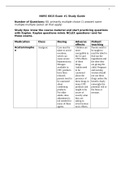
Medication Class Dosing Adverse Patient
effects teaching
Acetaminophe Analgesic Care must be Children are Parents need to
n taken to avoid more be taught to
overdose, susceptible to read the label to
which can the GI and find out the
cause severe CNS effects ingredients and
hepatotoxicity. of these the dose they
Dosages drugs. are giving the
available in Adults need child. Pregnant
OTC products to be and nursing
have been cautioned women should
reduced; about the not use these
parents need to presence of drugs unless the
be cautioned these drugs in benefit clearly
about many OTC outweighs the
combining products and potential risk to
products. taught to be the fetus or
For older aware of neonate.
adults, dose exactly what
adjustment is they are
not needed for taking to
many of these avoid serious
agents. toxic effects.
, 2
Salicylate NSAID At low levels, Salicylism At low levels,
(aspirin) (popular aspirin also can occur aspirin also
antiinflammator affects platelet with high affects platelet
y agent not only aggregation by levels of aggregation by
because of its inhibiting the aspirin; inhibiting the
ability to block synthesis of dizziness, synthesis of
the inflammatory thromboxane ringing in the thromboxane
response but also A2, a potent ears, A2, a potent
because of its vasoconstrictor difficulty vasoconstrictor
antipyretic that normally hearing, that normally
(fever-blocking) increases nausea, increases
and analgesic platelet vomiting, platelet
(pain-blocking) aggregation and diarrhea, aggregation and
properties) blood clot mental blood clot
formation. At confusion, formation. At
higher levels, and lassitude higher levels,
aspirin inhibits can occur aspirin inhibits
the synthesis of the synthesis of
prostacyclin, a prostacyclin, a
vasodilator that vasodilator that
inhibits platelet inhibits platelet
aggregation. aggregation.
Non-steroidal NSAID Because of its Salicylates, Provide strong
anti- extremely low NSAIDs, and anti-
inflammatory levels in gold products inflammatory
Medications breastmilk, have and analgesic
(ibuprofen) short half-life potentially effects without
and safe use in severe the adverse
infants in doses adverse effects
much higher effects on the associated with
than those neonate and the
excreted in possibly the corticosteroids
breastmilk, mother.
ibuprofen is a
preferred choice
as an analgesic
or anti-
inflammatory
agent in nursing
mothers.
What are the Acetaminophen – causes vasodilation and heat release, lowering
differences fever and working to relieve pain; can cause serious liver toxicity.
between these Aspirin – one of the most widely used drugs for treating inflammatory
medications? conditions; also affects platelet aggregation by inhibiting the synthesis
of thromboxane A2, a potent vasoconstrictor that normally increases
, 3
platelet aggregation and blood clot formation; at higher levels, aspirin
inhibits the synthesis of prostacyclin, a vasodilator that inhibits
platelet aggregation.
Ibuprofen – Relief of the signs and symptoms of rheumatoid arthritis
and osteoarthritis; relief of mild to moderate pain; treatment of
primary dysmenorrhea; fever reduction; Inhibits prostaglandin
synthesis by blocking COX-1 and COX-2 receptor sites, leading to an
antiinflammatory effect, analgesia, and antipyretic effects.
NURS 6015 Exam #1 Study Guide
Number of Questions: 60, primarily multiple choice (1 answer) some
multiple-multiple (select all that apply)
Study tips: know the course material and start practicing questions
with Kaplan. Kaplan questions mimic NCLEX questions—and for
these exams.
Medication Class Dosing Adverse Patient
effects teaching
Acetaminophe Analgesic Care must be Children are Parents need to
n taken to avoid more be taught to
overdose, susceptible to read the label to
which can the GI and find out the
cause severe CNS effects ingredients and
hepatotoxicity. of these the dose they
Dosages drugs. are giving the
available in Adults need child. Pregnant
OTC products to be and nursing
have been cautioned women should
reduced; about the not use these
parents need to presence of drugs unless the
be cautioned these drugs in benefit clearly
about many OTC outweighs the
combining products and potential risk to
products. taught to be the fetus or
For older aware of neonate.
adults, dose exactly what
adjustment is they are
not needed for taking to
many of these avoid serious
agents. toxic effects.
, 2
Salicylate NSAID At low levels, Salicylism At low levels,
(aspirin) (popular aspirin also can occur aspirin also
antiinflammator affects platelet with high affects platelet
y agent not only aggregation by levels of aggregation by
because of its inhibiting the aspirin; inhibiting the
ability to block synthesis of dizziness, synthesis of
the inflammatory thromboxane ringing in the thromboxane
response but also A2, a potent ears, A2, a potent
because of its vasoconstrictor difficulty vasoconstrictor
antipyretic that normally hearing, that normally
(fever-blocking) increases nausea, increases
and analgesic platelet vomiting, platelet
(pain-blocking) aggregation and diarrhea, aggregation and
properties) blood clot mental blood clot
formation. At confusion, formation. At
higher levels, and lassitude higher levels,
aspirin inhibits can occur aspirin inhibits
the synthesis of the synthesis of
prostacyclin, a prostacyclin, a
vasodilator that vasodilator that
inhibits platelet inhibits platelet
aggregation. aggregation.
Non-steroidal NSAID Because of its Salicylates, Provide strong
anti- extremely low NSAIDs, and anti-
inflammatory levels in gold products inflammatory
Medications breastmilk, have and analgesic
(ibuprofen) short half-life potentially effects without
and safe use in severe the adverse
infants in doses adverse effects
much higher effects on the associated with
than those neonate and the
excreted in possibly the corticosteroids
breastmilk, mother.
ibuprofen is a
preferred choice
as an analgesic
or anti-
inflammatory
agent in nursing
mothers.
What are the Acetaminophen – causes vasodilation and heat release, lowering
differences fever and working to relieve pain; can cause serious liver toxicity.
between these Aspirin – one of the most widely used drugs for treating inflammatory
medications? conditions; also affects platelet aggregation by inhibiting the synthesis
of thromboxane A2, a potent vasoconstrictor that normally increases
, 3
platelet aggregation and blood clot formation; at higher levels, aspirin
inhibits the synthesis of prostacyclin, a vasodilator that inhibits
platelet aggregation.
Ibuprofen – Relief of the signs and symptoms of rheumatoid arthritis
and osteoarthritis; relief of mild to moderate pain; treatment of
primary dysmenorrhea; fever reduction; Inhibits prostaglandin
synthesis by blocking COX-1 and COX-2 receptor sites, leading to an
antiinflammatory effect, analgesia, and antipyretic effects.