HANDOUTS BIOLOGY
IGCSE(0610)
Cell Structure & Organisation
A cell is the smallest unit that can carry on all theprocesses of life.
All organisms are made of cells, organisms are made of several organ systems, each organ
system containsseveral organs, each organ contains several tissues, each tissue is made of cells.
Cells are very tiny they could be seen only through a microscope. We have two types of cells.
CELLS
Plant Cells Animal Cells
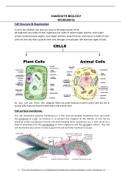
As you can see from the diagram there are some features found in plant cells but not in
animal cells.Features found in both plant and animal cells:
Cell surface membrane:
The cell membrane (plasma membrane) is a thin semi-permeable membrane that surrounds
the cytoplasm of a cell. Its function is to protect the integrity of the interior of the cell by
allowing certain substances into the cell while keeping other substances out. It also serves as a
base of attachment for the cytoskeleton in some organisms and the cell wall in others. Thus the
cell membrane also serves to help support the cell and help maintain its shape.
The cell membrane is a multifaceted membrane that envelopes a cell's cytoplasm. It
, Similar to the cell membrane, some cell organelles are surrounded by membranes. The
nucleus and mitochondria are two examples.
Another function of the membrane is to regulate cell growth through the balance of
endocytosis and exocytosis. In endocytosis, lipids and proteins are removed from the cell
membrane as substances are internalized. In exocytosis, vesicles containing lipids and proteins
fuse with the cell membrane increasing cell size. Animal cells, plant cells, prokaryotic cells,
and fungal cells have plasma membranes. Internal organelles are also encased by membranes.
Cytoplasm:
Cytoplasm refers to the fluid that fills the cell, which includes the cytosol along with filaments,
proteins, ions and macromolecular structures as well as the organelles suspended in the
cytosol.
In eukaryotic cells, cytoplasm refers to the contents of the cell with the exception of the
nucleus. Eukaryotes have elaborate mechanisms for maintaining a distinct nuclear
compartment separate from the cytoplasm. Active transport is involved in the creation of these
subcellular structures and for maintaining homeostasis with the cytoplasm. For prokaryotic
cells, since they do not have a defined nuclear membrane, the cytoplasm also contains the cell’s
primary genetic material. These cells are usually smaller in comparison to eukaryotes, and have
a simpler internal organization of the cytoplasm.
Cytoplasm Functions
The cytoplasm functions to support and suspend organelles and cellular molecules.
Many cellular processes also occur in the cytoplasm, such as protein synthesis, the first
stage of cellular respiration (known as glycolysis), mitosis, and meiosis.
The cytoplasm helps to move materials, such as hormones, around the cell and also
dissolves cellular waste.
Nucleus:
The nucleus is an organelle found in most eukaryotic cells, the exception being red blood cells. In
animal cells it is both the largest and stiffest organelle and is easily identifiable by light microscopy.
The average mammalian nucleus has a diameter of ~6µm and occupies about 10% of the total cell
volume.
The primary functions of the nucleus are to store the cell’s DNA, maintain its integrity, and facilitate
its transcription and replication. The nuclear contents, which include the genetic material and the
IGCSE(0610)
Cell Structure & Organisation
A cell is the smallest unit that can carry on all theprocesses of life.
All organisms are made of cells, organisms are made of several organ systems, each organ
system containsseveral organs, each organ contains several tissues, each tissue is made of cells.
Cells are very tiny they could be seen only through a microscope. We have two types of cells.
CELLS
Plant Cells Animal Cells
As you can see from the diagram there are some features found in plant cells but not in
animal cells.Features found in both plant and animal cells:
Cell surface membrane:
The cell membrane (plasma membrane) is a thin semi-permeable membrane that surrounds
the cytoplasm of a cell. Its function is to protect the integrity of the interior of the cell by
allowing certain substances into the cell while keeping other substances out. It also serves as a
base of attachment for the cytoskeleton in some organisms and the cell wall in others. Thus the
cell membrane also serves to help support the cell and help maintain its shape.
The cell membrane is a multifaceted membrane that envelopes a cell's cytoplasm. It
, Similar to the cell membrane, some cell organelles are surrounded by membranes. The
nucleus and mitochondria are two examples.
Another function of the membrane is to regulate cell growth through the balance of
endocytosis and exocytosis. In endocytosis, lipids and proteins are removed from the cell
membrane as substances are internalized. In exocytosis, vesicles containing lipids and proteins
fuse with the cell membrane increasing cell size. Animal cells, plant cells, prokaryotic cells,
and fungal cells have plasma membranes. Internal organelles are also encased by membranes.
Cytoplasm:
Cytoplasm refers to the fluid that fills the cell, which includes the cytosol along with filaments,
proteins, ions and macromolecular structures as well as the organelles suspended in the
cytosol.
In eukaryotic cells, cytoplasm refers to the contents of the cell with the exception of the
nucleus. Eukaryotes have elaborate mechanisms for maintaining a distinct nuclear
compartment separate from the cytoplasm. Active transport is involved in the creation of these
subcellular structures and for maintaining homeostasis with the cytoplasm. For prokaryotic
cells, since they do not have a defined nuclear membrane, the cytoplasm also contains the cell’s
primary genetic material. These cells are usually smaller in comparison to eukaryotes, and have
a simpler internal organization of the cytoplasm.
Cytoplasm Functions
The cytoplasm functions to support and suspend organelles and cellular molecules.
Many cellular processes also occur in the cytoplasm, such as protein synthesis, the first
stage of cellular respiration (known as glycolysis), mitosis, and meiosis.
The cytoplasm helps to move materials, such as hormones, around the cell and also
dissolves cellular waste.
Nucleus:
The nucleus is an organelle found in most eukaryotic cells, the exception being red blood cells. In
animal cells it is both the largest and stiffest organelle and is easily identifiable by light microscopy.
The average mammalian nucleus has a diameter of ~6µm and occupies about 10% of the total cell
volume.
The primary functions of the nucleus are to store the cell’s DNA, maintain its integrity, and facilitate
its transcription and replication. The nuclear contents, which include the genetic material and the