2021-
2022
Oncology
SUMMARY OF ONCOLOGY LECTURES 2021-2022
ELISE REUVEKAMP
,Oncology
Content
Introduction oncology............................................................................................................................3
1 – Epidemiological aspects of tumors...................................................................................................4
Key epidemiological concepts............................................................................................................4
Numbers and figures..........................................................................................................................5
Important risk factors.........................................................................................................................6
How to identify causes of cancer........................................................................................................6
Population attributable fraction.........................................................................................................8
2 – Pathology........................................................................................................................................10
How does cancer develop?...............................................................................................................10
What does a pathologist look for with cancer and why?..................................................................11
How do metastases develop?...........................................................................................................14
What are prognostic and predictive factors? What is molecular therapy?.......................................16
3 – Chemical carcinogenesis.................................................................................................................18
Introduction and history...................................................................................................................18
Biotransformation............................................................................................................................20
Transport (and excretion).................................................................................................................21
Mechanisms.....................................................................................................................................22
Regulation, evaluation and authorisation of chemicals (REACH)......................................................24
4 – Hereditary tumors..........................................................................................................................26
Background of genetic susceptibility................................................................................................26
Common characteristics of hereditary cancer..................................................................................26
Cancer susceptibility in breast cancer..............................................................................................26
Cancer susceptibility in colon cancer................................................................................................28
5 – Chemotherapy and receptor-mediated therapy.............................................................................32
Chemotherapy..................................................................................................................................32
Targeted therapy..............................................................................................................................34
Hormonal therapy............................................................................................................................35
Clinical trials.....................................................................................................................................36
6 – Radiotherapy..................................................................................................................................37
Hypoxia.............................................................................................................................................39
Combat hypoxia................................................................................................................................40
7 – Cancer immunology and Immunotherapy......................................................................................41
,8 – Molecular imaging of cancer...........................................................................................................42
What is molecular imaging?.............................................................................................................42
SPECT................................................................................................................................................43
PET....................................................................................................................................................43
New developments in the imaging field...........................................................................................45
, Introduction oncology
Oncology is the branch of science that deals with cancer, but also the branch of medicine that
specializes in the diagnosis and treatment of cancer.
Normal cells undergo homeostasis, in which there is feedback and control of growing. They will only
grow when there is a stimulus by growth factors. The normal cells are often tightly packed into a
tissue and have matured into specialized cells, so they know what function to perform
(differentiated). The cells can interact with each other since they are tightly packed, this also tells us
that they have a limited ability to divide and that their location in the tissue is determined. There are
tissues where the cells do divide, this will however stop when repair is needed and when there is too
much damage it will even lead to apoptosis. The growth of the cell is very much dependent on
oxygen supply.
However, in cancer cells these characteristics are very much different. There is a lot of cell division,
apoptosis is prevented, no repair, cells can grow without oxygen
The definition of cancer = Cancer refers to the process of accumulation of genetic alterations
resulting in unregulated cell growth, invasion into surrounding tissues and spread to other parts of
the body.
Mutations, disturbed growth and invasive growth are at the basis of cancer, but on itself they do
define cancer. For example, mutations can also lead to a mole, disturbed growth could lead to a wart
or polyp, invasive growth could lead to endometriosis, which is all not cancer.
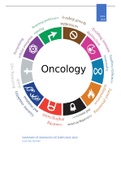
There is not one trait that defines cancer. The complexity
of cancer can be reduced to 10 underlying principles.
o Evading growth suppressors
o Sustaining proliferative signaling
o Avoiding immune destruction
o Enabling replicative immortality
o Tumor-promoting inflammation
o Activating invasion and metastasis
o Inducing angiogenesis
o Genome instability and mutations
o Resisting cell death
o Deregulating cellular energetics
Cancer is multi-trait, but also a
multi-step process. There is
initiation of cancer, promotion,
progression and eventually
advanced cancer.
It is often said that cancer is a
heterogenous disease, meaning that
it is a medical condition with several
etiologies/causes. Due to the fact
that it occurs in all organs of the
body.
2022
Oncology
SUMMARY OF ONCOLOGY LECTURES 2021-2022
ELISE REUVEKAMP
,Oncology
Content
Introduction oncology............................................................................................................................3
1 – Epidemiological aspects of tumors...................................................................................................4
Key epidemiological concepts............................................................................................................4
Numbers and figures..........................................................................................................................5
Important risk factors.........................................................................................................................6
How to identify causes of cancer........................................................................................................6
Population attributable fraction.........................................................................................................8
2 – Pathology........................................................................................................................................10
How does cancer develop?...............................................................................................................10
What does a pathologist look for with cancer and why?..................................................................11
How do metastases develop?...........................................................................................................14
What are prognostic and predictive factors? What is molecular therapy?.......................................16
3 – Chemical carcinogenesis.................................................................................................................18
Introduction and history...................................................................................................................18
Biotransformation............................................................................................................................20
Transport (and excretion).................................................................................................................21
Mechanisms.....................................................................................................................................22
Regulation, evaluation and authorisation of chemicals (REACH)......................................................24
4 – Hereditary tumors..........................................................................................................................26
Background of genetic susceptibility................................................................................................26
Common characteristics of hereditary cancer..................................................................................26
Cancer susceptibility in breast cancer..............................................................................................26
Cancer susceptibility in colon cancer................................................................................................28
5 – Chemotherapy and receptor-mediated therapy.............................................................................32
Chemotherapy..................................................................................................................................32
Targeted therapy..............................................................................................................................34
Hormonal therapy............................................................................................................................35
Clinical trials.....................................................................................................................................36
6 – Radiotherapy..................................................................................................................................37
Hypoxia.............................................................................................................................................39
Combat hypoxia................................................................................................................................40
7 – Cancer immunology and Immunotherapy......................................................................................41
,8 – Molecular imaging of cancer...........................................................................................................42
What is molecular imaging?.............................................................................................................42
SPECT................................................................................................................................................43
PET....................................................................................................................................................43
New developments in the imaging field...........................................................................................45
, Introduction oncology
Oncology is the branch of science that deals with cancer, but also the branch of medicine that
specializes in the diagnosis and treatment of cancer.
Normal cells undergo homeostasis, in which there is feedback and control of growing. They will only
grow when there is a stimulus by growth factors. The normal cells are often tightly packed into a
tissue and have matured into specialized cells, so they know what function to perform
(differentiated). The cells can interact with each other since they are tightly packed, this also tells us
that they have a limited ability to divide and that their location in the tissue is determined. There are
tissues where the cells do divide, this will however stop when repair is needed and when there is too
much damage it will even lead to apoptosis. The growth of the cell is very much dependent on
oxygen supply.
However, in cancer cells these characteristics are very much different. There is a lot of cell division,
apoptosis is prevented, no repair, cells can grow without oxygen
The definition of cancer = Cancer refers to the process of accumulation of genetic alterations
resulting in unregulated cell growth, invasion into surrounding tissues and spread to other parts of
the body.
Mutations, disturbed growth and invasive growth are at the basis of cancer, but on itself they do
define cancer. For example, mutations can also lead to a mole, disturbed growth could lead to a wart
or polyp, invasive growth could lead to endometriosis, which is all not cancer.
There is not one trait that defines cancer. The complexity
of cancer can be reduced to 10 underlying principles.
o Evading growth suppressors
o Sustaining proliferative signaling
o Avoiding immune destruction
o Enabling replicative immortality
o Tumor-promoting inflammation
o Activating invasion and metastasis
o Inducing angiogenesis
o Genome instability and mutations
o Resisting cell death
o Deregulating cellular energetics
Cancer is multi-trait, but also a
multi-step process. There is
initiation of cancer, promotion,
progression and eventually
advanced cancer.
It is often said that cancer is a
heterogenous disease, meaning that
it is a medical condition with several
etiologies/causes. Due to the fact
that it occurs in all organs of the
body.