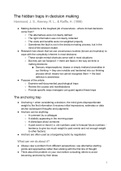
The hidden traps in decision making
Hammond, J. S., Keeney, R. L., & Raiffa, H. (1998)
● Making decisions is the toughest job of executives - where do bad decisions
come from?
○ The alternatives were not clearly defined
○ The right information was not clearly collected
○ The costs and benefits were not weighted properly
○ Sometimes the fault is not in the decision-making process, but in the
mind of the decision-maker.
● Research has shown that we use unconscious routines (known as heuristics) to
cope with the complexity inherent in most decisions
○ These simple mental shortcuts serve well in most situations
○ But they are not foolproof -> there are flaws in the way we think in
making decisions:
■ Sensory misperceptions, biases or simply irrational anomalies in
our thinking -> they are invisible and hardwired into our thinking
process which means we cannot recognise them -> the best
defence is awareness
● Purpose of the article:
○ Examine well-documented psychological traps
○ Review the causes and manifestations
○ Provide specific ways managers can guard against these traps
The anchoring trap
● Anchoring = when considering a decision, the mind gives disproportionate
weight to the first information it receives initial impressions, estimates or data
anchor subsequent thoughts and judgments
● Anchors can be anything:
○ A comment by a colleague
○ A statistic appearing in the morning paper
○ A stereotype about someone
○ A past event or trend (i.e. old numbers used to forecast future numbers -
tendency to give too much weight to past events and not enough weight
to other factors)
● Anchors are often used as a bargaining tactic by negotiators
What can we do about it?
● Always view a problem from different perspectives: use alternative starting
points and approaches rather than sticking with the first line of thought
● Think about the problem on your own before consulting others to avoid
becoming anchored by their ideas
1
, ● Be open-minded: seek information and opinions from a variety of people to
widen your frame of reference and to push your mind in fresh directions
● Be careful to avoid anchoring your advisers, consultants, and others from
whom you solicit information and counsel
● Be particularly wary of anchors in negotiations: think through your position
before any negotiation begins in order to avoid being anchored by the other
party’s initial proposal
○ Look for opportunities to use anchors to your own advantage
The status-quo trap
● Everyone has biases when making decisions, one very strong one being the
status quo
● The source of the status-quo trap lies deep within our desire to protect our egos
from damage.
○ Breaking from the status-quo -> taking action -> taking responsibility ->
opening ourselves to criticism and to regret
○ Sticking with the status-quo -> choosing the safer course -> less
psychological risk
● Research has shown that the more choices you are given, the more pull the
status quo has
● In business, where sins of commission (doing something) tend to be punished
much more severely than sins of omission (doing nothing), the status-quo holds
a particularly strong attraction
What can we do about it?
● In any given decision, maintaining the status quo may be the best choice, but
you don’t want to choose it because it is comfortable, but because it is indeed
the best choice
● Always remind yourself of your objectives and examine how they would be
served by the status quo
● Never think of the status quo as your only alternative – identify other options
and use them as counterbalances
● Ask yourself whether you would choose the status-quo alternative, if, in fact, it
wasn’t the status-quo
● Avoid exaggerating the effort or cost involved in switching from the status quo
● Remember that the desirability of the status-quo will change over time
● If you have several alternatives that are superior to the status quo, don’t default
to the status quo just because you’re having a hard time picking the best
alternative
2
Hammond, J. S., Keeney, R. L., & Raiffa, H. (1998)
● Making decisions is the toughest job of executives - where do bad decisions
come from?
○ The alternatives were not clearly defined
○ The right information was not clearly collected
○ The costs and benefits were not weighted properly
○ Sometimes the fault is not in the decision-making process, but in the
mind of the decision-maker.
● Research has shown that we use unconscious routines (known as heuristics) to
cope with the complexity inherent in most decisions
○ These simple mental shortcuts serve well in most situations
○ But they are not foolproof -> there are flaws in the way we think in
making decisions:
■ Sensory misperceptions, biases or simply irrational anomalies in
our thinking -> they are invisible and hardwired into our thinking
process which means we cannot recognise them -> the best
defence is awareness
● Purpose of the article:
○ Examine well-documented psychological traps
○ Review the causes and manifestations
○ Provide specific ways managers can guard against these traps
The anchoring trap
● Anchoring = when considering a decision, the mind gives disproportionate
weight to the first information it receives initial impressions, estimates or data
anchor subsequent thoughts and judgments
● Anchors can be anything:
○ A comment by a colleague
○ A statistic appearing in the morning paper
○ A stereotype about someone
○ A past event or trend (i.e. old numbers used to forecast future numbers -
tendency to give too much weight to past events and not enough weight
to other factors)
● Anchors are often used as a bargaining tactic by negotiators
What can we do about it?
● Always view a problem from different perspectives: use alternative starting
points and approaches rather than sticking with the first line of thought
● Think about the problem on your own before consulting others to avoid
becoming anchored by their ideas
1
, ● Be open-minded: seek information and opinions from a variety of people to
widen your frame of reference and to push your mind in fresh directions
● Be careful to avoid anchoring your advisers, consultants, and others from
whom you solicit information and counsel
● Be particularly wary of anchors in negotiations: think through your position
before any negotiation begins in order to avoid being anchored by the other
party’s initial proposal
○ Look for opportunities to use anchors to your own advantage
The status-quo trap
● Everyone has biases when making decisions, one very strong one being the
status quo
● The source of the status-quo trap lies deep within our desire to protect our egos
from damage.
○ Breaking from the status-quo -> taking action -> taking responsibility ->
opening ourselves to criticism and to regret
○ Sticking with the status-quo -> choosing the safer course -> less
psychological risk
● Research has shown that the more choices you are given, the more pull the
status quo has
● In business, where sins of commission (doing something) tend to be punished
much more severely than sins of omission (doing nothing), the status-quo holds
a particularly strong attraction
What can we do about it?
● In any given decision, maintaining the status quo may be the best choice, but
you don’t want to choose it because it is comfortable, but because it is indeed
the best choice
● Always remind yourself of your objectives and examine how they would be
served by the status quo
● Never think of the status quo as your only alternative – identify other options
and use them as counterbalances
● Ask yourself whether you would choose the status-quo alternative, if, in fact, it
wasn’t the status-quo
● Avoid exaggerating the effort or cost involved in switching from the status quo
● Remember that the desirability of the status-quo will change over time
● If you have several alternatives that are superior to the status quo, don’t default
to the status quo just because you’re having a hard time picking the best
alternative
2