t pharmacologic – QUESTION AND ANSWERS
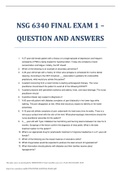
NSG 6340 FINAL EXAM 1 – QUESTION AND ANSWERS 1. A 37-year-old female patient with a history of a single episode of depression and frequent complaints of PMS is being treated for hypothyroidism. Today she complains of poor concentration and fatigue. Initially, the NP should: 2. Which of the following is an example of secondary prevention? 3. A 35-year old female with a history of mitral valve prolapse is scheduled for routine dental cleaning. According to the 2007 American ___Association’s guideline for endocarditis prophylaxis, what would you advise this patient? 4. A patient recovering from a recent stroke is starting anticoagulant therapy. The nurse practitioner should teach the patient to avoid all of the following EXCEPT: 5. A patient presents with periorbital erythema and edema, fever, and nasal drainage. The nurse practitioner should 6. A positive drawer sign support a diagnosis of 7. A 50-year-old patient with diabetes complains of pain bilaterally in her lower legs while walking. The pain disappears at rest. What else would you expect to identify on her lower extremities. 8. A 16-year-old athlete complains of pain underneath his heel every time he walks. There is a verrucous surface level with the skin of the heel. What pharmacologic interventions should the nurse practitioner prescribe for this patient?
Document information
- Uploaded on
- December 19, 2021
- Number of pages
- 9
- Written in
- 2021/2022
- Type
- Exam (elaborations)
- Contains
- Questions & answers