Intermediate Financial Accounting
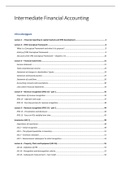
Inhoudsopgave
Lecture 1 – Financial reporting in capital markets and IFRS development....................................................... 2
Lecture 2 – IFRS Conceptual Framework ......................................................................................................... 8
What is a Conceptual Framework and what it its purpose? ............................................................................... 8
History of IFRS Conceptual Framework............................................................................................................... 9
Structure of the IFRS Conceptual Framework – Chapters 1-8 ........................................................................... 10
Lecture 3 – Financial statements ................................................................................................................... 21
Income statement ............................................................................................................................................. 21
Total comprehensive income ............................................................................................................................ 23
Statement of changes in shareholders’ Equity ................................................................................................. 24
Statement of financial position......................................................................................................................... 25
Statement of cash flows ................................................................................................................................... 26
Accounting concepts and assumptions ............................................................................................................. 30
Links within Financial Statements .................................................................................................................... 33
Lecture 4 – Revenue recognition (IFRS 15) – part 1........................................................................................ 35
Importance of revenue recognition .................................................................................................................. 35
IFRS 15 – objective and scope ........................................................................................................................... 37
IFRS 15 - Five step process for revenue recognition .......................................................................................... 38
Lecture 5 – Revenue recognition (IFRS 15) – part 2........................................................................................ 44
IFRS 15 – Presentation and disclosure .............................................................................................................. 44
IFRS 15 - Focus on POs satisfied over time........................................................................................................ 45
Inventories (IAS 2) ........................................................................................................................................ 48
Importance of inventories................................................................................................................................. 48
IAS 2 – Initial recognition .................................................................................................................................. 49
IAS 2 – The physical quantities in inventory...................................................................................................... 51
IAS 2 – Inventory valuation ............................................................................................................................... 51
IAS 2 – Measurement subsequent to initial recognition ................................................................................... 53
Lecture 6 – Property, Plant and Equipment (IAS 16) ...................................................................................... 55
IAS 16 – Definition of PPE ................................................................................................................................. 55
IAS 16 – Recognition and derecognition criteria ............................................................................................... 55
IAS 16 – Subsequent measurement - Cost model ............................................................................................. 56
, IAS 16 – The concept of depreciation................................................................................................................ 57
IAS 16 – subsequent measurement – Revaluation model ................................................................................. 59
Lecture 7 – Intangible Assets & Goodwill (IAS 38) and Impairment (IAS 36) .................................................. 62
IAS 38 – Definition of Intangible Assets ............................................................................................................ 62
IAS 38 - Initial recognition and measurement .................................................................................................. 63
IAS 38 – subsequent measurement................................................................................................................... 66
IAS 38 – Goodwill .............................................................................................................................................. 66
IAS 36 – concept of impairment ........................................................................................................................ 67
Lecture 8 – Provisions & Contingent liabilities (IAS 37) .................................................................................. 70
IAS 37 – Definition of provisions ....................................................................................................................... 70
IAS 37 - Recognition of provisions ..................................................................................................................... 70
IAS 37 – Types of provisions .............................................................................................................................. 71
IAS 37 – Definition of contingent liabilities ....................................................................................................... 77
IAS 37 – Contingent assets................................................................................................................................ 79
Lecture 9 – Financial instruments (IAS 32 & IFRS 9) ....................................................................................... 80
Financial instruments: Definition: ..................................................................................................................... 80
Financial assets ................................................................................................................................................. 81
Financial assets: equity financial instruments .................................................................................................. 83
Lecture 10 – Financial Instruments (IAS 32 & IFRS 9) – Part II ........................................................................ 86
Debt financial instruments – Bonds .................................................................................................................. 86
Pricing bonds .................................................................................................................................................... 87
Debt financial instruments: classification ......................................................................................................... 89
Debt instruments: Held For Collection .............................................................................................................. 89
Debt Instruments: Held for Collection and Selling ............................................................................................ 92
Debt Instruments: Held for Trading .................................................................................................................. 94
Debt financial instruments: Impairment ........................................................................................................... 94
Lecture 11 – Lease Accounting (Guestlecture) ............................................................................................... 98
IFRS 16 – Introduction....................................................................................................................................... 98
Accounting by Lessee ........................................................................................................................................ 99
Accounting by lessor ....................................................................................................................................... 104
Hoorcollege 12 – Consolidated financial statements (IFRS 3 & IFRS 10) ....................................................... 108
Lecture 1 – Financial reporting in capital markets and IFRS
development
What is accounting
,Accounting is the way a business uses to communicate its financial performance; it is the
language of the business.
Only financial information.
Role of financial reporting
Economic theory reasoning
• Firms needs economic resources, provided by capital providers.
• Absence of reporting = Wild Wild West à Adverse selection = information
asymmetry. Part that has more information, seller knows more about quality
compared to the buyer
The firms knows better than the capital providers. That’s why the firm needs to provide
information, in case the information asymmetry becomes less
, • For this mechanism to work efficiently, they need to write contracts, to prevent
agency conflicts and moral hazard behavior
General purpose is decision-usefulness
In addition: the stewardship: if the owners assign stewardship of their company to
management, they wish to have the ability to oversee management behavior to ensure that:
• It is aligned to owner’s objectives
• Management are devising strategies aimed at making the best use of company assets
• No misappropriation of the company assets takes place
= being able to control
Company’s are becoming bigger and they need to communicate
Our focus in this course
Is the annual report.
1. Letter to shareholders
2. Divisions
3. Corporate convenance
4. Group management report
5. Consolidated financial statements = most important
Inhoudsopgave
Lecture 1 – Financial reporting in capital markets and IFRS development....................................................... 2
Lecture 2 – IFRS Conceptual Framework ......................................................................................................... 8
What is a Conceptual Framework and what it its purpose? ............................................................................... 8
History of IFRS Conceptual Framework............................................................................................................... 9
Structure of the IFRS Conceptual Framework – Chapters 1-8 ........................................................................... 10
Lecture 3 – Financial statements ................................................................................................................... 21
Income statement ............................................................................................................................................. 21
Total comprehensive income ............................................................................................................................ 23
Statement of changes in shareholders’ Equity ................................................................................................. 24
Statement of financial position......................................................................................................................... 25
Statement of cash flows ................................................................................................................................... 26
Accounting concepts and assumptions ............................................................................................................. 30
Links within Financial Statements .................................................................................................................... 33
Lecture 4 – Revenue recognition (IFRS 15) – part 1........................................................................................ 35
Importance of revenue recognition .................................................................................................................. 35
IFRS 15 – objective and scope ........................................................................................................................... 37
IFRS 15 - Five step process for revenue recognition .......................................................................................... 38
Lecture 5 – Revenue recognition (IFRS 15) – part 2........................................................................................ 44
IFRS 15 – Presentation and disclosure .............................................................................................................. 44
IFRS 15 - Focus on POs satisfied over time........................................................................................................ 45
Inventories (IAS 2) ........................................................................................................................................ 48
Importance of inventories................................................................................................................................. 48
IAS 2 – Initial recognition .................................................................................................................................. 49
IAS 2 – The physical quantities in inventory...................................................................................................... 51
IAS 2 – Inventory valuation ............................................................................................................................... 51
IAS 2 – Measurement subsequent to initial recognition ................................................................................... 53
Lecture 6 – Property, Plant and Equipment (IAS 16) ...................................................................................... 55
IAS 16 – Definition of PPE ................................................................................................................................. 55
IAS 16 – Recognition and derecognition criteria ............................................................................................... 55
IAS 16 – Subsequent measurement - Cost model ............................................................................................. 56
, IAS 16 – The concept of depreciation................................................................................................................ 57
IAS 16 – subsequent measurement – Revaluation model ................................................................................. 59
Lecture 7 – Intangible Assets & Goodwill (IAS 38) and Impairment (IAS 36) .................................................. 62
IAS 38 – Definition of Intangible Assets ............................................................................................................ 62
IAS 38 - Initial recognition and measurement .................................................................................................. 63
IAS 38 – subsequent measurement................................................................................................................... 66
IAS 38 – Goodwill .............................................................................................................................................. 66
IAS 36 – concept of impairment ........................................................................................................................ 67
Lecture 8 – Provisions & Contingent liabilities (IAS 37) .................................................................................. 70
IAS 37 – Definition of provisions ....................................................................................................................... 70
IAS 37 - Recognition of provisions ..................................................................................................................... 70
IAS 37 – Types of provisions .............................................................................................................................. 71
IAS 37 – Definition of contingent liabilities ....................................................................................................... 77
IAS 37 – Contingent assets................................................................................................................................ 79
Lecture 9 – Financial instruments (IAS 32 & IFRS 9) ....................................................................................... 80
Financial instruments: Definition: ..................................................................................................................... 80
Financial assets ................................................................................................................................................. 81
Financial assets: equity financial instruments .................................................................................................. 83
Lecture 10 – Financial Instruments (IAS 32 & IFRS 9) – Part II ........................................................................ 86
Debt financial instruments – Bonds .................................................................................................................. 86
Pricing bonds .................................................................................................................................................... 87
Debt financial instruments: classification ......................................................................................................... 89
Debt instruments: Held For Collection .............................................................................................................. 89
Debt Instruments: Held for Collection and Selling ............................................................................................ 92
Debt Instruments: Held for Trading .................................................................................................................. 94
Debt financial instruments: Impairment ........................................................................................................... 94
Lecture 11 – Lease Accounting (Guestlecture) ............................................................................................... 98
IFRS 16 – Introduction....................................................................................................................................... 98
Accounting by Lessee ........................................................................................................................................ 99
Accounting by lessor ....................................................................................................................................... 104
Hoorcollege 12 – Consolidated financial statements (IFRS 3 & IFRS 10) ....................................................... 108
Lecture 1 – Financial reporting in capital markets and IFRS
development
What is accounting
,Accounting is the way a business uses to communicate its financial performance; it is the
language of the business.
Only financial information.
Role of financial reporting
Economic theory reasoning
• Firms needs economic resources, provided by capital providers.
• Absence of reporting = Wild Wild West à Adverse selection = information
asymmetry. Part that has more information, seller knows more about quality
compared to the buyer
The firms knows better than the capital providers. That’s why the firm needs to provide
information, in case the information asymmetry becomes less
, • For this mechanism to work efficiently, they need to write contracts, to prevent
agency conflicts and moral hazard behavior
General purpose is decision-usefulness
In addition: the stewardship: if the owners assign stewardship of their company to
management, they wish to have the ability to oversee management behavior to ensure that:
• It is aligned to owner’s objectives
• Management are devising strategies aimed at making the best use of company assets
• No misappropriation of the company assets takes place
= being able to control
Company’s are becoming bigger and they need to communicate
Our focus in this course
Is the annual report.
1. Letter to shareholders
2. Divisions
3. Corporate convenance
4. Group management report
5. Consolidated financial statements = most important