
||||||||||||||||||||
and
3:13 Guide
AM1*@*^%^#!*&^*&^!()(@*&$*@10/23/2026,
of
5th 11Page
Edition1CCNA
Cisco IOS
200-301
Commands
Portable
Comprehensive
Command
4:03:13Guide
AM1
Reference
of
5th
11Page
Edition
With
1CCNA
Cisco
Solution.pdf2026/10/23Page
IOS
200-301
Commands
Portable
Comprehensive
Command
1 of 11
Guide
Referen
5th
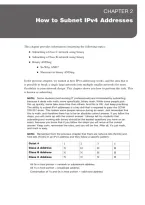
CHAPTER 2
How to Subnet IPv4 Addresses
This chapter provides information concerning the following topics:
Subnetting a Class C network using binary
Subnetting a Class B network using binary
Binary ANDing
So Why AND?
Shortcuts in binary ANDing
In the previous chapter, we looked at how IPv4 addressing works, and the idea that it
is possible to break a single large networks into multiple smaller networks for more
flexibility in your network design. This chapter shows you how to perform this task. This
is known as subnetting.
NOTE: Some students (and working IT professionals) are intimidated by subnetting
because it deals with math; more specifically, binary math. While some people pick
this up quickly, some take more time than others. And this is OK. Just keep practicing.
The ability to subnet IPv4 addresses is a key skill that is required to pass the CCNA
200-301 exam. This makes some people nervous during an exam. Just remember that
this is math, and therefore there has to be an absolute correct answer. If you follow the
steps, you will come up with the correct answer. I always tell my students that
subnetting and working with binary should be the easiest questions you have on an
exam, because you know that if you follow the steps you will arrive at the correct
answer. Keep calm, remember the rules, and you will be fine. After all, it’s just math,
and math is easy.
NOTE: Remember from the previous chapter that there are network bits (N bits) and
host bits (H bits) in an IPv4 address and they follow a specific pattern:
Octet # 1 2 3 4
Class A Address N H H H
Class B Address N N H H
Class C Address N N N H
All 0s in host portion = network or subnetwork address
All 1s in host portion = broadcast address
Combination of 1s and 0s in host portion = valid host address
26,
and4:03:13
Guide*@*^%^#!*&^*&^!()(@*&$*@10/23/2026,
5th
AM1Edition
of 11Page
Cisco1CCNA
IOS Commands
200-301 Portable
Comprehensive
4:03:13
Command
AM1
Reference
of
Guide
11Page
5th
With
Edition
1CCNA
Solution.pdf2026/10/23Page
Cisco
200-301
IOSPortable
CommandsCommand
Comprehensive
1 of 11
Guide 5thR
Technet24
||||||||||||||||||||
, ||||||||||||||||||||
and
3:13 Guide
AM2*@*^%^#!*&^*&^!()(@*&$*@10/23/2026,
of
5th 11Page
Edition2CCNA
Cisco IOS
200-301
Commands
Portable
Comprehensive
Command
4:03:13Guide
AM2
Reference
of
5th
11Page
Edition
With
2CCNA
Cisco
Solution.pdf2026/10/23Page
IOS
200-301
Commands
Portable
Comprehensive
Command
2 of 11
Guide
Referen
5th
12 Subnetting a Class C Network Using Binary
To subnet a network address space, we will use the following formulae:
2N (where N is equal to the number of network Number of total subnets created
bits borrowed)
2H (where H is equal to the number of host bits) Number of total hosts per subnet
2H – 2 Number of valid hosts per subnet
Subnetting a Class C Network Using Binary
You have an address of 192.168.100.0 /24. You need nine subnets. What is the IP plan of
network numbers, broadcast numbers, and valid host numbers? What is the subnet mask
needed for this plan?
You cannot use N bits, only H bits. Therefore, ignore 192.168.100. These numbers
cannot change. You only work with host bits. You need to borrow some host bits and turn
them into network bits (or in this case, subnetwork bits; I use the variable N to refer to
both network and subnetwork bits).
Step 1. Determine how many H bits you need to borrow to create nine valid subnets.
2N ≥ 9
N = 4, so you need to borrow 4 H bits and turn them into N bits.
Start with 8 H bits HHHHHHHH
Borrow 4 bits NNNNHHHH
Step 2. Determine the first subnet in binary.
0000HHHH
00000000 All 0s in host portion = subnetwork number
00000001 First valid host number
00000010 Second valid host number
00000011 Third valid host number
…
00001110 Last valid host number
00001111 All 1s in host portion = broadcast number
Step 3. Convert binary to decimal.
00000000 = 0 Subnetwork number
00000001 = 1 First valid host number
00000010 = 2 Second valid host number
00000011 = 3 Third valid host number
.…
00001110 = 14 Last valid host number
00001111 = 15 All 1s in host portion = broadcast number
26,
and4:03:13
Guide*@*^%^#!*&^*&^!()(@*&$*@10/23/2026,
5th
AM2Edition
of 11Page
Cisco2CCNA
IOS Commands
200-301 Portable
Comprehensive
4:03:13
Command
AM2
Reference
of
Guide
11Page
5th
With
Edition
2CCNA
Solution.pdf2026/10/23Page
Cisco
200-301
IOSPortable
CommandsCommand
Comprehensive
2 of 11
Guide 5thR
||||||||||||||||||||
and
3:13 Guide
AM1*@*^%^#!*&^*&^!()(@*&$*@10/23/2026,
of
5th 11Page
Edition1CCNA
Cisco IOS
200-301
Commands
Portable
Comprehensive
Command
4:03:13Guide
AM1
Reference
of
5th
11Page
Edition
With
1CCNA
Cisco
Solution.pdf2026/10/23Page
IOS
200-301
Commands
Portable
Comprehensive
Command
1 of 11
Guide
Referen
5th
CHAPTER 2
How to Subnet IPv4 Addresses
This chapter provides information concerning the following topics:
Subnetting a Class C network using binary
Subnetting a Class B network using binary
Binary ANDing
So Why AND?
Shortcuts in binary ANDing
In the previous chapter, we looked at how IPv4 addressing works, and the idea that it
is possible to break a single large networks into multiple smaller networks for more
flexibility in your network design. This chapter shows you how to perform this task. This
is known as subnetting.
NOTE: Some students (and working IT professionals) are intimidated by subnetting
because it deals with math; more specifically, binary math. While some people pick
this up quickly, some take more time than others. And this is OK. Just keep practicing.
The ability to subnet IPv4 addresses is a key skill that is required to pass the CCNA
200-301 exam. This makes some people nervous during an exam. Just remember that
this is math, and therefore there has to be an absolute correct answer. If you follow the
steps, you will come up with the correct answer. I always tell my students that
subnetting and working with binary should be the easiest questions you have on an
exam, because you know that if you follow the steps you will arrive at the correct
answer. Keep calm, remember the rules, and you will be fine. After all, it’s just math,
and math is easy.
NOTE: Remember from the previous chapter that there are network bits (N bits) and
host bits (H bits) in an IPv4 address and they follow a specific pattern:
Octet # 1 2 3 4
Class A Address N H H H
Class B Address N N H H
Class C Address N N N H
All 0s in host portion = network or subnetwork address
All 1s in host portion = broadcast address
Combination of 1s and 0s in host portion = valid host address
26,
and4:03:13
Guide*@*^%^#!*&^*&^!()(@*&$*@10/23/2026,
5th
AM1Edition
of 11Page
Cisco1CCNA
IOS Commands
200-301 Portable
Comprehensive
4:03:13
Command
AM1
Reference
of
Guide
11Page
5th
With
Edition
1CCNA
Solution.pdf2026/10/23Page
Cisco
200-301
IOSPortable
CommandsCommand
Comprehensive
1 of 11
Guide 5thR
Technet24
||||||||||||||||||||
, ||||||||||||||||||||
and
3:13 Guide
AM2*@*^%^#!*&^*&^!()(@*&$*@10/23/2026,
of
5th 11Page
Edition2CCNA
Cisco IOS
200-301
Commands
Portable
Comprehensive
Command
4:03:13Guide
AM2
Reference
of
5th
11Page
Edition
With
2CCNA
Cisco
Solution.pdf2026/10/23Page
IOS
200-301
Commands
Portable
Comprehensive
Command
2 of 11
Guide
Referen
5th
12 Subnetting a Class C Network Using Binary
To subnet a network address space, we will use the following formulae:
2N (where N is equal to the number of network Number of total subnets created
bits borrowed)
2H (where H is equal to the number of host bits) Number of total hosts per subnet
2H – 2 Number of valid hosts per subnet
Subnetting a Class C Network Using Binary
You have an address of 192.168.100.0 /24. You need nine subnets. What is the IP plan of
network numbers, broadcast numbers, and valid host numbers? What is the subnet mask
needed for this plan?
You cannot use N bits, only H bits. Therefore, ignore 192.168.100. These numbers
cannot change. You only work with host bits. You need to borrow some host bits and turn
them into network bits (or in this case, subnetwork bits; I use the variable N to refer to
both network and subnetwork bits).
Step 1. Determine how many H bits you need to borrow to create nine valid subnets.
2N ≥ 9
N = 4, so you need to borrow 4 H bits and turn them into N bits.
Start with 8 H bits HHHHHHHH
Borrow 4 bits NNNNHHHH
Step 2. Determine the first subnet in binary.
0000HHHH
00000000 All 0s in host portion = subnetwork number
00000001 First valid host number
00000010 Second valid host number
00000011 Third valid host number
…
00001110 Last valid host number
00001111 All 1s in host portion = broadcast number
Step 3. Convert binary to decimal.
00000000 = 0 Subnetwork number
00000001 = 1 First valid host number
00000010 = 2 Second valid host number
00000011 = 3 Third valid host number
.…
00001110 = 14 Last valid host number
00001111 = 15 All 1s in host portion = broadcast number
26,
and4:03:13
Guide*@*^%^#!*&^*&^!()(@*&$*@10/23/2026,
5th
AM2Edition
of 11Page
Cisco2CCNA
IOS Commands
200-301 Portable
Comprehensive
4:03:13
Command
AM2
Reference
of
Guide
11Page
5th
With
Edition
2CCNA
Solution.pdf2026/10/23Page
Cisco
200-301
IOSPortable
CommandsCommand
Comprehensive
2 of 11
Guide 5thR
||||||||||||||||||||


