
*@*^%^#!*&^*&^!()(@*&$*@10/23/2026,
*@*^%^#!*&^*&^!()(@*&$*@10/23/2026,
4:03:13 AM1
*@*^%^#!*&^*&^!()(@*&$*@10/23/2026,
of 7Page 1D252
4:03:13
Task
AM1
2.pdf2026/10/23Page
of 7Page 1D252
4:03:13
Task
AM1
1 of2.pdf2026/10/23Page
7of 7Page 1D252 Task
1 of2.pdf2026/10/23Page
7 1 of 7
D252 Task 2
A. Research the following topics:
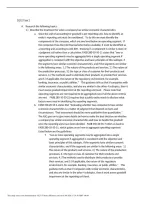
1.) Describe the treatment for when a company has similar economic characteristics:
a. Since the unit of accounting for goodwill is per reporting unit, how to identify an
entity’s reporting unit must be considered. To do this we must identify the
components of the company, which are one level below an operating segment. If
the component has discrete financial information available, it must be identified as
a reporting unit according to ASC 805. Knowing if a component is similar is more of
a judgment call rather than a calculation. FASB 280-10-50-11 states that “two or
more operating segments may be aggregated into a single operating segment if
aggregation is consistent with the objective and basic principles of this subtopic, if
the segments have similar economic characteristics, and if the segments are similar
in the following areas: 1.) The nature of the products and services, 2.) The nature of
the production processes, 3.) the type or class of customer for their products and
services, 4.) The methods used to distribute their products or provide their services,
and 5.) If applicable, the nature of the regulatory environment, for example,
banking, insurance, or public utilities.” This guidance tells us that if companies with
similar economic characteristics, and also are similar in the other 4 subtopics, then it
must assess goodwill impairment at the reporting unit level. Please note that
operating segments are not required to be aggregated even if all the above criteria
are met. FASB 280-10-50-21 requires that a public entity needs to disclose what
factors were used in identifying the reporting segments.
b. FASB 350-20-55-6 states that “Evaluating whether two components have similar
economic characteristics is a matter of judgment that depends on facts and
circumstances. That assessment should be more qualitative than quantitative.”
The ASC goes on to give more details on how to make the best decision on whether
a company has similar economic characteristics and how to handle the goodwill
once the reporting units have been decided. FASB 350-20-55-7 refers us back to
FASB 280-10-50-11, which guides us on how to aggregate operating segments.
Listed below are the guidelines:
“two or more operating segments may be aggregated into a single
operating segment if aggregation is consistent with the objective and
basic principles of this subtopic, if the segments have similar economic
characteristics, and if the segments are similar in the following areas: 1.)
The nature of the products and services, 2.) The nature of the production
processes, 3.) the type or class of customer for their products and
services, 4.) The methods used to distribute their products or provide
their services, and 5.) If applicable, the nature of the regulatory
environment, for example, banking, insurance, or public utilities.” This
guidance tells us that if companies with similar economic characteristics,
and also are similar in the other 4 subtopics, then it must assess goodwill
impairment at the reporting unit level.
This study source was downloaded by 1827175 from cliffsnotes.com on 01-08-2026 17:24:10 GMT -06:00
*@*^%^#!*&^*&^!()(@*&$*@10/23/2026,
Page 1 of 7*@*^%^#!*&^*&^!()(@*&$*@10/23/2026,
4:03:13 AM1
https://www.cliffsnotes.com//study-notes/21814953 *@*^%^#!*&^*&^!()(@*&$*@10/23/2026,
of 7Page 1D252 Task
4:03:13
2.pdf2026/10/23Page
AM1 of 7Page
4:03:13
1D252
AM1
1 ofTask
7of 7Page
2.pdf2026/10/23Page
1D252 Task 2.pdf2026/10/23Page
1 of 7 1 of 7
, *@*^%^#!*&^*&^!()(@*&$*@10/23/2026,
*@*^%^#!*&^*&^!()(@*&$*@10/23/2026,
4:03:13 AM2
*@*^%^#!*&^*&^!()(@*&$*@10/23/2026,
of 7Page 2D252
4:03:13
Task
AM2
2.pdf2026/10/23Page
of 7Page 2D252
4:03:13
Task
AM2
2 of2.pdf2026/10/23Page
7of 7Page 2D252 Task
2 of2.pdf2026/10/23Page
7 2 of 7
FASB 350-20-55-7 goes on to state that “every factor does not have to be met in
order for two components to be considered economically similar.” The guidance
then goes on to list what should be considered. It states that “a.) the manner in
which an entity operates its business or nonprofit activity and the nature of those
operations, b.) Whether goodwill is recoverable from the separate operations of
each component business (or nonprofit activity) or from two or more component
businesses (or nonprofit activities) working in concert (which might be the case if
the components are economically interdependent), c.) The extent to which the
component businesses (or nonprofit activities) share assets and other resources, as
might be evidenced by extensive transfer pricing mechanisms, and d.) Whether the
components support and benefit from common research and development
projects”. Once the company has identified the reporting units, then the goodwill
impairment test can be implemented for each reporting unit. Goodwill can be
divided among reporting units The impairment test must be done annually, anytime
in the year, but must be done the same time each year following, or if triggering
events occur. Each reporting unit can determine when in the year they would like
to perform this test. (FASB 350-20-35-28) An impairment = carrying amount of
goodwill > the implied fair value according to FASB 350-20-35-2).
2.) Describe the treatment for when a company does not have similar economic characteristics.
a. If a company identifies it’s reporting units and they do not share similar economic
characteristics, then FASB 350-20-35-41 states that separate impairment tests for
each reporting unit must be completed.
3.) Describe the treatment for a public company.
a. Public companies are not allowed to elect the alternative method and must use the
testing method when it comes to Goodwill impairment calculation. It’s stated that
only private company or not-for-profit entities are allowed to elect the accounting
alternative. (FASB 350-20-15-4) This means that the company must test for
impairment (FASB 350-20-35-1). They will use a quantitative analysis along with a
qualitative analysis to determine if there is a goodwill impairment. The qualitative
analysis is performed first, but the company may choose to bypass this analysis and
go directly to the quantitative analysis if they elect to. (FASB 350-20-35-3B) If they
choose do perform the qualitative analysis they will focus on topics such as
macroeconomic conditions, industry and market considerations, cost factors, overall
financial performance, or other relevant entity-specific events in order to determine
if there is a 50% or more likelihood that the fair value of the reporting unit is less
than its book value. (FASB 350-20-35-3C & FASB 350-20-35-3A) If the analysis
deems that there is less than a 50% chance that the fair value is less than the book
value, then no quantitative analysis needs to be performed, but if it deems there is a
50% or more chance, the quantitative analysis shall be performed. (FASB 350-20-
35-3D & 350-20-35-3E) The quantitative test compares the fair value of the
reporting unit to the book value. To establish the fair value, the reporting unit must
follow FASB guidelines 350-20-35-22 through 350-20-35-24. Also, FASB 350-20-35-7
states that deferred income taxes must be included in the book value that is
determined. The reporting until will then compare the fair value to book value for
This study source was downloaded by 1827175 from cliffsnotes.com on 01-08-2026 17:24:10 GMT -06:00
*@*^%^#!*&^*&^!()(@*&$*@10/23/2026,
Page 2 of 7*@*^%^#!*&^*&^!()(@*&$*@10/23/2026,
4:03:13 AM2
https://www.cliffsnotes.com//study-notes/21814953 *@*^%^#!*&^*&^!()(@*&$*@10/23/2026,
of 7Page 2D252 Task
4:03:13
2.pdf2026/10/23Page
AM2 of 7Page
4:03:13
2D252
AM2
2 ofTask
7of 7Page
2.pdf2026/10/23Page
2D252 Task 2.pdf2026/10/23Page
2 of 7 2 of 7
*@*^%^#!*&^*&^!()(@*&$*@10/23/2026,
4:03:13 AM1
*@*^%^#!*&^*&^!()(@*&$*@10/23/2026,
of 7Page 1D252
4:03:13
Task
AM1
2.pdf2026/10/23Page
of 7Page 1D252
4:03:13
Task
AM1
1 of2.pdf2026/10/23Page
7of 7Page 1D252 Task
1 of2.pdf2026/10/23Page
7 1 of 7
D252 Task 2
A. Research the following topics:
1.) Describe the treatment for when a company has similar economic characteristics:
a. Since the unit of accounting for goodwill is per reporting unit, how to identify an
entity’s reporting unit must be considered. To do this we must identify the
components of the company, which are one level below an operating segment. If
the component has discrete financial information available, it must be identified as
a reporting unit according to ASC 805. Knowing if a component is similar is more of
a judgment call rather than a calculation. FASB 280-10-50-11 states that “two or
more operating segments may be aggregated into a single operating segment if
aggregation is consistent with the objective and basic principles of this subtopic, if
the segments have similar economic characteristics, and if the segments are similar
in the following areas: 1.) The nature of the products and services, 2.) The nature of
the production processes, 3.) the type or class of customer for their products and
services, 4.) The methods used to distribute their products or provide their services,
and 5.) If applicable, the nature of the regulatory environment, for example,
banking, insurance, or public utilities.” This guidance tells us that if companies with
similar economic characteristics, and also are similar in the other 4 subtopics, then it
must assess goodwill impairment at the reporting unit level. Please note that
operating segments are not required to be aggregated even if all the above criteria
are met. FASB 280-10-50-21 requires that a public entity needs to disclose what
factors were used in identifying the reporting segments.
b. FASB 350-20-55-6 states that “Evaluating whether two components have similar
economic characteristics is a matter of judgment that depends on facts and
circumstances. That assessment should be more qualitative than quantitative.”
The ASC goes on to give more details on how to make the best decision on whether
a company has similar economic characteristics and how to handle the goodwill
once the reporting units have been decided. FASB 350-20-55-7 refers us back to
FASB 280-10-50-11, which guides us on how to aggregate operating segments.
Listed below are the guidelines:
“two or more operating segments may be aggregated into a single
operating segment if aggregation is consistent with the objective and
basic principles of this subtopic, if the segments have similar economic
characteristics, and if the segments are similar in the following areas: 1.)
The nature of the products and services, 2.) The nature of the production
processes, 3.) the type or class of customer for their products and
services, 4.) The methods used to distribute their products or provide
their services, and 5.) If applicable, the nature of the regulatory
environment, for example, banking, insurance, or public utilities.” This
guidance tells us that if companies with similar economic characteristics,
and also are similar in the other 4 subtopics, then it must assess goodwill
impairment at the reporting unit level.
This study source was downloaded by 1827175 from cliffsnotes.com on 01-08-2026 17:24:10 GMT -06:00
*@*^%^#!*&^*&^!()(@*&$*@10/23/2026,
Page 1 of 7*@*^%^#!*&^*&^!()(@*&$*@10/23/2026,
4:03:13 AM1
https://www.cliffsnotes.com//study-notes/21814953 *@*^%^#!*&^*&^!()(@*&$*@10/23/2026,
of 7Page 1D252 Task
4:03:13
2.pdf2026/10/23Page
AM1 of 7Page
4:03:13
1D252
AM1
1 ofTask
7of 7Page
2.pdf2026/10/23Page
1D252 Task 2.pdf2026/10/23Page
1 of 7 1 of 7
, *@*^%^#!*&^*&^!()(@*&$*@10/23/2026,
*@*^%^#!*&^*&^!()(@*&$*@10/23/2026,
4:03:13 AM2
*@*^%^#!*&^*&^!()(@*&$*@10/23/2026,
of 7Page 2D252
4:03:13
Task
AM2
2.pdf2026/10/23Page
of 7Page 2D252
4:03:13
Task
AM2
2 of2.pdf2026/10/23Page
7of 7Page 2D252 Task
2 of2.pdf2026/10/23Page
7 2 of 7
FASB 350-20-55-7 goes on to state that “every factor does not have to be met in
order for two components to be considered economically similar.” The guidance
then goes on to list what should be considered. It states that “a.) the manner in
which an entity operates its business or nonprofit activity and the nature of those
operations, b.) Whether goodwill is recoverable from the separate operations of
each component business (or nonprofit activity) or from two or more component
businesses (or nonprofit activities) working in concert (which might be the case if
the components are economically interdependent), c.) The extent to which the
component businesses (or nonprofit activities) share assets and other resources, as
might be evidenced by extensive transfer pricing mechanisms, and d.) Whether the
components support and benefit from common research and development
projects”. Once the company has identified the reporting units, then the goodwill
impairment test can be implemented for each reporting unit. Goodwill can be
divided among reporting units The impairment test must be done annually, anytime
in the year, but must be done the same time each year following, or if triggering
events occur. Each reporting unit can determine when in the year they would like
to perform this test. (FASB 350-20-35-28) An impairment = carrying amount of
goodwill > the implied fair value according to FASB 350-20-35-2).
2.) Describe the treatment for when a company does not have similar economic characteristics.
a. If a company identifies it’s reporting units and they do not share similar economic
characteristics, then FASB 350-20-35-41 states that separate impairment tests for
each reporting unit must be completed.
3.) Describe the treatment for a public company.
a. Public companies are not allowed to elect the alternative method and must use the
testing method when it comes to Goodwill impairment calculation. It’s stated that
only private company or not-for-profit entities are allowed to elect the accounting
alternative. (FASB 350-20-15-4) This means that the company must test for
impairment (FASB 350-20-35-1). They will use a quantitative analysis along with a
qualitative analysis to determine if there is a goodwill impairment. The qualitative
analysis is performed first, but the company may choose to bypass this analysis and
go directly to the quantitative analysis if they elect to. (FASB 350-20-35-3B) If they
choose do perform the qualitative analysis they will focus on topics such as
macroeconomic conditions, industry and market considerations, cost factors, overall
financial performance, or other relevant entity-specific events in order to determine
if there is a 50% or more likelihood that the fair value of the reporting unit is less
than its book value. (FASB 350-20-35-3C & FASB 350-20-35-3A) If the analysis
deems that there is less than a 50% chance that the fair value is less than the book
value, then no quantitative analysis needs to be performed, but if it deems there is a
50% or more chance, the quantitative analysis shall be performed. (FASB 350-20-
35-3D & 350-20-35-3E) The quantitative test compares the fair value of the
reporting unit to the book value. To establish the fair value, the reporting unit must
follow FASB guidelines 350-20-35-22 through 350-20-35-24. Also, FASB 350-20-35-7
states that deferred income taxes must be included in the book value that is
determined. The reporting until will then compare the fair value to book value for
This study source was downloaded by 1827175 from cliffsnotes.com on 01-08-2026 17:24:10 GMT -06:00
*@*^%^#!*&^*&^!()(@*&$*@10/23/2026,
Page 2 of 7*@*^%^#!*&^*&^!()(@*&$*@10/23/2026,
4:03:13 AM2
https://www.cliffsnotes.com//study-notes/21814953 *@*^%^#!*&^*&^!()(@*&$*@10/23/2026,
of 7Page 2D252 Task
4:03:13
2.pdf2026/10/23Page
AM2 of 7Page
4:03:13
2D252
AM2
2 ofTask
7of 7Page
2.pdf2026/10/23Page
2D252 Task 2.pdf2026/10/23Page
2 of 7 2 of 7


