HESI RN EXIT COMPR PROCTORED
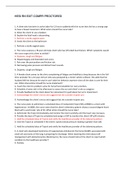
HESI RN EXIT COMPR PROCTORED 1. A client who has been in active labor for 12 hours suddenly tells the nurse that she has a strong urge to have a bowel movement. What action should the nurse take? A. Allow the client to use a bedpan. B. Explain the fetal head is descending. C. Perform a sterile vaginal exam. D. Assist the client to the bathroom C. Perform a sterile vaginal exam. 2. The nurse assesses a 78-year-old male client who has left sided heart failure. Which symptoms would the nurse expect this client to exhibit? A. Dyspnea, cough and fatigue. B. Hepatomegaly and distended neck veins. C. Pain over the pericardium and friction rub. D. Narrowing pulse pressure and distant heart sounds. A. Dyspnea, cough and fatigue. 3. A female client comes to the clinic complaining of fatigue and inability to sleep because she is the fulltime caretaker for a 22-year-old son who was paralyzed by a motor vehicle collision. She adds that her husband left her because he says he can't take her behavior anymore since all she does is care for their son. What intervention should the nurse implement? A. Teach the client to problem-solve for herself and establish her own priorities. B. Schedule a home visit in the afternoon to assess the son and client's role as caregiver. C. Provide feedback to the client about her atonement for guilt about her son's impairment. D. Acknowledge the client's stress and suggest that she consider respite care. D. Acknowledge the client's stress and suggest that she consider respite care. 4. The nurse plans to administer a scheduled dose of metoprolol (Toprol SR) at 0900 to a client with hypertension. At 0800, the nurse notes that the client's telemetry pattern shows a second-degree heart block with a ventricular rate of 50. What action should the nurse take? A. Administer the Toprol immediately and monitor the client carefully until the heart rate increases. B. Provide the dose of Toprol as scheduled and assign a UAP to monitor the client's BP q30 minutes. C. Hold the scheduled dose of Toprol and notify the healthcare provider of the telemetry pattern. D. Give the Toprol as scheduled if the client's systolic blood pressure reading is greater than 180. C. Hold the scheduled dose of Toprol and notify the healthcare provider of the telemetry pattern. 5. A client who developed Syndrome of Inappropriate Antidiuretic Hormone (SIADH) associated with small cell carcinoma of the lung is preparing for discharge. When teaching the client about selfmanagement with demeclocycline (Declomycin), the nurse should instruct the client to report which condition to the healthcare provider? A. Anxiety. B. Insomnia. C. Muscle cramping. D. Increased appetite C. Muscle cramping. 6. In determining the client position for insertion of an indwelling urinary catheter, it is most important for the nurse to recognize which client condition? A. High urinary pH. B. Fever. C. Abdominal ascites. D. Orthopnea. D. Orthopnea. 7. The nurse is reviewing a client's electrocardiogram and determines that the PR interval (PRI) is prolonged. What does this finding indicate? A. Inability of the SA node to initiate an impulse at the normal rate. B. Initiation of the impulse from a location outside the SA node. C. Increased conduction time from the SA node to the AV junction. D. Interference with the conduction through one or both ventricles. C. Increased conduction time from the SA node to the AV junction. 8. The nurse is teaching a male client with multiple sclerosis how to empty his bladder using the Crede Method. When performing a return demonstration, the client applies pressure to the umbilical area of his abdomen. What instruction should the nurse provide? A. Stroke the inner thigh below the perineum to initiate urinary flow. B. Pour warm water over the external sphincter at the distal glans. C. Apply downward manual pressure at the suprapubic region. D. Contract, hold, and then relax the pubococcygeal muscle. C. Apply downward manual pressure at the suprapubic region. 9. A 35-year-old female client has just been admitted to the postanesthesia recovery unit following a partial thyroidectomy. Which statement reflects the nurse's accurate understanding of the expected outcome for the client following this surgery? A. Supplemental hormonal therapy will probably be unnecessary. B. The thyroid will regenerate to a normal size within a few years. C. The client will be restricted from eating seafood. D. The remainder of the thyroid will be removed at a later date. A. Supplemental hormonal therapy will probably be unnecessary. 10. A client with gestational diabetes, at 39-weeks gestation, is in the second stage of labor. After delivery of the fetal head, the nurse recognizes that shoulder dystocia is occurring. What intervention should the nurse implement first? A. Lower the head of the bed and apply suprapubic pressure. B. Encourage the client to move to a hands-and-knees position. C. Prepare the client for an emergency cesarean birth. D. Assist the client to sharply flex her thighs up against the abdomen. D. Assist the client to sharply flex her thighs up against the abdomen. 11. The nurse should observe most closely for drug toxicity when a client receives a medication that has which characteristic? A. Rapid onset of action. B. Low bioavailability. .C Narrow therapeutic index. D. Short half-life. C Narrow therapeutic index. 12. Following insertion of a LeVeen shunt in a client with cirrhosis of the liver, which assessment finding indicates to the nurse that the shunt is effective? A. Decreased abdominal girth. B. Increased blood pressure. C. Clear breath sounds. D. Decreased serum albumin. A. Decreased abdominal girth. 13. When finding a client sitting on the floor, the nurse calls for help from the unlicensed assistive personnel (UAP). Which task should the nurse ask the UAP to do? A. Check for any abrasions or bruises. B. Help the client to stand. C. Get a blood pressure cuff. D. Report the fall to the nurse-manager. C. Get a blood pressure cuff. 14. During the initial newborn assessment, the nurse finds that a newborn's heart rate is irregular. Which intervention should the nurse implement? A. Notify the pediatrician immediately. B. Teach the parents about congenital heart defects. C. Document the finding in the infant's record. D. Apply oxygen per nasal cannula at 3 L/min. C. Document the finding in the infant's record. 15. A client is diagnosed with a frontal lobe glioma, which is a benign brain tumor. When teaching the client about the tumor, which information should the nurse consider? A. Surgery is not indicated unless the tumor becomes malignant. B. Vision and hearing will be affected in the future. C. If the tumor metastasizes, surgical intervention is necessary. D. Personality changes or expressive aphasia are likely. D. Personality changes or expressive aphasia are likely. 16. A client who has suffered 3rd degree burns over 60% of the body is admitted to the emergency department. The healthcare provider writes a prescription for "IV Lactated Ringer's 350 ml/hr". Which intervention should the nurse implement? A. Administer the Lactated Ringer's at 350 ml/hr via gravity infusion. B. Collaborate with the pharmacist to recalculate the infusion rate. C. Obtain an intravenous infusion pump prior to administering the IV. D. Call the healthcare provider and question the prescription C. Obtain an intravenous infusion pump prior to administering the IV. 17. A male client with HIV, who is being admitted to a healthcare facility, tells the nurse that he is concerned about his right to have access to his records and explanations regarding his treatment and the cost of such treatment. Which resource should guide the nurse's response to this client? A. The Patient's Bill of Rights. B. The hospital policy and procedure manual. C. The Nurse Practice Act. D. The client's Durable Power of Attorney. A. The Patient's Bill of Rights. 18. When assessing the oral temperature of an adult client at 6:00 pm, the nurse notes that the client's temperature at 6:00 am was 97.2, and is now 98.8. Which intervention should the nurse implement? A. Document this intermittent fever in the nurse's notes. B. Administer a PRN dose of medication to reduce the fever. C. Document this temperature variation on the graphic sheet. D. Notify the healthcare provider of the increase in temperature. C. Document this temperature variation on the graphic sheet. 19. It would be of greatest benefit for the client with which problem related to diabetes mellitus to change from the use of insulin syringes to using an insulin pen for medication administration? A. Lipodystrophy from continuous use of one injection site. B. Hyperglycemia due to noncompliance with diet. C. Diminished dexterity due to finger paresthesias. D. Blindness secondary to diabetic retinopathy C. Diminished dexterity due to finger paresthesias. 20. A one-year-old child with neuroblastoma is crying continuously and is curled into a fetal position. What action is most important for the nurse to implement? A. Give a prescribed analgesic. B. Reduce light and noise in the room. C. Offer the child a favorite toy to clutch. D. Ask the parent to rock the child. A. Give a prescribed analgesic. 21. A client diagnosed with major depression is being allowed a weekend pass from the psychiatric unit. Which instruction should the nurse provide to the client's family? A. Keep the client busy during the weekend. B. Instruct family to administer all client medications. C. Limit the number of visitors that come to the home. D. Involve the client in usual at-home activities. D. Involve the client in usual at-home activities. 22. The nurse is evaluating an asthmatic client's response to an inhaled corticosteroid medication. What assessment finding indicates that the medication has been effective in controlling the asthma symptoms? The client has increased A. Peak flow meter rates. B. Retraction of the chest muscles. C. Volume of expiratory wheezes. D. Viscosity of tracheal secretions. A. Peak flow meter rates. 23. In reviewing the goals of "Healthy People", the nurse determines that the community has a significant problem in preventing dental caries among children. To bring about change that addresses this identified community health problem, where is the best place to initiate a prevention program? A. WIC program intake offices. B. Pediatricians' offices in clinics. C. Social Security office. D. Dentists' offices in the community. A. WIC program intake offices. 24. In planning care for a client with a nursing diagnosis of "Impaired mobility", the nurse instructs the unlicensed assistive personnel (UAP) to assist the client with ambulation. Because the healthcare provider has prescribed bed rest for the client, what action should the nurse take? A. Update the plan of care to include ambulatory assistance by the nurse rather than the UAP. B. Instruct the UAP to provide sufficient assistance to ensure client safety during ambulation. C. Revise the prescribed medical treatment plan to include frequent ambulation with assistance. D. Change the planned interventions to include range of motion exercises rather than ambulation. D. Change the planned interventions to include range of motion exercises rather than ambulation. 25. When assigning an unlicensed assistive personnel (UAP) to assist a client with personal care, which client information is most important for the nurse to provide the UAP? A. The client's weight. B. IV site location. C. Turning schedule. D. Prescribed activity level. D. Prescribed activity level. 26. Within four weeks of childbirth, a client is admitted to the hospital for disorganized speech, bizarre behavior, and strange thoughts about her infant being possessed by demons. The nurse identifies a nursing diagnosis of, "Altered thought processes, secondary to" what condition? A. Postpartum psychosis. B. Postpartum depression. C. Paranoid personality. D. Adjustment disorder A. Postpartum psychosis. 27. The nurse is preparing to discharge a client from the hospital who has aphasia secondary to a cerebrovascular accident (CVA). What instruction should the nurse provide the family to assist them in communicating with the client? A. Provide ongoing stimulation for the client such as a radio turned on in the room. B. Speak much slower and louder to help the client with comprehension. C. Be consistent in using the same words each time a question is asked. D. Give detailed explanations before assisting the client with any care. C. Be consistent in using the same words each time a question is asked. 28. The intensive care department is full and short staffed, so the nursing supervisor informs the charge nurse in the medical department that one nurse must float to the ICU. Which nurse should the medical department charge nurse send to the intensive care department? A. A staff nurse who was sent to work in the intensive care department yesterday. B. A nurse who has been working the medical floor since graduation one year ago. C. A nurse who has recently transferred from the emergency room to the medical floor. D. A staff nurse who was cross-trained to work in the critical care department. D. A staff nurse who was cross-trained to work in the critical care department. 29. A mother brings her newborn infant to the well-baby clinic for the one-month check-up. The nurse reviews the infant's records and identifies that the newborn received the first dose of the HBV immunization upon discharge from the newborn nursery. When should the nurse recommend the administration of the next booster for the HBV series? A. At the next clinic visit, or 3-months of age. B. During this visit, one-month of age. C. The last two doses should be administered at 11-12 years of age. D. At 6 months of age. B. During this visit, one-month of age. 30. When assessing a restless intubated client who is on a mechanical ventilator, the nurse auscultates breath sounds on the right side of the chest only. What action should the nurse implement next? A. Provide comfort and sedation for the client. B. Mark the lip line on the tube with indelible ink. C. Apply soft wrist restraints per protocol. D. Reposition the depth of the endotracheal tube. D. Reposition the depth of the endotracheal tube. 31. A male client taking several medications complains of sexual dysfunction. The nurse knows that this is a side effect commonly associated with which of his current medications? A. Aluminum hydroxide (Mylanta). B. Theophylline (Theo-dur). C. Ampicillin (Omnipen). D. Enalapril maleate (Vasotec). D. Enalapril maleate (Vasotec). 32. The parents of two children with sickle cell disease ask the nurse to explain why both of their children have this disease. Which concept should the nurse use to provide an explanation? A. The chances of two children in a family not having the sickle cell disease is 50%. B. Each child has a 25% chance of inheriting the sickle cell trait from both parents. C. All of your children will be carriers of the sickle cell trait. D. Children of parents with the trait will manifest the disease. B. Each child has a 25% chance of inheriting the sickle cell trait from both parents. 33. A client with a cervical spinal cord injury is brought to the emergency center. What should be the nurse's priority assessment? A. Obtain injury and health history. B. Check the blood pressure. C. Assess the respiratory pattern. D. Assess ability to move extremities. C. Assess the respiratory pattern. 34. A 13-year-old female client is evaluated at a mental health clinic because her parents suspect she is using an illicit substance. Symptoms reported to healthcare provider include sleep disturbances, slurred speech, mild hand tremors, and trouble hearing. Based on these symptoms, the nurse should screen for which substance? A. Ecstasy. B. Crack cocaine. C. Marijuana. D. Paint thinner. D. Paint thinner. 35. The charge nurse is developing the nursing guidelines for a coronary care unit. Which reference is likely to be the most useful in developing these guidelines? A. The American Heart Association's recommendations on diet and lifestyle. B. The Patient's Bill of Rights of 1990. C. The Scope of Standards of Practice from the American Nurses' Association. D. The Americans with Disability Act of 1990. C. The Scope of Standards of Practice from the American Nurses' Association. 36. A male client who is in the day room becomes increasingly angry and aggressive when he is denied a day-pass. Which action should the nurse implement? A. Instruct the client to sit down and be quiet. B. Decrease the volume on the television set. C. Tell him he can have a day pass if he calms down. D. Put the client's behavior on extinction. B. Decrease the volume on the television set. 37. The nurse is assessing a client following a thoracotomy and left lung pneumonectomy. What assessment finding should the nurse anticipate? A. Absent breath sounds on the left side of the chest. B. Decreased breath sounds on the left, clear breath sounds on the right. C. Diminished breath sounds auscultated bilaterally. D. Crackles and wheezes auscultated in the right lung fields. A. Absent breath sounds on the left side of the chest. 38. A male client with Type 1 diabetes mellitus takes a combination of short-acting and intermediateacting insulin drugs. The client complains of headaches when awakening and his blood glucose average for the past week has been 210 mg/dl. The nurse recognizes the client is experiencing a daily Somogyi, or rebound, effect. Which dosing method is likely to relieve these symptoms? A. Increase the short-acting dose before lunchtime. B. Move the PM intermediate-acting dose to bedtime. C. Delay the morning doses until after breakfast. D. Increase the intermediate-acting dose with evening meal. B. Move the PM intermediate-acting dose to bedtime. 39. When obtaining a throat culture from a 6-year-old with possible streptococcal infection, which action is most important for the nurse to implement? A. Instruct the child to look at the ceiling and open the mouth widely. B. Allow the child to hold the tongue depressor and practice saying "Ah". C. Encourage the parent to hold the child during the procedure. D. Swab the child's erythematous oropharyngeal surfaces or tonsilar pustules. D. Swab the child's erythematous oropharyngeal surfaces or tonsilar pustules. 40. The nurse is caring for a 42-year-old male client who is excreting less sodium than he is consuming. If this condition continues, what complication can the nurse expect this client to exhibit? A. Hyponatremia. B. Edema. C. Dehydration. D. Azotemia. B. Edema. 41. Which condition would likely cause secondary polycythemia? A. Acute blood loss. B. Graft versus host disease. C. Hereditary spherocytosis. D. High altitude exposure. D. High altitude exposure. 42. An infant is treated for intussusception with hydrostatic reduction. What instruction should the nurse include in the parents' teaching plan? A. Skills needed for care of a stoma. B. Steps in tube feeding administration. C. Low-fat, high-protein diet. D. Signs and symptoms of recurrence. D. Signs and symptoms of recurrence. 43. The nurse is planning care for a 48-year-old client, diagnosed with schizophrenia at age 25, who has been taking antipsychotic drugs since diagnosis. Long-term use of these drugs is associated with which side effect? A. Dystonia. B. Akathisia. C. Tardive dyskinesia. D. Parkinsonism. C. Tardive dyskinesia. 44. What instruction is most important for the nurse to provide a client with neutropenia? A. Avoid sources of potential infection. B. Take precautions to minimize bleeding. C. Schedule regular rest periods. D. Avoid exposure to excessive ultraviolet light. A. Avoid sources of potential infection. 45. A client with acute laryngitis reports feeling "short of breath". The nurse assesses that the client's respiratory rate has increased from 16/minute to 28/minute. What intervention should the nurse implement? A. Assess the client for stridor and increased respiratory effort. B. Administer an intravenous analgesic per PRN protocol. C. Provide written means of communication for the client. D. Determine the client's recent exposure to irritating substances. A. Assess the client for stridor and increased respiratory effort. 46. When caring for a client who had a craniotomy yesterday for removal of a pituitary tumor, which finding indicates to the nurse that further information is needed? A. White blood cells (WBC) are 11,000/mm and glucose is 138 mg/dl. B. Suture line is slightly reddened and swollen. C. Urine output for 8 hours is 2,000 ml with a specific gravity of 1.001. D. Glasgow come scale (GCS) score is 14. C. Urine output for 8 hours is 2,000 ml with a specific gravity of 1.001. 47. The nurse is working with an interdisciplinary group to write procedures for assessment of clients from a multiracial inner city population. The guidelines include a statement that reads, "Remember that all Hispanic clients may not wish to give personal medical information to a stranger." Which action should the nurse take? A. Conclude that this guideline is written in a culturally sensitive context. B. Suggest that the client assessment address this ethnicity group. C. Revise the guideline to include a checklist that provides a racial profile. D. Recommend changing the language that stereotypes one ethnic group. D. Recommend changing the language that stereotypes one ethnic group. 48. What nursing action has the highest priority in preventing postoperative bleeding following a submucosal resection for a deviated septum? A. Reinforce pressure-dressing PRN. B. Provide mouth care hourly. C. Maintain intact nasal packing. D. Instruct client to expectorate secretions. C. Maintain intact nasal packing. 49. A female client chooses to have a prophylactic mastectomy because she has a positive BRCA1 mutation, her mother died of breast cancer at age 30, and her cousin was diagnosed with breast cancer at age 28. Which intervention is most critical for the nurse to include in this client's immediate postoperative plan of care? A. Review information about available reconstruction choices. B. Determine the client's understanding of the risk for ovarian cancer. C. Ensure adequate pain control using postoperative analgesics. D. Assess the client's emotional reaction to prophylactic surgery C. Ensure adequate pain control using postoperative analgesics. 50. The psychiatric nurse is called to a train derailment that was likely caused by a terrorist bomb. In triaging those in need of immediate care, what is the priority ranking for these cases? (Arrange these cases in order of priority, with the top item requiring the most immediate care and the bottom item requiring the least priority care.) 4 - A mother and father have just arrived on the scene looking 2 - A woman sitting on the ground with a blanket wrapped 3 - A crying child being held by another passenger, who is 1 - A middle-aged man who is wandering around the scene ... 51. A client with pneumonia is admitted with severe shortness of breath and arterial blood gases of pH 7.30, PaO2 60 mm Hg, PaCO2 62 mm Hg, HCO2 35 mEq/liter. Which information should the nurse communicate immediately to the healthcare provider? A. Occasional premature ventricular contractions. B. Drowsiness and difficulty in arousing. C. Heart rate of 115 beats/minute. D. Complaint of a headache. B. Drowsiness and difficulty in arousing. 52. The nurse is teaching a primigravida, who describes herself as a lacto-vegetarian, about nutrition during pregnancy. Which foods should the nurse encourage this client to include in her diet? A. Cheese, green salads, and fruit. B. Chicken, milk, and green vegetables. C. Eggs, milk, and green salads. D. Fish, brown rice and fruits A. Cheese, green salads, and fruit. 53. The mother of a 5-year-old boy calls the emergency room and reports that a pot of hot soup was pulled off the stove onto her child's right arm and leg. What should the nurse tell this mother to do first? A. Put him on a warm surface until an ambulance can arrive. B. Place him in a cool bath and remove his clothing. C. Wrap the child in a blanket and bring him to the hospital immediately. D. Immobilize him by wrapping him tightly in a clean sheet. C. Wrap the child in a blanket and bring him to the hospital immediately. 54. A nurse is caring for a client with a diagnosis of acute renal failure who complains of shortness of breath, weakness, headache, and swelling of the lower legs and feet. What nursing intervention should be completed immediately? A. Administer PRN dose of ibuprofen (Motrin). B. Elevate the head of the bed at least 45 degrees. C. Percuss abdomen to check for ascites. D. Encourage the client to deep breathe and cough. B. Elevate the head of the bed at least 45 degrees. 55. A client with acute low back pain reports pain radiating down the buttock to below the knee. Initial nursing actions should be based on which interpretation of these symptoms? A. Ischemic pain is occurring due to arterial compression. B. The client is describing classic signs of phantom pain. C. This pain is along the path of the sciatic nerve. D. The client is experiencing severe muscle strain and spasm. C. This pain is along the path of the sciatic nerve. 56. The nurse is attempting to teach a male client newly diagnosed with diabetes how to administer insulin. When the nurse attempts to answer the client's questions he becomes angry and tells the nurse that the entire process is just too much to learn. What action is best for the nurse to take? A. Encourage the family to learn how to administer the insulin until the client is better able to handle the procedure. B. Ignore the client's outbursts, and continue with the instructions. C. Acknowledge the client's feelings, and tell him that he will eventually be able to do self- administration. D. Explain to the client that he cannot go home until he learns to administer the insulin. C. Acknowledge the client's feelings, and tell him that he will eventually be able to do selfadministration. 57. In evaluating the effectiveness of a client's nocturnal sleep patterns, what information is best for the nurse to obtain? A. The number of times the client voids during the night. B. Recall of experiencing dreaming during the night. C. The number of hours the client sleeps each night. D. Self-evaluation of feeling well rested upon awakening. D. Self-evaluation of feeling well rested upon awakening. 58. Four clients present to the Labor and Delivery unit at the same time. The nurse should assess the client with which complaint first? A. Has not felt the baby for the last 12 hours. B. Contractions every 10 minutes. C. Urinary frequency and burning on urination. D. Abdominal pain and bright red bleeding. D. Abdominal pain and bright red bleeding 59. The nurse is conducting discharge teaching about the antianxiety drug diazepam (Valium). Which instruction has the highest priority for inclusion in the teaching plan? A. If muscle spasms occur during treatment, notify the healthcare provider immediately. B. Crush tablets and take with food or water if they are difficult to swallow. C. Notify the healthcare provider if anxiety continues two weeks after beginning treatment. D. Evaluate the ingredients of all over-the-counter drugs for alcohol content. D. Evaluate the ingredients of all over-the-counter drugs for alcohol content. 60. A male Muslin client with pneumonia is scheduled to receive a dose of an intravenous antibiotic but refuses to allow the nurse to begin the medication, stating he cannot allow fluids to enter his body once he is cleansed for prayer. Which action should the nurse implement? A. Reschedule administration of the antibiotic until after he completes his prayers. B. Instruct the client that the antibiotics must be given on time to be effective. C. Ask the pharmacist to supply an oral form of the antibiotic for the client. D. Notify the healthcare provider that the client has refused the scheduled antibiotic. A. Reschedule administration of the antibiotic until after he completes his prayers. 61. After administering a medication through a nasogastric tube connected to suction, what action should the nurse take first? A. Clamp the tube. B. Re-connect the tube to the suction. C. Document the medication administration. D. Discard the supplies used. B. Re-connect the tube to the suction. 62. Which of these women, all of whom have recently discovered a new breast lump, is at greatest risk for a diagnosis of breast cancer? A. A 51-year-old whose mother had breast cancer and describes the lump as non-tender. B. A 22-year-old who has fibrocystic breast-disease and describes the lump as painful. C. A 45-year-old who is taking estrogen therapy and has had four children before the age of 28. D. A 55-year-old whose weight is normal for her height, and had one child at age 31. A. A 51-year-old whose mother had breast cancer and describes the lump as non-tender. 63. Which client situation requires the most immediate intervention by the nurse? A. A stage II pressure ulcer located on the client's sacrum is draining a moderate amount of purulent drainage. B. A stage IV pressure ulcer has a five-centimeter area of necrosis surrounded by pale pink tissue. C. A four-centimeter area of dehiscence is observed on a client's abdominal incision one day after surgery. D. A six-centimeter area of reactive hyperemia is observed over the left trochanter of a bedfast client. C. A four-centimeter area of dehiscence is observed on a client's abdominal incision one day after surgery. 64. On admission, the healthcare provider prescribes a broad-spectrum antibiotic, ticarcillin (Ticar), for a client with a gram-negative infection. Before administering the first dose, it is important for the nurse to implement which prescription? A. Irrigation and topical antibiotic application to wound area. B. Wound and blood specimens for culture and sensitivity. C. Monitor for signs of sodium and fluid retention. D. Complete blood and serum electrolytes. B. Wound and blood specimens for culture and sensitivity. 65. The nurse observes that a client receiving an aminoglycoside for an infection appears dizzy when ambulating. The nurse should consult with the healthcare provider regarding the need for which test? A. Peak and trough. B. Creatinine clearance. C. Culture and sensitivity. D. White blood cell count. A. Peak and trough. 66. The nurse is administering a continuous IV infusion of dopamine (Intropin) to a client. Which assessment finding indicates that the therapeutic effect has been achieved? A. Clear breath sounds bilaterally. B. Decrease in central venous pressure. C. Conversion to normal sinus rhythm. D. Increased blood pressure. D. Increased blood pressure. 67. The wife of a client with terminal cancer gives the nurse a copy of her husband's living will. What action should the nurse take? A. Alert the nursing staff of a client's do not resuscitate status. B. Place a certified copy of the living will in the client's chart. C. Notify the healthcare provider of the client's wishes. D. Facilitate a family meeting with the palliative care team C. Notify the healthcare provider of the client's wishes. 68. A client with a fractured femur is placed in traction to immobilize the fracture. When transporting this client to another room, how should the nurse handle the traction? A. Prevent movement of the weights by resting them on top of the bed until arrival. B. Increase the amount of weights by 50% during the transport. C. Release the weight during transport and reconnect them upon arrival. D. Leave the weights in place for the full duration of the transport. D. Leave the weights in place for the full duration of the transport. 69. The healthcare provider prescribed triazolam (Halcion) 500 mcg for a client with insomnia. The pharmacy supplies Halcion in 0.25 mg tablets. How many tablets should the nurse administer? (Enter numeric value only.) 2 70. A client who is being prepared for discharge following a transurethral resection of the prostate (TURP) tells the nurse that he is concerned about becoming constipated. Which instruction should the nurse provide to this client? A. Use glycerin rectal suppositories as needed. B. Use oral stool softeners daily. C. Use a soft-tip mineral oil enema as needed. D. Take a laxative of choice daily. B. Use oral stool softeners daily. 71. A 3-year-old child visits the clinic with both parents for a well-child check-up. The nurse auscultates bronchovesicular breath sounds in the peripheral lung fields and assesses the child's respiratory rate of 28 breaths/minute. Which interpretation of this finding is accurate? A. An expected finding. B. Tachypnea. C. Asthmatic wheeze. D. Mucus plug in the bronchus. A. An expected finding. 72. The nurse is providing preoperative teaching to a female client scheduled for surgery tomorrow at an ambulatory surgery center. Which instruction is most important for the nurse to include? A. Teach the client how to describe her pain using a numeric pain scale. B. Advise the client to make arrangements for someone to drive her home. C. Instruct the client not to bring any valuable jewelry to the surgery center. D. Explain to the client that an intravenous line will be started before surgery. B. Advise the client to make arrangements for someone to drive her home. 73. In performing an initial assessment of an infant with cryptorchidism the nurse should also assess for which finding? A. Abnormal bowel sounds and closed fontanels. B. A heart murmur and poor weight gain. C. Difficulty feeding and a history of frequent emesis. D.
Written for
- Institution
- HESI RN EXIT COMPR PROCTORED
- Course
- HESI RN EXIT COMPR PROCTORED
Document information
- Uploaded on
- September 9, 2021
- Number of pages
- 30
- Written in
- 2021/2022
- Type
- Exam (elaborations)
- Contains
- Questions & answers
Subjects
-
hesi rn exit compr proctored 1 a client who has been in active labor for 12 hours suddenly tells the nurse that she has a strong urge to have a bowel movement what action should the nurse take a a

Also available in package deal