
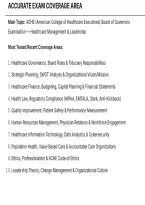
ACCURATE EXAM COVERAGE AREA
Main Topic: ACHE (American College of Healthcare Executives) Board of Governors
Examination — Healthcare Management & Leadership
Most Tested Recent Coverage Areas:
1. Healthcare Governance, Board Roles & Fiduciary Responsibilities
2. Strategic Planning, SWOT Analysis & Organizational Vision/Mission
3. Healthcare Finance, Budgeting, Capital Planning & Financial Statements
4. Health Law, Regulatory Compliance (HIPAA, EMTALA, Stark, Anti-Kickback)
5. Quality Improvement, Patient Safety & Performance Measurement
6. Human Resources Management, Physician Relations & Workforce Engagement
7. Healthcare Information Technology, Data Analytics & Cybersecurity
8. Population Health, Value-Based Care & Accountable Care Organizations
9. Ethics, Professionalism & ACHE Code of Ethics
10. Leadership Theory, Change Management & Organizational Culture
,Ache Bog Exam
250 DETAILED MULTIPLE-CHOICE QUESTIONS WITH ANSWERS AND
RATIONALES
1. Which of the following best describes the primary fiduciary duty of a healthcare
organization's board of directors regarding financial oversight?
A. Maximizing short-term profits for shareholders
B. Ensuring the organization's financial viability while fulfilling its charitable mission
C. Delegating all financial decisions to the chief executive officer
D. Avoiding involvement in budget approval processes
Answer: B
Rationale: Board members have a fiduciary duty to ensure financial sustainability while
preserving the organization's mission. Profit maximization is not the primary goal of
nonprofit healthcare organizations, and boards cannot abdicate financial oversight to the
CEO.
,2. A hospital CEO is developing a strategic plan and wants to assess the organization's
internal strengths and weaknesses alongside external opportunities and threats.
Which framework should be used?
A. Balanced Scorecard
B. SWOT analysis
C. Pareto analysis
D. Fishbone diagram
Answer: B
Rationale: SWOT analysis specifically examines internal Strengths and Weaknesses and
external Opportunities and Threats, making it the appropriate strategic planning tool for
this assessment.
3. Under the Emergency Medical Treatment and Labor Act (EMTALA), which of the
following obligations applies to Medicare-participating hospitals when a patient
presents to the emergency department?
A. Providing treatment only after insurance verification
B. Conducting a medical screening examination and stabilizing emergency conditions
, C. Transferring all uninsured patients to public hospitals
D. Requiring prepayment before triage
Answer: B
Rationale: EMTALA mandates that Medicare-participating hospitals with emergency
departments provide a medical screening examination and stabilizing treatment
regardless of ability to pay, insurance status, or citizenship.
4. Which leadership theory emphasizes that effective leaders adapt their style based
on the situation and the maturity level of followers?
A. Trait theory
B. Situational leadership theory
C. Great man theory
D. Psychodynamic theory
Answer: B
Rationale: Situational leadership theory, developed by Hersey and Blanchard, holds that
leaders must adjust their task and relationship behaviors according to followers'
readiness and the demands of the situation.


