
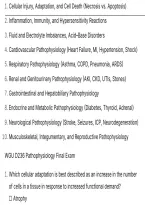
1. Cellular Injury, Adaptation, and Cell Death (Necrosis vs. Apoptosis)
2. Inflammation, Immunity, and Hypersensitivity Reactions
3. Fluid and Electrolyte Imbalances, Acid–Base Disorders
4. Cardiovascular Pathophysiology (Heart Failure, MI, Hypertension, Shock)
5. Respiratory Pathophysiology (Asthma, COPD, Pneumonia, ARDS)
6. Renal and Genitourinary Pathophysiology (AKI, CKD, UTIs, Stones)
7. Gastrointestinal and Hepatobiliary Pathophysiology
8. Endocrine and Metabolic Pathophysiology (Diabetes, Thyroid, Adrenal)
9. Neurological Pathophysiology (Stroke, Seizures, ICP, Neurodegeneration)
10. Musculoskeletal, Integumentary, and Reproductive Pathophysiology
WGU D236 Pathophysiology Final Exam
1. Which cellular adaptation is best described as an increase in the number
of cells in a tissue in response to increased functional demand?
☐ Atrophy
, ☐ Metaplasia
☐ Hyperplasia
☑ Hypertrophy
Rationale: Hyperplasia is an increase in cell number, whereas hypertrophy is
an increase in cell size. Atrophy is shrinkage and metaplasia is replacement
of one mature cell type with another.
2. A patient with chronic hypertension develops thickening of the left
ventricular myocardium. Which cellular adaptation does this represent?
☑ Hypertrophy
☐ Hyperplasia
☐ Dysplasia
☐ Metaplasia
Rationale: Cardiac muscle cells cannot divide significantly, so increased
workload leads to hypertrophy (increased cell size), not hyperplasia.
,3. Which type of cell death is characterized by cell swelling, membrane
rupture, and surrounding inflammation?
☐ Apoptosis
☑ Necrosis
☐ Autophagy
☐ Dysplasia
Rationale: Necrosis involves loss of membrane integrity, cell swelling, and
inflammation, whereas apoptosis is programmed, energy-dependent, and
non-inflammatory.
4. A biopsy of a smoker's bronchial mucosa shows replacement of normal
ciliated columnar epithelium with stratified squamous epithelium. This
finding is best described as:
☐ Hyperplasia
☐ Atrophy
☑ Metaplasia
☐ Dysplasia
, Rationale: Metaplasia is reversible replacement of one mature cell type by
another better able to withstand stress; squamous metaplasia occurs in
smokers' airways.
5. Which intracellular accumulation is most characteristic of fatty change in
the liver due to alcohol abuse?
☐ Calcium
☐ Bilirubin
☑ Triglycerides
☐ Hemosiderin
Rationale: Alcoholic liver injury impairs lipid metabolism, causing
accumulation of triglycerides within hepatocytes (steatosis).
6. Which of the following is the primary mechanism of cellular injury caused
by ischemia?
☐ Excess oxygen delivery
☑ ATP depletion and anaerobic metabolism


