NR 293 PHARMACOLOGY EXAM 2 STUDY GUIDE |
CHAMBERLAIN UNIVERSITY | KEY CONCEPTS & EXAM
REVIEW
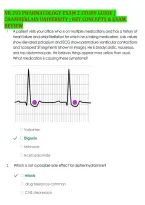
1. A patient visits your office who is on multiple medications and has a history of
heart failure and atrial fibrillation for which he is taking medication. Lab values
show elevated potassium and ECG shows premature ventricular contractions
and 'scooped' ST segments (shown in image). He is bradycardic, nauseous,
and has abdominal pain. He believes things appear more yellow than usual.
What medication is causing these symptoms?
Valsartan
Digoxin
Milrinone
Acetazolamide
2. Which is not a possible side effect for diphenhydramine?
miosis
drug tolerance-common
CNS depression
, dry mouth
3. What is the pharmacological class of loratadine?
Beta blocker
Antihistamine
Anticoagulant
Corticosteroid
4. What is the primary reason for transitioning a patient from heparin to
warfarin?
To increase blood pressure.
To provide long-term anticoagulation therapy.
To treat respiratory infections.
To reduce heart rate.
5. What is a key step in the application of transdermal nitroglycerin patches?
Use the patch on broken skin.
Clean and dry the skin before application.
Apply the patch to a hairy area.
Apply the patch immediately after bathing.
6. Describe the role of protamine sulfate in the management of patients
receiving heparin therapy.
Protamine sulfate is used to treat hypertension in patients on heparin.
Protamine sulfate is an alternative anticoagulant used instead of
heparin.
, Protamine sulfate is used to neutralize the anticoagulant effects of
heparin in cases of overdose or when rapid reversal is needed.
Protamine sulfate enhances the effects of heparin to prevent clot
formation.
7. Describe why hypersensitivity is a contraindication for fluticasone use.
Hypersensitivity only affects the drug's dosage.
Hypersensitivity is irrelevant to the drug's mechanism of action.
Hypersensitivity can lead to severe allergic reactions, making
fluticasone unsafe for those individuals.
Hypersensitivity indicates that the drug will be ineffective.
8. What type of medication is montelukast classified as?
Anticoagulant
Beta blocker
Leukotriene receptor antagonist
Corticosteroid
9. Atorvastatin is a...
Ion channel blocker
ACE inhibitor
Angiotensin Receptor Blocker
HMG -CoA reductase inhibitor
10. What is one of the common side effects associated with the use of
nitroglycerin?
, Dizziness
Headache
Insomnia
Nausea
11. What is a known adverse effect associated with the use of milrinone
(Primacor)?
Hypotension
Headache
Rash
Nausea
12. Describe the primary purpose of antiplatelet agents like aspirin and
clopidogrel in cardiovascular therapy.
Antiplatelet agents are used to treat respiratory conditions.
Antiplatelet agents prevent blood clots by inhibiting platelet
aggregation.
Antiplatelet agents increase blood pressure.
Antiplatelet agents promote platelet production.
13. A patient taking nitroglycerin reports experiencing frequent headaches.
What should the nurse advise the patient to manage this side effect?
Increase the dosage of nitroglycerin.
Use over-the-counter analgesics as needed.
Switch to a different medication without consulting a doctor.
Stop taking the medication immediately.