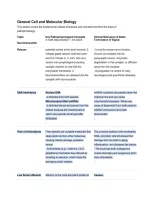
General Cell and Molecular Biology
This section covers the fundamental cellular processes and concepts that form the basis of
pathophysiology.
Topic Key Pathophysiological Concepts Clinical Relevance & Notes
A multi-step process: 1. An action Termination of Signal:
Neurotransmitter
Release potential arrives at the axon terminal. 2. Crucial for proper nerve function.
Voltage-gated calcium channels open, Occurs via reuptake into the
and Ca²+ floods in. 3. Ca²+ acts as a presynaptic neuron, enzymatic
sensor (via synaptotagmin) causing degradation in the synapse, or diffusion
synaptic vesicles to fuse with the away from the synapse
presynaptic membrane. 4. . Dysregulation is central to many
Neurotransmitters are released into the neurological and psychiatric disorders.
synaptic cleft via exocytosis
DNA Inheritance Nuclear DNA mtDNA mutations are passed down the
is inherited from both parents. maternal line and can cause
Mitochondrial DNA (mtDNA) mitochondrial diseases. While rare,
is inherited almost exclusively from the cases of biparental (from both parents)
mother because the mitochondria in mtDNA inheritance have been
sperm are typically destroyed after documented
fertilization .
.
Role of Antioxidants Free radicals are unstable molecules that This process protects cell membranes,
steal electrons from other molecules, DNA, and other vital structures from
causing cellular damage (oxidative damage that can lead to aging,
stress) inflammation, and diseases like cancer
. Antioxidants (e.g., Vitamins C & E, . The body has both endogenous
glutathione) neutralize free radicals by (made internally) and exogenous (from
donating an electron, which stops the diet) antioxidants
damaging chain reaction .
Low Serum Albumin Albumin is the most abundant protein in Causes:
, (Hypoalbuminemia) blood plasma and is responsible for Often seen in liver disease (decreased
maintaining colloid osmotic pressure production), kidney disease (increased
(oncotic pressure), which keeps fluid loss), and severe malnutrition
inside the blood vessels .
. When albumin is low, this pressure Presentation:
drops. Hydrostatic pressure then pushes Peripheral edema (swelling in feet,
fluid out of the vessels into the interstitial ankles), ascites (abdominal fluid), and
tissue, causing edema pulmonary edema
. .
Bone vs. Cartilage Bone: Bone's vascularity allows for faster
A hard, highly vascularized connective healing compared to cartilage, which
tissue with a calcified matrix made of heals very slowly due to its lack of
collagen and minerals (hydroxyapatite). direct blood supply
Contains cells called osteocytes .
.
Cartilage:
A flexible, avascular connective tissue
with a gel-like matrix. Contains cells
called chondrocytes. It is resistant to
compression and serves as a cushion in
joints
.
Genetics, Disease, and Cancer Pathophysiology
Understanding how genetic variations and cellular changes lead to disease, including the
development and spread of cancer.
Key Genetic Principles
Term Definition & Pathophysiological Relevance Example
Homozygous An individual has two identical alleles In Phenylketonuria (PKU), an individual
(versions) for a particular gene must be homozygous for the recessive
. If the allele is recessive and disease- allele of the PAH gene to have the
causing, being homozygous will result in the disorder
expression of the disease. .