26,
e 14:11:38
of 810/20/2026https://www.stuvia.com/user/????????????????????"OP@)(@)(*#@(#*@#&*$^&)(*@)$*$(&(Y&*&%Y&*(@)&$(&%*&%*&(&%@&*($#(*&98oMicrobiology
Page
AMPage
1 of 810/20/2026https://www.stuvia.com/user/????????????????????"OP@)(@)(*#@(#*@#&*$^&)(*@)$*$(&(Y&*&%Y&*(@)&$(&%*&%*&(&%@&*($#(*&98oMicrobiology
1 of 810/20/2026https://www.stuvia.com/user/????????????????????"OP@)(@)(*#@(#*@#&*$^&)(*@)$*$(&(Y&*&%Y&*(@)&$(&%*&%*&(&%@&*($#(*&98oMicrobiology
Foundations_Foundations_
Key Foundations_
Discoveries,
Key Cell
Discoveries,
KeyStructures,
Discoveries,
Celland
Structures,
Cell
Disease
Structures,
and
Mechanisms.pdf10/20/2026,
Disease
and Disease
Mechanisms.pdf10/20/2026,
Mechanisms.pdf10/20/2026,
4:09:33 AM 4:09:334:
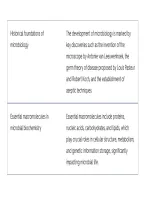
Historical foundations of The development of microbiology is marked by
microbiology key discoveries such as the invention of the
microscope by Antonie van Leeuwenhoek, the
germ theory of disease proposed by Louis Pasteur
and Robert Koch, and the establishment of
aseptic techniques.
Essential macromolecules in Essential macromolecules include proteins,
microbial biochemistry nucleic acids, carbohydrates, and lipids, which
play crucial roles in cellular structure, metabolism,
and genetic information storage, significantly
impacting microbial life.
e 1Page
of 810/20/2026https://www.stuvia.com/user/????????????????????"OP@)(@)(*#@(#*@#&*$^&)(*@)$*$(&(Y&*&%Y&*(@)&$(&%*&%*&(&%@&*($#(*&98oMicrobiology
1Page
of 810/20/2026https://www.stuvia.com/user/????????????????????"OP@)(@)(*#@(#*@#&*$^&)(*@)$*$(&(Y&*&%Y&*(@)&$(&%*&%*&(&%@&*($#(*&98oMicrobiology
1 of 810/20/2026https://www.stuvia.com/user/????????????????????"OP@)(@)(*#@(#*@#&*$^&)(*@)$*$(&(Y&*&%Y&*(@)&$(&%*&%*&(&%@&*($#(*&98oMicrobiology
Foundations_
Foundations_
Foundations_
Key Discoveries,
Key Discoveries,
Key Cell
Discoveries,
Structures,
Cell Structures,
Celland
Structures,
Disease
and Disease
and
Mechanisms.pdf10/20/2026,
Disease
Mechanisms.pdf10/20/2026,
Mechanisms.pdf10/20/2026,
4:09:334:09:33
AM 4:09:33
AM
,26,
e 24:11:38
of 810/20/2026https://www.stuvia.com/user/????????????????????"OP@)(@)(*#@(#*@#&*$^&)(*@)$*$(&(Y&*&%Y&*(@)&$(&%*&%*&(&%@&*($#(*&98oMicrobiology
Page
AMPage
2 of 810/20/2026https://www.stuvia.com/user/????????????????????"OP@)(@)(*#@(#*@#&*$^&)(*@)$*$(&(Y&*&%Y&*(@)&$(&%*&%*&(&%@&*($#(*&98oMicrobiology
2 of 810/20/2026https://www.stuvia.com/user/????????????????????"OP@)(@)(*#@(#*@#&*$^&)(*@)$*$(&(Y&*&%Y&*(@)&$(&%*&%*&(&%@&*($#(*&98oMicrobiology
Foundations_Foundations_
Key Foundations_
Discoveries,
Key Cell
Discoveries,
KeyStructures,
Discoveries,
Celland
Structures,
Cell
Disease
Structures,
and
Mechanisms.pdf10/20/2026,
Disease
and Disease
Mechanisms.pdf10/20/2026,
Mechanisms.pdf10/20/2026,
4:09:33 AM 4:09:334:
Prokaryotic form and function Prokaryotes, including bacteria and archaea, are
characterized by their lack of a nucleus, unique
cell wall structures, and diverse metabolic
pathways, allowing them to thrive in various
environments.
Structure of eukaryotic cells Eukaryotic cells have a defined nucleus and
membrane-bound organelles, such as
mitochondria and the endoplasmic reticulum,
which facilitate complex cellular functions and
processes.
e 2Page
of 810/20/2026https://www.stuvia.com/user/????????????????????"OP@)(@)(*#@(#*@#&*$^&)(*@)$*$(&(Y&*&%Y&*(@)&$(&%*&%*&(&%@&*($#(*&98oMicrobiology
2Page
of 810/20/2026https://www.stuvia.com/user/????????????????????"OP@)(@)(*#@(#*@#&*$^&)(*@)$*$(&(Y&*&%Y&*(@)&$(&%*&%*&(&%@&*($#(*&98oMicrobiology
2 of 810/20/2026https://www.stuvia.com/user/????????????????????"OP@)(@)(*#@(#*@#&*$^&)(*@)$*$(&(Y&*&%Y&*(@)&$(&%*&%*&(&%@&*($#(*&98oMicrobiology
Foundations_
Foundations_
Foundations_
Key Discoveries,
Key Discoveries,
Key Cell
Discoveries,
Structures,
Cell Structures,
Celland
Structures,
Disease
and Disease
and
Mechanisms.pdf10/20/2026,
Disease
Mechanisms.pdf10/20/2026,
Mechanisms.pdf10/20/2026,
4:09:334:09:33
AM 4:09:33
AM