
TEST BANK
U/
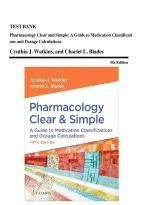
Pharmacology Clear and Simple: A Guide to Medication Classificati
U/ U/ U/ U/ U/ U/ U/ U/
ons and Dosage Calculations
U/ U/ U/
Cynthia J. Watkins, and Charlet L. Blades
U/ U/ U/ U/ U/ U/
5th Edition
U/
,Table of Contents
U/ U/
Nursing Educators Test Bank
U/ U/ U/ 1
Chapter 01 A Brief History of Pharmacology
U/ U/ U/ U/ U/ U/ 1
Chapter 02 Basics of Pharmacology
U/ U/ U/ U/ 10
Chapter 03 Patient Safety in Medication Administration
U/ U/ U/ U/ U/ U/ 18
Chapter 04 Regulations
U/ U/ 30
Chapter 05 Prescriptions and Labels
U/ U/ U/ U/ 40
Chapter 06 Review of Mathematics
U/ U/ U/ U/ 50
Chapter 07 Measurement Systems
U/ U/ U/ 55
Chapter 08 Dosage Calculations
U/ U/ U/ 60
Chapter 09 Enteral Medications and Administration
U/ U/ U/ U/ U/ 65
Chapter 10 Parenteral Medications and Administration
U/ U/ U/ U/ U/ 74
Chapter 11 Integumentary System Medications
U/ U/ U/ U/ 83
Chapter 12 Musculoskeletal System Medications
U/ U/ U/ U/ 92
Chapter 13 Nervous System Medications
U/ U/ U/ U/ 101
Chapter 14 Eye and Ear Medications
U/ U/ U/ U/ U/ 110
Chapter 15 Endocrine System Medications
U/ U/ U/ U/ 119
Chapter 16 Cardiovascular System Medications
U/ U/ U/ U/ 128
Chapter 17 Immunologic System Medications
U/ U/ U/ U/ 137
Chapter 18 Pulmonary System Medications
U/ U/ U/ U/ 146
Chapter 19 Gastrointestinal System Medications
U/ U/ U/ U/ 155
Chapter 20 Reproductive and Urinary System Medications
U/ U/ U/ U/ U/ U/ 164
Chapter 21 Vitamins, Minerals, Herbs, and Complementary and Alternative Medicine
U/ U/ U/ U/ U/ U/ U/ U/ U/
173
Medical Assisting Test Bank
U/ U/ U/ 182
Chapter 01 A Brief History of Pharmacology
U/ U/ U/ U/ U/ U/ 182
Chapter 02 Basics of Pharmacology
U/ U/ U/ U/ 191
Chapter 03 Patient Safety in Medication Administration
U/ U/ U/ U/ U/ U/ 200
Chapter 04 Regulations
U/ U/ 211
Chapter 05 Prescriptions and Labels
U/ U/ U/ U/ 223
Chapter 06 Review of Mathematics
U/ U/ U/ U/ 230
Chapter 07 Measurement Systems
U/ U/ U/ 244
Chapter 08 Dosage Calculations
U/ U/ U/ 253
Chapter 09 Enteral Medications and Administration
U/ U/ U/ U/ U/ 262
Chapter 10 Parenteral Medications and Administration
U/ U/ U/ U/ U/ 269
Chapter 11 Integumentary System Medications
U/ U/ U/ U/ 282
Chapter 12 Musculoskeletal System Medications
U/ U/ U/ U/ 291
Chapter 13 Nervous System Medications
U/ U/ U/ U/ 299
Chapter 14 Eye and Ear Medications
U/ U/ U/ U/ U/ 309
Chapter 15 Endocrine System Medications
U/ U/ U/ U/ 315
Chapter 16 Cardiovascular System Medications
U/ U/ U/ U/ 326
Chapter 17 Immunologic System Medications
U/ U/ U/ U/ 338
,Chapter 18 Pulmonary System Medications
U/ U/ U/ U/ 349
Chapter 19 Gastrointestinal System Medications
U/ U/ U/ U/ 357
Chapter 20 Reproductive and Urinary System Medications
U/ U/ U/ U/ U/ U/ 366
Chapter 21 Vitamins, Minerals, Herbs, and Complementary and Alternative Medicine
U/ U/ U/ U/ U/ U/ U/ U/ U/
376
, TestU/BankU/-
U/PharmacologyU/ClearU/andU/Simple,U/5thU/EditionU/(Watkins,U/2025)
Chapter 1. A Brief History of Pharmacology
U/ U/ U/ U/ U/ U/
MULTIPLE CHOICE U/
1. Which term best describes the process of utilizing genetic information to devel
U/ U/ U/ U/ U/ U/ U/ U/ U/ U/ U/
op pharmacological agents to treat diseases?
U/ U/ U/ U/ U/
a. Partially synthesized U/
b. Pharmacogenetics
c. Totally synthesized U/
d. Scientific method U/
U/ ANS: U / B
Feedback
A Partially synthesized refers to medications made by adding a pure chemical to a
U/ U/ U/ U/ U/ U/ U/ U/ U/ U/ U/ U/ U
natural substance.
/ U/
B Pharmacogenetics is the study of individual candidate genes as powerful tools to U/ U/ U/ U/ U/ U/ U/ U/ U/ U/ U/
explain interindividual variability in drug response.
U/ U/ U/ U/ U/ U/
C Totally synthesized refers to medications made by combining two or more pure
U/ U/ U/ U/ U/ U/ U/ U/ U/ U/ U/ U/
chemicals to produce a new substance that could be used as a medication.
U/ U/ U/ U/ U/ U/ U/ U/ U/ U/ U/ U/
D Scientific method refers to the process of using hypothesis, testing, and observat
U/ U/ U/ U/ U/ U/ U/ U/ U/ U/ U/
ion to make deductions.
U/ U/ U/
PTS: 1 REF: 5
2. A client has been prescribed diuretic therapy to treat fluid volume excess and wants to kn
U/ U/ U/ U/ U/ U/ U/ U/ U/ U/ U/ U/ U/ U/ U/
ow if any dietary modifications are necessary. Which of the following responses by the n
U/ U/ U/ U/ U/ U/ U/ U/ U/ U/ U/ U/ U/ U/
urse is best? U/ U/
a. “There is no need for any dietary modification as long as you eat a well-
U/ U/ U/ U/ U/ U/ U/ U/ U/ U/ U/ U/ U/ U/
balanced diet.” U/
b. “As long as you take the medication as prescribed, there should be no dieta
U/ U/ U/ U/ U/ U/ U/ U/ U/ U/ U/ U/ U/
ry modifications needed.”
U/ U/
c. “I need to verify the medication order in order to provide you with information.”
U/ U/ U/ U/ U/ U/ U/ U/ U/ U/ U/ U/ U/
d. “As long as you consume eight glasses of water a day, you will be able to repl
U/ U/ U/ U/ U/ U/ U/ U/ U/ U/ U/ U/ U/ U/ U/ U/
ace all fluid losses.” U/ U/ U/
ANS: U/U/ C
Feedback
A There are several types of diuretic medications that have different mechanisms
U/ U/ U/ U/ U/ U/ U/ U/ U/ U/
of action; therefore, this statement is not accurate. It is critical to know the
U/ U/ U/ U/ U/ U/ U/ U/ U/ U/ U/ U/ U/ U/
specific type of diuretic therapy that is prescribed in order to provide a logical r
U/ U/ U/ U/ U/ U/ U/ U/ U/ U/ U/ U/ U/ U/
esponse.
B Diuretic therapy is aimed at fluid reduction, and depending on the type of di
U/ U/ U/ U/ U/ U/ U/ U/ U/ U/ U/ U/ U/
uretic therapy, electrolyte loss can also occur. This takes place based on the m
U/ U/ U/ U/ U/ U/ U/ U/ U/ U/ U/ U/ U/
echanism of action for the prescribed therapy. This is not an accurate stateme
U/ U/ U/ U/ U/ U/ U/ U/ U/ U/ U/ U/
nt.
C The nurse should verify the medication order to find out what type of diuretic t
U/ U/ U/ U/ U/ U/ U/ U/ U/ U/ U/ U/ U/ U/
herapy has been prescribed. For example, furosemide is a loop diuretic that
U/ U/ U/ U/ U/ U/ U/ U/ U/ U/ U/
1 |P a ge
U/ U/ U/ U/ U/
U/
Pharmacology Clear and Simple: A Guide to Medication Classificati
U/ U/ U/ U/ U/ U/ U/ U/
ons and Dosage Calculations
U/ U/ U/
Cynthia J. Watkins, and Charlet L. Blades
U/ U/ U/ U/ U/ U/
5th Edition
U/
,Table of Contents
U/ U/
Nursing Educators Test Bank
U/ U/ U/ 1
Chapter 01 A Brief History of Pharmacology
U/ U/ U/ U/ U/ U/ 1
Chapter 02 Basics of Pharmacology
U/ U/ U/ U/ 10
Chapter 03 Patient Safety in Medication Administration
U/ U/ U/ U/ U/ U/ 18
Chapter 04 Regulations
U/ U/ 30
Chapter 05 Prescriptions and Labels
U/ U/ U/ U/ 40
Chapter 06 Review of Mathematics
U/ U/ U/ U/ 50
Chapter 07 Measurement Systems
U/ U/ U/ 55
Chapter 08 Dosage Calculations
U/ U/ U/ 60
Chapter 09 Enteral Medications and Administration
U/ U/ U/ U/ U/ 65
Chapter 10 Parenteral Medications and Administration
U/ U/ U/ U/ U/ 74
Chapter 11 Integumentary System Medications
U/ U/ U/ U/ 83
Chapter 12 Musculoskeletal System Medications
U/ U/ U/ U/ 92
Chapter 13 Nervous System Medications
U/ U/ U/ U/ 101
Chapter 14 Eye and Ear Medications
U/ U/ U/ U/ U/ 110
Chapter 15 Endocrine System Medications
U/ U/ U/ U/ 119
Chapter 16 Cardiovascular System Medications
U/ U/ U/ U/ 128
Chapter 17 Immunologic System Medications
U/ U/ U/ U/ 137
Chapter 18 Pulmonary System Medications
U/ U/ U/ U/ 146
Chapter 19 Gastrointestinal System Medications
U/ U/ U/ U/ 155
Chapter 20 Reproductive and Urinary System Medications
U/ U/ U/ U/ U/ U/ 164
Chapter 21 Vitamins, Minerals, Herbs, and Complementary and Alternative Medicine
U/ U/ U/ U/ U/ U/ U/ U/ U/
173
Medical Assisting Test Bank
U/ U/ U/ 182
Chapter 01 A Brief History of Pharmacology
U/ U/ U/ U/ U/ U/ 182
Chapter 02 Basics of Pharmacology
U/ U/ U/ U/ 191
Chapter 03 Patient Safety in Medication Administration
U/ U/ U/ U/ U/ U/ 200
Chapter 04 Regulations
U/ U/ 211
Chapter 05 Prescriptions and Labels
U/ U/ U/ U/ 223
Chapter 06 Review of Mathematics
U/ U/ U/ U/ 230
Chapter 07 Measurement Systems
U/ U/ U/ 244
Chapter 08 Dosage Calculations
U/ U/ U/ 253
Chapter 09 Enteral Medications and Administration
U/ U/ U/ U/ U/ 262
Chapter 10 Parenteral Medications and Administration
U/ U/ U/ U/ U/ 269
Chapter 11 Integumentary System Medications
U/ U/ U/ U/ 282
Chapter 12 Musculoskeletal System Medications
U/ U/ U/ U/ 291
Chapter 13 Nervous System Medications
U/ U/ U/ U/ 299
Chapter 14 Eye and Ear Medications
U/ U/ U/ U/ U/ 309
Chapter 15 Endocrine System Medications
U/ U/ U/ U/ 315
Chapter 16 Cardiovascular System Medications
U/ U/ U/ U/ 326
Chapter 17 Immunologic System Medications
U/ U/ U/ U/ 338
,Chapter 18 Pulmonary System Medications
U/ U/ U/ U/ 349
Chapter 19 Gastrointestinal System Medications
U/ U/ U/ U/ 357
Chapter 20 Reproductive and Urinary System Medications
U/ U/ U/ U/ U/ U/ 366
Chapter 21 Vitamins, Minerals, Herbs, and Complementary and Alternative Medicine
U/ U/ U/ U/ U/ U/ U/ U/ U/
376
, TestU/BankU/-
U/PharmacologyU/ClearU/andU/Simple,U/5thU/EditionU/(Watkins,U/2025)
Chapter 1. A Brief History of Pharmacology
U/ U/ U/ U/ U/ U/
MULTIPLE CHOICE U/
1. Which term best describes the process of utilizing genetic information to devel
U/ U/ U/ U/ U/ U/ U/ U/ U/ U/ U/
op pharmacological agents to treat diseases?
U/ U/ U/ U/ U/
a. Partially synthesized U/
b. Pharmacogenetics
c. Totally synthesized U/
d. Scientific method U/
U/ ANS: U / B
Feedback
A Partially synthesized refers to medications made by adding a pure chemical to a
U/ U/ U/ U/ U/ U/ U/ U/ U/ U/ U/ U/ U
natural substance.
/ U/
B Pharmacogenetics is the study of individual candidate genes as powerful tools to U/ U/ U/ U/ U/ U/ U/ U/ U/ U/ U/
explain interindividual variability in drug response.
U/ U/ U/ U/ U/ U/
C Totally synthesized refers to medications made by combining two or more pure
U/ U/ U/ U/ U/ U/ U/ U/ U/ U/ U/ U/
chemicals to produce a new substance that could be used as a medication.
U/ U/ U/ U/ U/ U/ U/ U/ U/ U/ U/ U/
D Scientific method refers to the process of using hypothesis, testing, and observat
U/ U/ U/ U/ U/ U/ U/ U/ U/ U/ U/
ion to make deductions.
U/ U/ U/
PTS: 1 REF: 5
2. A client has been prescribed diuretic therapy to treat fluid volume excess and wants to kn
U/ U/ U/ U/ U/ U/ U/ U/ U/ U/ U/ U/ U/ U/ U/
ow if any dietary modifications are necessary. Which of the following responses by the n
U/ U/ U/ U/ U/ U/ U/ U/ U/ U/ U/ U/ U/ U/
urse is best? U/ U/
a. “There is no need for any dietary modification as long as you eat a well-
U/ U/ U/ U/ U/ U/ U/ U/ U/ U/ U/ U/ U/ U/
balanced diet.” U/
b. “As long as you take the medication as prescribed, there should be no dieta
U/ U/ U/ U/ U/ U/ U/ U/ U/ U/ U/ U/ U/
ry modifications needed.”
U/ U/
c. “I need to verify the medication order in order to provide you with information.”
U/ U/ U/ U/ U/ U/ U/ U/ U/ U/ U/ U/ U/
d. “As long as you consume eight glasses of water a day, you will be able to repl
U/ U/ U/ U/ U/ U/ U/ U/ U/ U/ U/ U/ U/ U/ U/ U/
ace all fluid losses.” U/ U/ U/
ANS: U/U/ C
Feedback
A There are several types of diuretic medications that have different mechanisms
U/ U/ U/ U/ U/ U/ U/ U/ U/ U/
of action; therefore, this statement is not accurate. It is critical to know the
U/ U/ U/ U/ U/ U/ U/ U/ U/ U/ U/ U/ U/ U/
specific type of diuretic therapy that is prescribed in order to provide a logical r
U/ U/ U/ U/ U/ U/ U/ U/ U/ U/ U/ U/ U/ U/
esponse.
B Diuretic therapy is aimed at fluid reduction, and depending on the type of di
U/ U/ U/ U/ U/ U/ U/ U/ U/ U/ U/ U/ U/
uretic therapy, electrolyte loss can also occur. This takes place based on the m
U/ U/ U/ U/ U/ U/ U/ U/ U/ U/ U/ U/ U/
echanism of action for the prescribed therapy. This is not an accurate stateme
U/ U/ U/ U/ U/ U/ U/ U/ U/ U/ U/ U/
nt.
C The nurse should verify the medication order to find out what type of diuretic t
U/ U/ U/ U/ U/ U/ U/ U/ U/ U/ U/ U/ U/ U/
herapy has been prescribed. For example, furosemide is a loop diuretic that
U/ U/ U/ U/ U/ U/ U/ U/ U/ U/ U/
1 |P a ge
U/ U/ U/ U/ U/


