

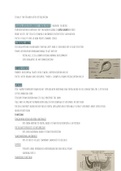
Usually 3rd-8th week after fertilisation
Prenatal later development - foetal period (3 months to birth)
Di erentiation continues but the major change is rapid growth of body
Bones ossify, fat tissue is formed & antibodies enter foetus via placenta
Foetus usually turns so head points towards cervix
Ultrasound images
Uses high-pitched sound waves that we can’t hear & is bounced o a solid structure
Forms ultrasound/sonogram image to get info of:
- Foetal age, size & growth during normal development
- Early diagnoses of any complications
Embryo vs Foetus
Embryo: developing zygote until 8 weeks, di erentiation occurs
Foetus: after organs have developed, 9 weeks+. Growth & organ specialisation occur
Placenta
Disc-shaped temporary organ richly supplied with maternal and foetal blood vessels connecting the 2 at the end
of the umbilical cord
Develops from chorion and its villi penetrate the endo
Villi have a capillary network with large SA for exchange of substances by di usion
Foetal & mother’s blood do not mix as foetal capillaries have thin walls so only substances move into foetal
blood by di usion
Functions:
Oxygen and dissolved food substances
- Pass from mother to foetal blood system for respiration & nutrition
Foetal waste products of metabolism
- Pass into maternal blood system for excretion
Some maternal antibodies
- Pass to foetus to give temporary immunity to diseases
Barrier
- Prevents some pathogenic microorganisms and drugs from
reaching foetus
Endocrine function
, - After 3 months of pregnancy it takes over the secretion of P & O from the corpus luteum which are
necessary for changes in the uterus to maintain pregnancy. P prevents ovulation & menstruation
- Secretes relaxin to relax joints and ligaments for delivery of baby
Amnion
Membrane that surrounds developing embryo & foetus and secretes amniotic fluid
Amniotic fluid
Provides a protective environment. 99% water, foetal cells & waste products
Cells contain genetic info so fluid can be used during amniocentesis to determine chromosomal
abnormalities
Functions
- Supports foetus allowing freedom to move and prevent malformations due to pressure/gravity
- Protection from external injury or impact from mother
- Medium in which to practice breathing & swallowing movements
- Holds urine
- Protection from changes in temperature & dehydration
Umbilical cord
Flexible cord from foetus abdomen to placenta joining to mother and contains 2 umbilical arteries and a vein
Functions
- Arteries: leave foetus carrying waste which di use into the mother’s blood and are excreted
- Veins: enter foetus carrying oxygenated blood and nutrients from mother
Stages of pregnancy
First trimester: first 12 weeks (highest miscarriage/birth defects risk)
Second trimester: weeks 13-28
Third trimester: weeks 29-40 (visible growth di erence from 2nd trimester)
READ THROUGH CHANGES IN BOOK BUT DON’T LEARN
Birth (parturition)
Expulsion of the foetus, its surrounding membranes and the placenta from the uterus
At the end of gestation period, placenta is less e cient so birth must happen
Why human birth is distinctive
- Baby is born at a immature & helpless stage
- Birth canal narrower: process of becoming upright & bipedal lead to wide pelvis
Prenatal later development - foetal period (3 months to birth)
Di erentiation continues but the major change is rapid growth of body
Bones ossify, fat tissue is formed & antibodies enter foetus via placenta
Foetus usually turns so head points towards cervix
Ultrasound images
Uses high-pitched sound waves that we can’t hear & is bounced o a solid structure
Forms ultrasound/sonogram image to get info of:
- Foetal age, size & growth during normal development
- Early diagnoses of any complications
Embryo vs Foetus
Embryo: developing zygote until 8 weeks, di erentiation occurs
Foetus: after organs have developed, 9 weeks+. Growth & organ specialisation occur
Placenta
Disc-shaped temporary organ richly supplied with maternal and foetal blood vessels connecting the 2 at the end
of the umbilical cord
Develops from chorion and its villi penetrate the endo
Villi have a capillary network with large SA for exchange of substances by di usion
Foetal & mother’s blood do not mix as foetal capillaries have thin walls so only substances move into foetal
blood by di usion
Functions:
Oxygen and dissolved food substances
- Pass from mother to foetal blood system for respiration & nutrition
Foetal waste products of metabolism
- Pass into maternal blood system for excretion
Some maternal antibodies
- Pass to foetus to give temporary immunity to diseases
Barrier
- Prevents some pathogenic microorganisms and drugs from
reaching foetus
Endocrine function
, - After 3 months of pregnancy it takes over the secretion of P & O from the corpus luteum which are
necessary for changes in the uterus to maintain pregnancy. P prevents ovulation & menstruation
- Secretes relaxin to relax joints and ligaments for delivery of baby
Amnion
Membrane that surrounds developing embryo & foetus and secretes amniotic fluid
Amniotic fluid
Provides a protective environment. 99% water, foetal cells & waste products
Cells contain genetic info so fluid can be used during amniocentesis to determine chromosomal
abnormalities
Functions
- Supports foetus allowing freedom to move and prevent malformations due to pressure/gravity
- Protection from external injury or impact from mother
- Medium in which to practice breathing & swallowing movements
- Holds urine
- Protection from changes in temperature & dehydration
Umbilical cord
Flexible cord from foetus abdomen to placenta joining to mother and contains 2 umbilical arteries and a vein
Functions
- Arteries: leave foetus carrying waste which di use into the mother’s blood and are excreted
- Veins: enter foetus carrying oxygenated blood and nutrients from mother
Stages of pregnancy
First trimester: first 12 weeks (highest miscarriage/birth defects risk)
Second trimester: weeks 13-28
Third trimester: weeks 29-40 (visible growth di erence from 2nd trimester)
READ THROUGH CHANGES IN BOOK BUT DON’T LEARN
Birth (parturition)
Expulsion of the foetus, its surrounding membranes and the placenta from the uterus
At the end of gestation period, placenta is less e cient so birth must happen
Why human birth is distinctive
- Baby is born at a immature & helpless stage
- Birth canal narrower: process of becoming upright & bipedal lead to wide pelvis



