
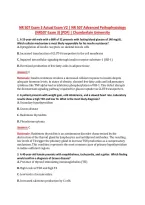
NR 507 Exam 3 Actual Exam V2 | NR 507 Advanced Pathophysiology
(NR507 Exam 3) [PDF] | Chamberlain University
1. A 55-year-old male with a BMI of 32 presents with fasting blood glucose of 140 mg/dL.
Which cellular mechanism is most likely responsible for his insulin resistance?
A. Upregulation of insulin receptors on skeletal muscle cells
B. Increased translocation of GLUT4 transporters to the cell membrane
C. Impaired intracellular signaling through insulin receptor substrate-1 (IRS-1)
D. Decreased production of free fatty acids in adipose tissue
Answer: C
Rationale: Insulin resistance involves a decreased cellular response to insulin despite
adequate hormone levels. In states of obesity, elevated free fatty acids and inflammatory
cytokines like TNF-alpha lead to inhibitory phosphorylation of IRS-1. This defect disrupts
the downstream signaling pathway required for glucose uptake via GLUT4 transporters.
2. A patient presents with weight gain, cold intolerance, and a slowed heart rate. Laboratory
results show a high TSH and low T4. What is the most likely diagnosis?
A. Secondary hypothyroidism
B. Graves disease
C. Hashimoto thyroiditis
D. Pheochromocytoma
Answer: C
Rationale: Hashimoto thyroiditis is an autoimmune disorder characterized by the
destruction of the thyroid gland by lymphocytes and antithyroid antibodies. The resulting
low levels of T4 trigger the pituitary gland to increase TSH production as a compensatory
mechanism. This condition represents the most common cause of primary hypothyroidism
in iodine-sufficient regions.
3. A 40-year-old female presents with exophthalmos, tachycardia, and a goiter. Which finding
would confirm a diagnosis of Graves disease?
A. Presence of thyroid-stimulating immunoglobulins (TSI)
B. High levels of TSH and high T4
C. Low levels of serum iodine
D. Increased calcitonin production by C cells
,Answer: A
Rationale: Graves disease is caused by type II hypersensitivity where autoantibodies (TSI)
bind to TSH receptors. These antibodies mimic TSH, leading to continuous stimulation of
the thyroid gland and hypersecretion of thyroid hormones. The clinical manifestation of
ophthalmopathy is specifically related to orbital fibroblast stimulation by these antibodies.
4. A patient with chronic kidney disease (CKD) develops anemia. What is the primary cause of
this hematological abnormality?
A. Chronic blood loss during hemodialysis
B. Shortened lifespan of red blood cells due to uremic toxins
C. Iron deficiency due to poor dietary intake
D. Deficiency of erythropoietin production by peritubular cells
Answer: D
Rationale: The kidneys are the primary source of erythropoietin, a hormone that
stimulates red blood cell production in the bone marrow. As renal function declines in CKD,
the peritubular fibroblast cells are unable to produce sufficient erythropoietin. This leads
to a normocytic, normochromic anemia that typically requires exogenous hormone
replacement.
5. A 60-year-old male presents with sudden onset of oliguria and an elevated serum
creatinine. His fractional excretion of sodium (FENa) is less than 1%. Which condition is most
likely?
A. Acute tubular necrosis
B. Prerenal acute kidney injury
C. Post-renal obstruction
D. Acute interstitial nephritis
Answer: B
Rationale: Prerenal AKI is caused by decreased renal perfusion without intrinsic damage
to the kidney parenchyma. A FENa less than 1% indicates that the renal tubules are
functioning correctly and are reabsorbing sodium to compensate for low blood volume.
Restoring renal blood flow usually leads to a rapid improvement in glomerular filtration
rate.
6. Which clinical finding is most characteristic of nephrotic syndrome compared to nephritic
syndrome?
A. Gross hematuria and RBC casts
B. Hypertension and oliguria
, C. Rapidly declining GFR with azotemia
D. Proteinuria exceeding 3.5 grams per day
Answer: D
Rationale: Nephrotic syndrome is defined by massive proteinuria resulting from increased
glomerular permeability to plasma proteins. This loss of albumin leads to
hypoalbuminemia and a decrease in plasma oncotic pressure, causing significant edema. In
contrast, nephritic syndrome is primarily characterized by inflammation and hematuria.
7. A patient with liver cirrhosis presents with confusion and a flapping tremor of the hands
(asterixis). What is the underlying pathophysiology?
A. Failure of the liver to convert ammonia to urea
B. Hypernatremia causing neuronal shrinkage
C. Accumulation of bilirubin in the basal ganglia
D. Vitamin B12 deficiency due to malabsorption
Answer: A
Rationale: Hepatic encephalopathy occurs when the liver cannot detoxify metabolic
byproducts, specifically ammonia derived from protein breakdown. Elevated systemic
ammonia crosses the blood-brain barrier and causes astrocyte swelling and
neurotransmitter dysfunction. Treatment often involves lactulose to decrease intestinal
ammonia absorption.
8. What is the primary pathophysiology of Type 1 Diabetes Mellitus?
A. Autoimmune destruction of pancreatic beta cells
B. Peripheral tissue resistance to insulin action
C. Excessive glucagon secretion by alpha cells
D. Hypertrophy of the islets of Langerhans
Answer: A
Rationale: Type 1 Diabetes Mellitus is a chronic autoimmune disease characterized by the
T-cell mediated destruction of insulin-producing beta cells. This results in an absolute
insulin deficiency, making the patient dependent on exogenous insulin for survival. It is
often associated with specific HLA genotypes that predispose individuals to this immune
dysfunction.
9. A patient with acute pancreatitis develops severe abdominal pain radiating to the back and
elevated serum lipase. What is the initial trigger for tissue damage in this condition?
A. Bacterial infection of the pancreatic duct
(NR507 Exam 3) [PDF] | Chamberlain University
1. A 55-year-old male with a BMI of 32 presents with fasting blood glucose of 140 mg/dL.
Which cellular mechanism is most likely responsible for his insulin resistance?
A. Upregulation of insulin receptors on skeletal muscle cells
B. Increased translocation of GLUT4 transporters to the cell membrane
C. Impaired intracellular signaling through insulin receptor substrate-1 (IRS-1)
D. Decreased production of free fatty acids in adipose tissue
Answer: C
Rationale: Insulin resistance involves a decreased cellular response to insulin despite
adequate hormone levels. In states of obesity, elevated free fatty acids and inflammatory
cytokines like TNF-alpha lead to inhibitory phosphorylation of IRS-1. This defect disrupts
the downstream signaling pathway required for glucose uptake via GLUT4 transporters.
2. A patient presents with weight gain, cold intolerance, and a slowed heart rate. Laboratory
results show a high TSH and low T4. What is the most likely diagnosis?
A. Secondary hypothyroidism
B. Graves disease
C. Hashimoto thyroiditis
D. Pheochromocytoma
Answer: C
Rationale: Hashimoto thyroiditis is an autoimmune disorder characterized by the
destruction of the thyroid gland by lymphocytes and antithyroid antibodies. The resulting
low levels of T4 trigger the pituitary gland to increase TSH production as a compensatory
mechanism. This condition represents the most common cause of primary hypothyroidism
in iodine-sufficient regions.
3. A 40-year-old female presents with exophthalmos, tachycardia, and a goiter. Which finding
would confirm a diagnosis of Graves disease?
A. Presence of thyroid-stimulating immunoglobulins (TSI)
B. High levels of TSH and high T4
C. Low levels of serum iodine
D. Increased calcitonin production by C cells
,Answer: A
Rationale: Graves disease is caused by type II hypersensitivity where autoantibodies (TSI)
bind to TSH receptors. These antibodies mimic TSH, leading to continuous stimulation of
the thyroid gland and hypersecretion of thyroid hormones. The clinical manifestation of
ophthalmopathy is specifically related to orbital fibroblast stimulation by these antibodies.
4. A patient with chronic kidney disease (CKD) develops anemia. What is the primary cause of
this hematological abnormality?
A. Chronic blood loss during hemodialysis
B. Shortened lifespan of red blood cells due to uremic toxins
C. Iron deficiency due to poor dietary intake
D. Deficiency of erythropoietin production by peritubular cells
Answer: D
Rationale: The kidneys are the primary source of erythropoietin, a hormone that
stimulates red blood cell production in the bone marrow. As renal function declines in CKD,
the peritubular fibroblast cells are unable to produce sufficient erythropoietin. This leads
to a normocytic, normochromic anemia that typically requires exogenous hormone
replacement.
5. A 60-year-old male presents with sudden onset of oliguria and an elevated serum
creatinine. His fractional excretion of sodium (FENa) is less than 1%. Which condition is most
likely?
A. Acute tubular necrosis
B. Prerenal acute kidney injury
C. Post-renal obstruction
D. Acute interstitial nephritis
Answer: B
Rationale: Prerenal AKI is caused by decreased renal perfusion without intrinsic damage
to the kidney parenchyma. A FENa less than 1% indicates that the renal tubules are
functioning correctly and are reabsorbing sodium to compensate for low blood volume.
Restoring renal blood flow usually leads to a rapid improvement in glomerular filtration
rate.
6. Which clinical finding is most characteristic of nephrotic syndrome compared to nephritic
syndrome?
A. Gross hematuria and RBC casts
B. Hypertension and oliguria
, C. Rapidly declining GFR with azotemia
D. Proteinuria exceeding 3.5 grams per day
Answer: D
Rationale: Nephrotic syndrome is defined by massive proteinuria resulting from increased
glomerular permeability to plasma proteins. This loss of albumin leads to
hypoalbuminemia and a decrease in plasma oncotic pressure, causing significant edema. In
contrast, nephritic syndrome is primarily characterized by inflammation and hematuria.
7. A patient with liver cirrhosis presents with confusion and a flapping tremor of the hands
(asterixis). What is the underlying pathophysiology?
A. Failure of the liver to convert ammonia to urea
B. Hypernatremia causing neuronal shrinkage
C. Accumulation of bilirubin in the basal ganglia
D. Vitamin B12 deficiency due to malabsorption
Answer: A
Rationale: Hepatic encephalopathy occurs when the liver cannot detoxify metabolic
byproducts, specifically ammonia derived from protein breakdown. Elevated systemic
ammonia crosses the blood-brain barrier and causes astrocyte swelling and
neurotransmitter dysfunction. Treatment often involves lactulose to decrease intestinal
ammonia absorption.
8. What is the primary pathophysiology of Type 1 Diabetes Mellitus?
A. Autoimmune destruction of pancreatic beta cells
B. Peripheral tissue resistance to insulin action
C. Excessive glucagon secretion by alpha cells
D. Hypertrophy of the islets of Langerhans
Answer: A
Rationale: Type 1 Diabetes Mellitus is a chronic autoimmune disease characterized by the
T-cell mediated destruction of insulin-producing beta cells. This results in an absolute
insulin deficiency, making the patient dependent on exogenous insulin for survival. It is
often associated with specific HLA genotypes that predispose individuals to this immune
dysfunction.
9. A patient with acute pancreatitis develops severe abdominal pain radiating to the back and
elevated serum lipase. What is the initial trigger for tissue damage in this condition?
A. Bacterial infection of the pancreatic duct


