
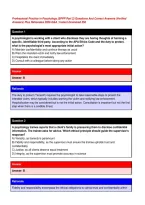
Professional Practice in Psychology (EPPP Part 2) Questions And Correct Answers (Verified
Answers) Plus Rationales 2026 Q&A | Instant Download 250
Question 1
A psychologist is working with a client who discloses they are having thoughts of harming a
specific, identifiable third party. According to the APA Ethics Code and the duty to protect,
what is the psychologist's most appropriate initial action?
A) Maintain confidentiality and continue therapy as usual
B) Warn the intended victim and notify law enforcement
C) Hospitalize the client immediately
D) Consult with a colleague before taking any action
Answer
Answer: B
Rationale
The duty to protect (Tarasoff) requires the psychologist to take reasonable steps to protect the
intended victim, which typically includes warning the victim and notifying law enforcement.
Hospitalization may be considered but is not the initial action. Consultation is important but not the first
step when there is a credible threat.
Question 2
A psychology trainee reports that a client's family is pressuring them to disclose confidential
information. The trainee asks for advice. Which ethical principle should guide the supervisor's
response?
A) Veracity, as honesty is paramount
B) Fidelity and responsibility, as the supervisor must ensure the trainee upholds trust and
confidentiality
C) Justice, as all clients deserve equal treatment
D) Integrity, as the supervisor must promote accuracy in science
Answer
Answer: B
Rationale
Fidelity and responsibility encompass the ethical obligations to uphold trust and confidentiality within
,professional relationships. The supervisor must guide the trainee in maintaining confidentiality and
managing family pressure appropriately.
Question 3
A psychologist is evaluating a client who reports recurrent panic attacks. The client asks the
psychologist to prescribe medication. What is the most appropriate response?
A) Prescribe the medication since it will help the client
B) Refer the client to a psychiatrist for medication evaluation
C) Tell the client that medication is not necessary
D) Prescribe the medication under supervision
Answer
Answer: B
Rationale
Psychologists are not licensed to prescribe medication in most jurisdictions. The most appropriate
action is to refer the client to a psychiatrist or other medical professional for medication evaluation
while continuing psychological treatment.
Question 4
During a supervision session, a supervisee discloses that they have developed romantic
feelings for a client. What is the supervisor's most appropriate action?
A) Tell the supervisee to ignore the feelings and continue treatment
B) Advise the supervisee to terminate the therapeutic relationship and transfer the client to another
clinician
C) Suggest the supervisee explore the feelings in their own therapy and continue supervision
D) Report the supervisee to the licensing board
Answer
Answer: B
Rationale
Romantic feelings toward a client can impair objectivity and constitute a multiple relationship. The
supervisee should transfer the client to another clinician to protect the client's welfare. The supervisor
should also address the issue in supervision and recommend personal therapy if needed.
2
,Question 5
A psychologist receives a request for records from an insurance company. What is the best
course of action?
A) Release all records immediately
B) Decline to provide any information
C) Obtain written consent from the client before releasing records
D) Send only the diagnosis and treatment dates
Answer
Answer: C
Rationale
Psychologists must obtain written informed consent from the client before releasing confidential
information to third parties, including insurance companies. Releasing records without consent is a
violation of confidentiality.
Question 6
A psychologist is asked to provide expert testimony in a child custody case. What is the
psychologist's primary ethical obligation?
A) Advocate for the parent who hired them
B) Provide objective, unbiased opinions based on the data
C) Recommend the parent who can pay the highest fee
D) Refuse to testify in custody cases
Answer
Answer: B
Rationale
Psychologists serving as expert witnesses must provide objective, unbiased opinions based on their
assessment and data. They should avoid advocacy for one party and maintain professional integrity.
Question 7
3
, A client presents with symptoms of depression and reports that they have been seeing another
therapist who is prescribing medication. What should the psychologist do?
A) Continue treatment without contacting the other therapist
B) Obtain a release to coordinate care with the other therapist
C) Tell the client to stop seeing the other therapist
D) Ignore the information
Answer
Answer: B
Rationale
Coordinating care with other professionals is essential for comprehensive treatment. The psychologist
should obtain a release from the client to communicate with the other therapist, ensuring continuity
and avoiding conflicting treatments.
Question 8
A psychologist is conducting an assessment and realizes that the test they are using has not
been validated for the client's cultural background. What should the psychologist do?
A) Use the test anyway and note the limitation
B) Select a different test that is appropriate for the client's cultural background
C) Interpret the results with caution
D) Refer the client to another psychologist
Answer
Answer: B
Rationale
Psychologists must use assessment instruments that are appropriate for the client's cultural
background. If a test is not validated for that population, the psychologist should select an alternative
measure or adapt the assessment appropriately.
Question 9
A supervisor notices that a supervisee is consistently arriving late to sessions and appears
unprepared. What is the supervisor's most appropriate initial step?
A) Immediately terminate the supervisory relationship
4
Answers) Plus Rationales 2026 Q&A | Instant Download 250
Question 1
A psychologist is working with a client who discloses they are having thoughts of harming a
specific, identifiable third party. According to the APA Ethics Code and the duty to protect,
what is the psychologist's most appropriate initial action?
A) Maintain confidentiality and continue therapy as usual
B) Warn the intended victim and notify law enforcement
C) Hospitalize the client immediately
D) Consult with a colleague before taking any action
Answer
Answer: B
Rationale
The duty to protect (Tarasoff) requires the psychologist to take reasonable steps to protect the
intended victim, which typically includes warning the victim and notifying law enforcement.
Hospitalization may be considered but is not the initial action. Consultation is important but not the first
step when there is a credible threat.
Question 2
A psychology trainee reports that a client's family is pressuring them to disclose confidential
information. The trainee asks for advice. Which ethical principle should guide the supervisor's
response?
A) Veracity, as honesty is paramount
B) Fidelity and responsibility, as the supervisor must ensure the trainee upholds trust and
confidentiality
C) Justice, as all clients deserve equal treatment
D) Integrity, as the supervisor must promote accuracy in science
Answer
Answer: B
Rationale
Fidelity and responsibility encompass the ethical obligations to uphold trust and confidentiality within
,professional relationships. The supervisor must guide the trainee in maintaining confidentiality and
managing family pressure appropriately.
Question 3
A psychologist is evaluating a client who reports recurrent panic attacks. The client asks the
psychologist to prescribe medication. What is the most appropriate response?
A) Prescribe the medication since it will help the client
B) Refer the client to a psychiatrist for medication evaluation
C) Tell the client that medication is not necessary
D) Prescribe the medication under supervision
Answer
Answer: B
Rationale
Psychologists are not licensed to prescribe medication in most jurisdictions. The most appropriate
action is to refer the client to a psychiatrist or other medical professional for medication evaluation
while continuing psychological treatment.
Question 4
During a supervision session, a supervisee discloses that they have developed romantic
feelings for a client. What is the supervisor's most appropriate action?
A) Tell the supervisee to ignore the feelings and continue treatment
B) Advise the supervisee to terminate the therapeutic relationship and transfer the client to another
clinician
C) Suggest the supervisee explore the feelings in their own therapy and continue supervision
D) Report the supervisee to the licensing board
Answer
Answer: B
Rationale
Romantic feelings toward a client can impair objectivity and constitute a multiple relationship. The
supervisee should transfer the client to another clinician to protect the client's welfare. The supervisor
should also address the issue in supervision and recommend personal therapy if needed.
2
,Question 5
A psychologist receives a request for records from an insurance company. What is the best
course of action?
A) Release all records immediately
B) Decline to provide any information
C) Obtain written consent from the client before releasing records
D) Send only the diagnosis and treatment dates
Answer
Answer: C
Rationale
Psychologists must obtain written informed consent from the client before releasing confidential
information to third parties, including insurance companies. Releasing records without consent is a
violation of confidentiality.
Question 6
A psychologist is asked to provide expert testimony in a child custody case. What is the
psychologist's primary ethical obligation?
A) Advocate for the parent who hired them
B) Provide objective, unbiased opinions based on the data
C) Recommend the parent who can pay the highest fee
D) Refuse to testify in custody cases
Answer
Answer: B
Rationale
Psychologists serving as expert witnesses must provide objective, unbiased opinions based on their
assessment and data. They should avoid advocacy for one party and maintain professional integrity.
Question 7
3
, A client presents with symptoms of depression and reports that they have been seeing another
therapist who is prescribing medication. What should the psychologist do?
A) Continue treatment without contacting the other therapist
B) Obtain a release to coordinate care with the other therapist
C) Tell the client to stop seeing the other therapist
D) Ignore the information
Answer
Answer: B
Rationale
Coordinating care with other professionals is essential for comprehensive treatment. The psychologist
should obtain a release from the client to communicate with the other therapist, ensuring continuity
and avoiding conflicting treatments.
Question 8
A psychologist is conducting an assessment and realizes that the test they are using has not
been validated for the client's cultural background. What should the psychologist do?
A) Use the test anyway and note the limitation
B) Select a different test that is appropriate for the client's cultural background
C) Interpret the results with caution
D) Refer the client to another psychologist
Answer
Answer: B
Rationale
Psychologists must use assessment instruments that are appropriate for the client's cultural
background. If a test is not validated for that population, the psychologist should select an alternative
measure or adapt the assessment appropriately.
Question 9
A supervisor notices that a supervisee is consistently arriving late to sessions and appears
unprepared. What is the supervisor's most appropriate initial step?
A) Immediately terminate the supervisory relationship
4


