Adult Care 2 Exam 1 – Questions With Accurate
Solutions
Add to calendar
Play your way to mastery with fun games
Match Blocks Charms NEW
Terms in this set (95)
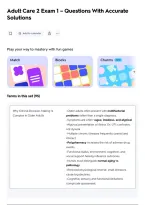
Why Clinical Decision-Making Is -Older adults often present with multifactorial
Complex in Older Adults problems rather than a single diagnosis.
-Symptoms are often vague, insidious, and atypical.
-Atypical presentation of illness. Ex: UTI: confusion,
not dysuria
-Multiple chronic illnesses frequently coexist and
interact.
-Polypharmacy increases the risk of adverse drug
events.
-Functional status, environment, cognition, and
social support heavily influence outcomes.
-Nurses must distinguish normal aging vs
pathology.
-Reduced physiological reverse: small stressors
cause big declines.
-Cognitive, sensory and functional limitations
complicate assessment.
,ADLs vs IADLs ADLs (Activities of Daily Living) – last abilities to be
lost
Toileting, bathing, dressing, feeding, continence
Loss → need for hands-on care
IADLs (Instrumental Activities of Daily Living) –
require cognition + physical ability
Using phone, shopping, housekeeping, laundry,
medications, finances
Loss → need for support services, may still live
independently
-IADLs decline first, happen before ADLs.
-Loss of IADLs will increase need for support
-Loss of ALDS: patients may need for institutional
care like LTC, assisted living facilities.
Normal vs Abnormal Aging Normal Aging
Slower gait speed (shorter stride)
Mild forgetfulness
Decreased muscle mass
Abnormal Aging (RED FLAGS)
Acute confusion
Falls
Incontinence
Sudden functional decline
Not normal aging: geriatric syndromes
-Immobility
-Falls
-Constipation
-Urinary incontinence
-Polypharmacy
-Frailty
Acute confusion, falls, incontinence, and sudden
functional decline are NEVER normal aging and
always require assessment.
,Geriatric syndromes NOT normal aging.
They are:
Multifactorial
Highly prevalent in older adults
Associated with poor outcomes
Common Syndromes:
Immobility
Falls
Urinary Incontinence
Delirium
Polypharmacy
Frailty
IMMOBILITY & FALLS Function is critical – assess in context of
environment
Hospitalization often creates dependency
Immobility is a major red flag
interventions to prevent/decrease fall -Proper footwear
risk -Assistive devices
-Medication reviews especially sedatives and
antihypertensives
-Adequate lighting
-Remove throw rugs/ clutter
-Physical therapy for strength and balance
-Safety first
-Medication review
-Gait training & PT
-Home safety modification
, Timed Up and Go (TUG) Procedure:
Stand from chair
Walk 10 feet
Turn
Return and sit
⏱ >12 seconds = poor performance & high fall risk
If less than 12 seconds: Normal
If more than 12 seconds: high risk for fall
Inability to complete means patient need
intervention
-If patient cannot complete TUG or takes >12
seconds → initiate fall precautions and PT referral
Effects of Immobility -Skin breakdown
-Pneumonia
-Constipation
-DVT
-Loss of independence
-Increased level of care (home → LTC)
Immobility increases risk for:
-Falls
-Pressure injuries
-Constipation
-Delirium
-Long term care placement