
6,
1 of
1:58:15
310/13/2026,
Page
AMAmerican
1 of
1:58:15
310/13/2026,
Heart
AMAmerican
Association
1:58:15
Heart
AMAmerican
BLSAssociation
(Basic Life
Heart
BLS
Support)(*((&#*!(*#*($$(*($(*$Y(&*&$(*)&*)((&$*^$&*&$
Association
(Basic Life BLS
Support)(*((&#*!(*#*($$(*($(*$Y(&*&$(*)&*)((&$*^$&*&$
(Basic Life Support)(*((&#*!(*#*($$(*($(*$Y(&*&$(*)&*)((&$*^$&*&$
(&*$ **F VJyvhjbnoP+_IREOLKDJ(UWRORWUOI
(&*$ **F VJyvhjbnoP+_IREOLKDJ(UWROR
(&*$ **F VJyvhjbnoP+_IREO
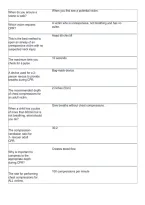
When you first see a potential victim.
When do you ensure a
scene is safe?
Which victim requires A victim who is unresponsive, not breathing and has no
pulse.
CPR?
Head tilt-chin lift
This is the best method to
open an airway of an
unresponsive victim with no
suspected neck injury.
10 seconds
The maximum time you
check for a pulse.
Bag-mask device
A device used for a 2-
person rescue to provide
breaths during CPR.
2 inches (5cm)
The recommended depth
of chest compressions for
an adult victim.
Give breaths without chest compressions.
When a child has a pulse
of more than 60/min but is
not breathing, what should
you do?
30:2
The compression-
ventilation ratio for
1- rescuer adult
CPR.
Creates blood flow
Why is important to
compress to the
appropriate depth
during CPR?
100 compressions per minute
The rate for performing
chest compressions for
ALL victims.
6,
1 of
1:58:15
310/13/2026,
Page
AMAmerican
1 of
1:58:15
310/13/2026,
Heart
AMAmerican
Association
1:58:15
Heart
AMAmerican
BLSAssociation
(Basic Life
Heart
BLS
Support)(*((&#*!(*#*($$(*($(*$Y(&*&$(*)&*)((&$*^$&*&$
Association
(Basic Life BLS
Support)(*((&#*!(*#*($$(*($(*$Y(&*&$(*)&*)((&$*^$&*&$
(Basic Life Support)(*((&#*!(*#*($$(*($(*$Y(&*&$(*)&*)((&$*^$&*&$
(&*$ **F VJyvhjbnoP+_IREOLKDJ(UWRORWUOI
(&*$ **F VJyvhjbnoP+_IREOLKDJ(UWROR
(&*$ **F VJyvhjbnoP+_IREO
1 of
1:58:15
310/13/2026,
Page
AMAmerican
1 of
1:58:15
310/13/2026,
Heart
AMAmerican
Association
1:58:15
Heart
AMAmerican
BLSAssociation
(Basic Life
Heart
BLS
Support)(*((&#*!(*#*($$(*($(*$Y(&*&$(*)&*)((&$*^$&*&$
Association
(Basic Life BLS
Support)(*((&#*!(*#*($$(*($(*$Y(&*&$(*)&*)((&$*^$&*&$
(Basic Life Support)(*((&#*!(*#*($$(*($(*$Y(&*&$(*)&*)((&$*^$&*&$
(&*$ **F VJyvhjbnoP+_IREOLKDJ(UWRORWUOI
(&*$ **F VJyvhjbnoP+_IREOLKDJ(UWROR
(&*$ **F VJyvhjbnoP+_IREO
When you first see a potential victim.
When do you ensure a
scene is safe?
Which victim requires A victim who is unresponsive, not breathing and has no
pulse.
CPR?
Head tilt-chin lift
This is the best method to
open an airway of an
unresponsive victim with no
suspected neck injury.
10 seconds
The maximum time you
check for a pulse.
Bag-mask device
A device used for a 2-
person rescue to provide
breaths during CPR.
2 inches (5cm)
The recommended depth
of chest compressions for
an adult victim.
Give breaths without chest compressions.
When a child has a pulse
of more than 60/min but is
not breathing, what should
you do?
30:2
The compression-
ventilation ratio for
1- rescuer adult
CPR.
Creates blood flow
Why is important to
compress to the
appropriate depth
during CPR?
100 compressions per minute
The rate for performing
chest compressions for
ALL victims.
6,
1 of
1:58:15
310/13/2026,
Page
AMAmerican
1 of
1:58:15
310/13/2026,
Heart
AMAmerican
Association
1:58:15
Heart
AMAmerican
BLSAssociation
(Basic Life
Heart
BLS
Support)(*((&#*!(*#*($$(*($(*$Y(&*&$(*)&*)((&$*^$&*&$
Association
(Basic Life BLS
Support)(*((&#*!(*#*($$(*($(*$Y(&*&$(*)&*)((&$*^$&*&$
(Basic Life Support)(*((&#*!(*#*($$(*($(*$Y(&*&$(*)&*)((&$*^$&*&$
(&*$ **F VJyvhjbnoP+_IREOLKDJ(UWRORWUOI
(&*$ **F VJyvhjbnoP+_IREOLKDJ(UWROR
(&*$ **F VJyvhjbnoP+_IREO


