MANA 366 – INDUSTRIAL RELATIONS & COLLECTIVE BARGAINING
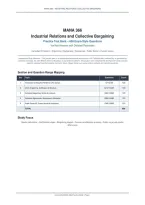
MANA 366
Industrial Relations and Collective Bargaining
Practice Test Bank – 600 Exam-Style Questions
Verified Answers with Detailed Rationales
Canadian IR System • Organizing • Bargaining • Grievances • Public Sector • Current Issues
Independent Study Resource – This practice bank is an independent educational resource and is NOT affiliated with, endorsed by, or sponsored by
Concordia University, the John Molson School of Business, or any textbook publisher. All questions were independently developed for study purposes
based on standard industrial relations curriculum topics. Always follow your course outline, textbook, and instructor guidance.
Section and Question Range Mapping
Sec Topic Questions Count
1 Introduction to Industrial Relations & the Canad... Q1-Q120 120
2 Union Organizing, Certification & Structure Q121-Q240 120
3 Collective Bargaining, Strikes & Lockouts Q241-Q360 120
4 Collective Agreements, Grievances & Arbitration Q361-Q480 120
5 Public Sector IR, Current Issues & Institutions Q481-Q600 120
TOTAL 600
Study Focus
Master definitions • Certification steps • Bargaining stages • Grievance/arbitration process • Public vs private sector
differences
Concordia MANA 366 Practice Bank | Page 1
, MANA 366 – INDUSTRIAL RELATIONS & COLLECTIVE BARGAINING
Section 1: Introduction to Industrial Relations & the Canadian System
Q1: Industrial relations is best defined as:
A. Only the study of non-union HR practices
B. The interdisciplinary field examining employment relationships, especially in unionized
settings, including unions, employers, and the state [CORRECT]
C. Only payroll administration
D. Only international trade
Correct Answer: B
Rationale: IR focuses on the employment relationship and the institutions that govern it, particularly
collective relationships.
Q2: A key difference often drawn between industrial relations and human resource
management is that:
A. IR ignores employees entirely
B. IR traditionally emphasizes unionized relationships and collective processes, while
HRM addresses employment relationships more broadly [CORRECT]
C. HRM only studies strikes
D. They are identical in every respect
Correct Answer: B
Rationale: IR has historically centred on unions and collective bargaining; HRM is broader.
Q3: The main actors in the Canadian industrial relations system are typically described
as:
A. Only employees
B. Labour (unions/employees), management (employers), and the state
(government/legislators) [CORRECT]
C. Only shareholders
D. Only customers
Correct Answer: B
Rationale: The classic triad is labour, management, and the state.
Concordia MANA 366 Practice Bank | Page 2
, MANA 366 – INDUSTRIAL RELATIONS & COLLECTIVE BARGAINING
Q4: In Canada, labour relations jurisdiction is primarily:
A. Only federal for all workplaces
B. Divided between federal and provincial/territorial governments depending on the
industry [CORRECT]
C. Only municipal
D. Only international
Correct Answer: B
Rationale: Most private-sector employees fall under provincial law; some industries are federally
regulated.
Q5: Union density refers to:
A. The height of union buildings
B. The proportion of the workforce that is unionized [CORRECT]
C. Only the number of union logos
D. Management’s share of profits
Correct Answer: B
Rationale: Union density measures the percentage of workers who are union members.
Q6: A collective agreement is:
A. An informal handshake only
B. A written contract between a union and employer setting terms and conditions of
employment for the bargaining unit [CORRECT]
C. Only a company handbook
D. A document that never expires
Correct Answer: B
Rationale: The collective agreement is the negotiated, enforceable contract in a unionized workplace.
Concordia MANA 366 Practice Bank | Page 3
, MANA 366 – INDUSTRIAL RELATIONS & COLLECTIVE BARGAINING
Q7: Collective bargaining is the process by which:
A. Individuals negotiate only their own pay
B. Union and management negotiate terms and conditions of employment [CORRECT]
C. Only the government sets all wages
D. Customers set prices
Correct Answer: B
Rationale: Collective bargaining produces the collective agreement.
Q8: Why might employees seek union representation?
A. Only to increase management power
B. To gain a collective voice, improve wages and conditions, and obtain protection
through a collective agreement [CORRECT]
C. To eliminate all job security
D. To avoid all workplace rules
Correct Answer: B
Rationale: Voice, economic improvement, and protection are common motives.
Q9: Why might employers resist unions?
A. Unions always increase profits immediately
B. Concerns about reduced flexibility, higher costs, and loss of unilateral decision-making
authority [CORRECT]
C. Unions never affect operations
D. Only because of personal dislike of meetings
Correct Answer: B
Rationale: Cost, flexibility, and control are frequent employer concerns.
Concordia MANA 366 Practice Bank | Page 4
MANA 366
Industrial Relations and Collective Bargaining
Practice Test Bank – 600 Exam-Style Questions
Verified Answers with Detailed Rationales
Canadian IR System • Organizing • Bargaining • Grievances • Public Sector • Current Issues
Independent Study Resource – This practice bank is an independent educational resource and is NOT affiliated with, endorsed by, or sponsored by
Concordia University, the John Molson School of Business, or any textbook publisher. All questions were independently developed for study purposes
based on standard industrial relations curriculum topics. Always follow your course outline, textbook, and instructor guidance.
Section and Question Range Mapping
Sec Topic Questions Count
1 Introduction to Industrial Relations & the Canad... Q1-Q120 120
2 Union Organizing, Certification & Structure Q121-Q240 120
3 Collective Bargaining, Strikes & Lockouts Q241-Q360 120
4 Collective Agreements, Grievances & Arbitration Q361-Q480 120
5 Public Sector IR, Current Issues & Institutions Q481-Q600 120
TOTAL 600
Study Focus
Master definitions • Certification steps • Bargaining stages • Grievance/arbitration process • Public vs private sector
differences
Concordia MANA 366 Practice Bank | Page 1
, MANA 366 – INDUSTRIAL RELATIONS & COLLECTIVE BARGAINING
Section 1: Introduction to Industrial Relations & the Canadian System
Q1: Industrial relations is best defined as:
A. Only the study of non-union HR practices
B. The interdisciplinary field examining employment relationships, especially in unionized
settings, including unions, employers, and the state [CORRECT]
C. Only payroll administration
D. Only international trade
Correct Answer: B
Rationale: IR focuses on the employment relationship and the institutions that govern it, particularly
collective relationships.
Q2: A key difference often drawn between industrial relations and human resource
management is that:
A. IR ignores employees entirely
B. IR traditionally emphasizes unionized relationships and collective processes, while
HRM addresses employment relationships more broadly [CORRECT]
C. HRM only studies strikes
D. They are identical in every respect
Correct Answer: B
Rationale: IR has historically centred on unions and collective bargaining; HRM is broader.
Q3: The main actors in the Canadian industrial relations system are typically described
as:
A. Only employees
B. Labour (unions/employees), management (employers), and the state
(government/legislators) [CORRECT]
C. Only shareholders
D. Only customers
Correct Answer: B
Rationale: The classic triad is labour, management, and the state.
Concordia MANA 366 Practice Bank | Page 2
, MANA 366 – INDUSTRIAL RELATIONS & COLLECTIVE BARGAINING
Q4: In Canada, labour relations jurisdiction is primarily:
A. Only federal for all workplaces
B. Divided between federal and provincial/territorial governments depending on the
industry [CORRECT]
C. Only municipal
D. Only international
Correct Answer: B
Rationale: Most private-sector employees fall under provincial law; some industries are federally
regulated.
Q5: Union density refers to:
A. The height of union buildings
B. The proportion of the workforce that is unionized [CORRECT]
C. Only the number of union logos
D. Management’s share of profits
Correct Answer: B
Rationale: Union density measures the percentage of workers who are union members.
Q6: A collective agreement is:
A. An informal handshake only
B. A written contract between a union and employer setting terms and conditions of
employment for the bargaining unit [CORRECT]
C. Only a company handbook
D. A document that never expires
Correct Answer: B
Rationale: The collective agreement is the negotiated, enforceable contract in a unionized workplace.
Concordia MANA 366 Practice Bank | Page 3
, MANA 366 – INDUSTRIAL RELATIONS & COLLECTIVE BARGAINING
Q7: Collective bargaining is the process by which:
A. Individuals negotiate only their own pay
B. Union and management negotiate terms and conditions of employment [CORRECT]
C. Only the government sets all wages
D. Customers set prices
Correct Answer: B
Rationale: Collective bargaining produces the collective agreement.
Q8: Why might employees seek union representation?
A. Only to increase management power
B. To gain a collective voice, improve wages and conditions, and obtain protection
through a collective agreement [CORRECT]
C. To eliminate all job security
D. To avoid all workplace rules
Correct Answer: B
Rationale: Voice, economic improvement, and protection are common motives.
Q9: Why might employers resist unions?
A. Unions always increase profits immediately
B. Concerns about reduced flexibility, higher costs, and loss of unilateral decision-making
authority [CORRECT]
C. Unions never affect operations
D. Only because of personal dislike of meetings
Correct Answer: B
Rationale: Cost, flexibility, and control are frequent employer concerns.
Concordia MANA 366 Practice Bank | Page 4