
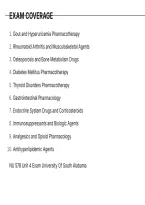
EXAM COVERAGE
1. Gout and Hyperuricemia Pharmacotherapy
2. Rheumatoid Arthritis and Musculoskeletal Agents
3. Osteoporosis and Bone Metabolism Drugs
4. Diabetes Mellitus Pharmacotherapy
5. Thyroid Disorders Pharmacotherapy
6. Gastrointestinal Pharmacology
7. Endocrine System Drugs and Corticosteroids
8. Immunosuppressants and Biologic Agents
9. Analgesics and Opioid Pharmacology
10. Antihyperlipidemic Agents
NU 578 Unit 4 Exam University Of South Alabama
,200 EXTREMELY DETAILED AND RELEVANT MOSTLY
TESTED QUESTIONS
Question 1
A patient with an acute gout flare is prescribed colchicine, and the nurse
practitioner should recognize that which mechanism of action best explains its
therapeutic anti-inflammatory effect during the acute phase of treatment?
A. Inhibition of xanthine oxidase enzyme to reduce uric acid production
B. Binding to tubulin and inhibiting microtubule polymerization in neutrophils
C. Increasing renal excretion of uric acid through uricosuric pathways
D. Blocking interleukin-1 receptors on synovial macrophages
Answer: B
Rationale: Colchicine exerts its anti-inflammatory effects by binding to tubulin,
which inhibits microtubule polymerization and impairs neutrophil chemotaxis and
,phagocytosis. Xanthine oxidase inhibition is the mechanism of allopurinol and
febuxostat, not colchicine 8 10 .
Question 2
A 58-year-old male with chronic gout and a history of kidney stones asks about
starting allopurinol, and the practitioner should explain that the primary
mechanism of action of this medication involves which of the following
enzymatic effects?
A. Inhibition of xanthine oxidase, reducing conversion of hypoxanthine to
xanthine and uric acid
B. Activation of uricase enzyme to enhance uric acid degradation
C. Blockade of renal tubular reabsorption of uric acid
D. Inhibition of purine synthesis through feedback mechanisms
Answer: A
Rationale: Allopurinol is a xanthine oxidase inhibitor that reduces the production
, of uric acid by blocking the conversion of hypoxanthine to xanthine and xanthine
to uric acid. It is not a uricosuric agent, which distinguishes it from probenecid
8 33 .
Question 3
A patient with gout who has an allergy to sulfonamide antibiotics is seeking pain
relief for an acute flare, and the practitioner should avoid prescribing celecoxib
primarily due to which structural consideration?
A. The presence of a sulfonamide moiety in the celecoxib molecule
B. The drug's ability to cross-react with penicillin-binding proteins
C. The medication's effect on cytochrome P450 2C9 metabolism
D. The NSAID's potential to cause interstitial nephritis
Answer: A
Rationale: Celecoxib contains a sulfonamide moiety in its chemical structure,
making it contraindicated in patients with sulfa allergies due to the risk of


