
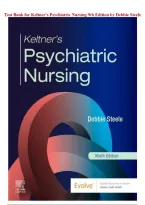
Test Bank for Keltner’s Psychiatric Nursing, 9th Edition by Debbie Steele
Prepare for psychiatric and mental health nursing coursework with a study resource designed to complement Keltner’s Psychiatric Nursing, 9th Edition by Debbie Steele. This educational resource is intended to help nursing students review essential psychiatric nursing concepts, strengthen their understanding of mental health care, and develop the critical-thinking skills needed for academic success. Psychiatric nursing is an important area of nursing practice that focuses on mental health assessment, therapeutic communication, patient safety, emotional well-being, and evidence-informed interventions. Students must understand mental health conditions, recognize changes in patient behavior, evaluate nursing priorities, and apply appropriate approaches to patient-centered care. A structured study companion can make these topics easier to review by organizing learning activities around key concepts and encouraging active recall. Whether you are preparing for classroom assessments, reviewing lecture material, or reinforcing concepts before a nursing examination, this resource can support a more organized and purposeful study routine. Key Learning Areas 1. Foundations of Psychiatric Nursing Develop a stronger understanding of psychiatric nursing principles, professional responsibilities, and the nurse’s role in mental health care. Review concepts related to patient advocacy, therapeutic relationships, ethical practice, confidentiality, and respect for individual differences. Understanding these foundations helps students recognize how psychiatric nurses contribute to treatment, recovery, and the promotion of emotional well-being. 2. Mental Health Assessment Psychiatric nursing requires careful observation, effective communication, and systematic assessment. Students can use structured review activities to reinforce their understanding of mental status examinations, patient histories, behavioral observations, and the identification of potential safety concerns. Reviewing assessment principles can also help learners understand how to distinguish reported symptoms from observable findings and recognize information that requires further evaluation. 3. Therapeutic Communication Communication is central to psychiatric nursing practice. Study topics may include active listening, empathy, clarification, reflection, open-ended questions, and the development of professional boundaries. Practice activities involving patient scenarios can help students evaluate communication approaches, identify ineffective responses, and select supportive interventions that encourage patients to express their concerns. 4. Psychiatric Disorders and Clinical Concepts Students need a sound understanding of mental health conditions, their common manifestations, and their potential effects on daily functioning. Relevant study areas may include mood disorders, anxiety disorders, psychotic disorders, trauma-related conditions, personality disorders, and substance-related disorders. Reviewing these concepts helps learners organize information about symptoms, contributing factors, treatment approaches, and nursing responsibilities. Students should consult their assigned textbook and current clinical guidelines for detailed diagnostic criteria and treatment recommendations. 5. Psychopharmacology and Medication Safety Psychiatric nursing education includes learning about medications used in mental health treatment. Students benefit from reviewing medication classifications, therapeutic purposes, common adverse effects, important monitoring considerations, and patient education. Topics may include antidepressants, antipsychotics, mood stabilizers, anxiolytics, and other medications used in psychiatric care. Particular attention should be given to medication safety, interactions, adherence, and the importance of reporting concerning adverse effects. 6. Patient Safety and Crisis Intervention Patient safety is a fundamental responsibility in psychiatric nursing. Study activities can reinforce concepts related to risk assessment, de-escalation, crisis intervention, suicide prevention, and the recognition of situations requiring immediate assistance. Students should learn to prioritize safety, follow institutional procedures, communicate concerns promptly, and use appropriate evidence-informed interventions. Clinical decisions should always follow applicable professional standards and supervision requirements. 7. Nursing Care Planning and Clinical Judgment Successful psychiatric nursing requires more than memorizing definitions. Students must connect assessment findings with appropriate nursing priorities and interventions. Case-based review can help learners practice identifying patient needs, establishing measurable goals, selecting suitable interventions, and evaluating patient responses. These activities also encourage students to explain the reasoning behind their decisions. 8. Therapeutic Environments and Patient-Centered Care A supportive therapeutic environment promotes dignity, safety, trust, and participation in treatment. Review concepts related to professional boundaries, group interactions, patient rights, collaboration with interdisciplinary teams, and individualized care planning. Students should also consider how family involvement, social circumstances, cultural factors, and personal preferences may influence mental health care. Benefits for Nursing Students A well-organized psychiatric nursing study companion can support learning in several ways. Structured review: Organize study sessions around specific psychiatric nursing topics. Active recall: Use practice questions and self-testing to identify knowledge gaps. Critical thinking: Strengthen the ability to interpret patient information and evaluate nursing priorities. Concept reinforcement: Revisit challenging material from lectures, assigned readings, and class discussions. Exam preparation: Build familiarity with applying psychiatric nursing concepts to academic questions and clinical scenarios. Independent learning: Identify areas that require additional reading or instructor guidance. Progress monitoring: Track topics that have been mastered and those that need further review. Who Can Benefit From This Resource? This study companion is intended for nursing students taking psychiatric or mental health nursing courses, learners reviewing foundational behavioral health concepts, and students who want to supplement their assigned readings with structured practice. It may also be useful for nursing educators and tutors seeking ideas for review sessions, discussion activities, and classroom learning exercises. Educators should independently verify any instructional material before incorporating it into formal teaching. How to Use This Study Resource For the best learning experience, begin by reviewing the relevant chapter in your assigned textbook. Attempt practice activities without consulting your notes, then revisit the material to understand any incorrect responses. Create a list of difficult concepts, including medication safety, therapeutic communication, mental health assessment, and crisis intervention. Revisit these subjects regularly instead of waiting until the examination period. When reviewing a patient scenario, ask yourself four questions: What assessment findings are most important? Which patient needs or safety concerns should receive priority? What nursing intervention is appropriate, and why? How would the nurse evaluate the patient's response? This approach encourages understanding and application rather than simple memorization. Always verify clinical information against your assigned textbook, instructor guidance, and current professional recommendations. Important Product Information This listing refers to a supplementary educational study resource associated with Keltner’s Psychiatric Nursing, 9th Edition by Debbie Steele. The exact contents, question count, answer explanations, and format should be confirmed with the seller before purchase. Unless specifically verified, this product should not be represented as an official publisher resource, an authorized examination, or a collection of actual examination questions. It is intended for educational review and should be used alongside the prescribed textbook and other appropriate learning materials. Conclusion Strengthen your psychiatric nursing study routine with a structured approach to mental health concepts, patient assessment, therapeutic communication, psychopharmacology, safety, and clinical judgment. By combining focused practice with textbook reading and regular self-assessment, nursing students can build a stronger conceptual foundation and improve their readiness for coursework and future clinical learning. Choose a study resource that supports active learning, encourages thoughtful review, and complements your nursing education.
Document information
- Uploaded on
- October 12, 2026
- Number of pages
- 108
- Written in
- 2026/2027
- Type
- Exam (elaborations)
- Contains
- Questions & answers


