
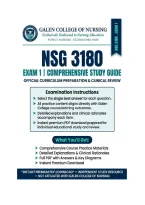
,NSG 3180 Exam 1 | Communication and Teamwork
(2026/2027) PDF | Nursing | Galen College
1. Which of the following best describes the primary focus of therapeutic
communication in nursing?
A) Sharing personal stories to build rapport with the client
B) Using medical terminology to ensure accurate information exchange
C) Purposeful, goal-directed communication that promotes client well-being
D) Informal conversation that helps the client feel comfortable
Correct Answer: Purposeful, goal-directed communication that promotes client
well-being
Rationale: Therapeutic communication is client-centered, goal-directed, and
designed to promote expression, understanding, and well-being. It differs from
social conversation, which is informal and not focused on client outcomes. Using
medical jargon and sharing personal stories are barriers to effective therapeutic
communication.
2. What is the primary function of the SBAR communication tool?
A) To document nursing interventions in the medical record
B) To provide a structured framework for communicating critical information
C) To assess a client's level of consciousness
D) To calculate medication dosages accurately
,Correct Answer: To provide a structured framework for communicating critical
information
Rationale: SBAR (Situation, Background, Assessment, Recommendation)
provides a standardized format for communicating essential information
between healthcare providers during handoffs. It reduces communication errors
and improves patient safety. It is not used for documentation, consciousness
assessment, or dosage calculation, although these may be discussed within the
SBAR framework.
3. According to the principles of the helping relationship, which phase involves
the nurse and client establishing trust and defining the purpose of the
relationship?
A) Working phase
B) Termination phase
C) Orientation phase
D) Pre-interaction phase
Correct Answer: Orientation phase
Rationale: The orientation phase is the first phase of the nurse-client
relationship, where the nurse and client meet, establish trust, and define the
goals and boundaries of the relationship. The working phase involves
accomplishing the goals, and the termination phase involves ending the
relationship. The pre-interaction phase occurs before the first meeting.
, 4. In the context of cultural competence, what is the primary purpose of a
cultural assessment?
A) To determine the client's immigration status
B) To understand the client's cultural beliefs and practices related to health
C) To evaluate the client's English language proficiency
D) To assign the client to a healthcare provider of the same cultural background
Correct Answer: To understand the client's cultural beliefs and practices related
to health
Rationale: A cultural assessment gathers information about the client's cultural
beliefs, values, practices, and preferences related to health, illness, and
treatment. This information guides culturally appropriate care. It is not used to
determine immigration status, evaluate language proficiency, or assign
providers based on cultural background.
5. A nurse is caring for a client who is scheduled for surgery and has been NPO
since midnight. The client reports feeling weak and dizzy. Which action should
the nurse take first?
A) Administer a prescribed antiemetic
B) Obtain a blood glucose reading
C) Encourage the client to sip clear liquids
D) Reposition the client to a supine position
Correct Answer: Obtain a blood glucose reading
(2026/2027) PDF | Nursing | Galen College
1. Which of the following best describes the primary focus of therapeutic
communication in nursing?
A) Sharing personal stories to build rapport with the client
B) Using medical terminology to ensure accurate information exchange
C) Purposeful, goal-directed communication that promotes client well-being
D) Informal conversation that helps the client feel comfortable
Correct Answer: Purposeful, goal-directed communication that promotes client
well-being
Rationale: Therapeutic communication is client-centered, goal-directed, and
designed to promote expression, understanding, and well-being. It differs from
social conversation, which is informal and not focused on client outcomes. Using
medical jargon and sharing personal stories are barriers to effective therapeutic
communication.
2. What is the primary function of the SBAR communication tool?
A) To document nursing interventions in the medical record
B) To provide a structured framework for communicating critical information
C) To assess a client's level of consciousness
D) To calculate medication dosages accurately
,Correct Answer: To provide a structured framework for communicating critical
information
Rationale: SBAR (Situation, Background, Assessment, Recommendation)
provides a standardized format for communicating essential information
between healthcare providers during handoffs. It reduces communication errors
and improves patient safety. It is not used for documentation, consciousness
assessment, or dosage calculation, although these may be discussed within the
SBAR framework.
3. According to the principles of the helping relationship, which phase involves
the nurse and client establishing trust and defining the purpose of the
relationship?
A) Working phase
B) Termination phase
C) Orientation phase
D) Pre-interaction phase
Correct Answer: Orientation phase
Rationale: The orientation phase is the first phase of the nurse-client
relationship, where the nurse and client meet, establish trust, and define the
goals and boundaries of the relationship. The working phase involves
accomplishing the goals, and the termination phase involves ending the
relationship. The pre-interaction phase occurs before the first meeting.
, 4. In the context of cultural competence, what is the primary purpose of a
cultural assessment?
A) To determine the client's immigration status
B) To understand the client's cultural beliefs and practices related to health
C) To evaluate the client's English language proficiency
D) To assign the client to a healthcare provider of the same cultural background
Correct Answer: To understand the client's cultural beliefs and practices related
to health
Rationale: A cultural assessment gathers information about the client's cultural
beliefs, values, practices, and preferences related to health, illness, and
treatment. This information guides culturally appropriate care. It is not used to
determine immigration status, evaluate language proficiency, or assign
providers based on cultural background.
5. A nurse is caring for a client who is scheduled for surgery and has been NPO
since midnight. The client reports feeling weak and dizzy. Which action should
the nurse take first?
A) Administer a prescribed antiemetic
B) Obtain a blood glucose reading
C) Encourage the client to sip clear liquids
D) Reposition the client to a supine position
Correct Answer: Obtain a blood glucose reading


