
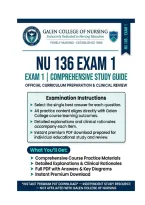
,NU 136 Exam 1 | Fundamentals of Nursing
(2026/2027) PDF | Nursing | Galen College
1. Which of the following best describes the World Health Organization's
definition of health?
A) The absence of disease or infirmity
B) A state of complete physical, mental, and social well-being
C) The ability to perform activities of daily living independently
D) Freedom from pain and physical limitations
Correct Answer: A state of complete physical, mental, and social well-being
Rationale: The WHO defines health as a state of complete physical, mental, and
social well-being, not merely the absence of disease or infirmity. This holistic
definition acknowledges that health is multidimensional and subjective,
influenced by culture, education, and social factors. The other options reflect
incomplete or outdated definitions.
2. What is the primary difference between a disease and an illness?
A) Disease is subjective, while illness is objective
B) Disease is a pathologic process, while illness is the patient's perception of
being unwell
C) Disease is always chronic, while illness is always acute
D) Disease affects only physical health, while illness affects mental health
,Correct Answer: Disease is a pathologic process, while illness is the patient's
perception of being unwell
Rationale: Disease refers to a pathologic process such as infection or organ
dysfunction, while illness is the patient's perception and experience of being
unwell. Disease can be present without the patient feeling ill, and a patient can
feel ill without an identifiable disease. This distinction is fundamental to
patient-centered care.
3. A nurse is teaching a community group about primary prevention strategies.
Which example should the nurse include?
A) Annual mammograms for women over 40
B) Vaccinations and sunscreen use
C) Cardiac rehabilitation after a heart attack
D) Blood pressure screening at a health fair
Correct Answer: Vaccinations and sunscreen use
Rationale: Primary prevention aims to prevent disease before it occurs through
measures such as vaccinations, sunscreen use, helmets, and healthy lifestyle
choices. Mammograms and blood pressure screening are secondary prevention
(early detection), and cardiac rehabilitation is tertiary prevention (managing
established disease).
4. A patient presents with a sudden illness from which recovery is expected.
Which type of illness is this?
, A) Chronic illness
B) Terminal illness
C) Acute illness
D) Secondary illness
Correct Answer: Acute illness
Rationale: An acute illness is a sudden illness from which a person is expected to
recover. Chronic illnesses are ongoing health problems of a generally incurable
nature (e.g., diabetes). Terminal illnesses are incurable and result in death.
Secondary illnesses result from or are caused by a primary illness.
5. A nurse collects vital signs, auscultates lung sounds, and asks the patient
about pain. These actions represent which step of the nursing process?
A) Planning
B) Assessment
C) Implementation
D) Evaluation
Correct Answer: Assessment
Rationale: Assessment is the first step of the nursing process, involving the
systematic collection of subjective and objective data. Planning sets goals,
implementation carries out interventions, and evaluation determines if
outcomes were met. This nurse is gathering baseline information.
(2026/2027) PDF | Nursing | Galen College
1. Which of the following best describes the World Health Organization's
definition of health?
A) The absence of disease or infirmity
B) A state of complete physical, mental, and social well-being
C) The ability to perform activities of daily living independently
D) Freedom from pain and physical limitations
Correct Answer: A state of complete physical, mental, and social well-being
Rationale: The WHO defines health as a state of complete physical, mental, and
social well-being, not merely the absence of disease or infirmity. This holistic
definition acknowledges that health is multidimensional and subjective,
influenced by culture, education, and social factors. The other options reflect
incomplete or outdated definitions.
2. What is the primary difference between a disease and an illness?
A) Disease is subjective, while illness is objective
B) Disease is a pathologic process, while illness is the patient's perception of
being unwell
C) Disease is always chronic, while illness is always acute
D) Disease affects only physical health, while illness affects mental health
,Correct Answer: Disease is a pathologic process, while illness is the patient's
perception of being unwell
Rationale: Disease refers to a pathologic process such as infection or organ
dysfunction, while illness is the patient's perception and experience of being
unwell. Disease can be present without the patient feeling ill, and a patient can
feel ill without an identifiable disease. This distinction is fundamental to
patient-centered care.
3. A nurse is teaching a community group about primary prevention strategies.
Which example should the nurse include?
A) Annual mammograms for women over 40
B) Vaccinations and sunscreen use
C) Cardiac rehabilitation after a heart attack
D) Blood pressure screening at a health fair
Correct Answer: Vaccinations and sunscreen use
Rationale: Primary prevention aims to prevent disease before it occurs through
measures such as vaccinations, sunscreen use, helmets, and healthy lifestyle
choices. Mammograms and blood pressure screening are secondary prevention
(early detection), and cardiac rehabilitation is tertiary prevention (managing
established disease).
4. A patient presents with a sudden illness from which recovery is expected.
Which type of illness is this?
, A) Chronic illness
B) Terminal illness
C) Acute illness
D) Secondary illness
Correct Answer: Acute illness
Rationale: An acute illness is a sudden illness from which a person is expected to
recover. Chronic illnesses are ongoing health problems of a generally incurable
nature (e.g., diabetes). Terminal illnesses are incurable and result in death.
Secondary illnesses result from or are caused by a primary illness.
5. A nurse collects vital signs, auscultates lung sounds, and asks the patient
about pain. These actions represent which step of the nursing process?
A) Planning
B) Assessment
C) Implementation
D) Evaluation
Correct Answer: Assessment
Rationale: Assessment is the first step of the nursing process, involving the
systematic collection of subjective and objective data. Planning sets goals,
implementation carries out interventions, and evaluation determines if
outcomes were met. This nurse is gathering baseline information.


