
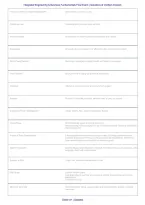
Integrated Engineering & Business Fundamentals Final Exam | Questions & Verified Answers
Triple Constraints of Project Management Specifications, schedule, cost
Project sponsor Initiates project, provides team authority
Project Manager Responsible for achieving project's objectives; team leader
Stakeholder Any party who is interested in or affected by the outcome of the project
Senior Team Member Sub-project manager, provides breadth and depth of knowledge
Team member full or part time w/ assigned actions in project plan
Customer Internal or external persons who benefit from project
Supplier Provider of materials, products, services need to carry out project
6 Stages of Project Management Initiate, Define, Plan, Control, Implement, Review
Initiate Stage Check feasibility (good chance of success?)
Identify driving (reasons project is a go) and resisting forces (resource availability)
Risk Assessments
Stages of Team Development Forming (members tentative about project roles), Storming (members assert
positions and power), Norming (working practices are established), Performing
(team works positively and productively achieving goals)
SMART Objectives Specific, Measurable, Attainable, Relevant, Time-Bound (Focus on outcomes, clear
language, check with stakeholders)
Sources of Risk Project risk, business risks and Acts of God
Plan Stage Develop detailed plans
Listing activities to see how work overlaps, identify dependencies and monitor
performance
Commit Resources
Needs for each task Work description, inputs, outputs, roles and responsibilities, duration, required
resources
Grade A+ | Updated
, Integrated Engineering & Business Fundamentals Final Exam | Questions & Verified Answers
Network Diagrams Critical Path: Sequence of activities that takes the longest time to complete
Non-Critical Path: sequence of activities that can be delayed and still finish the
project on time
Slack time: max amt of time you can delay activity and still finish project on time
Earliest Start Date: (first date you can start activity)
Control Plan the work, Work the plan
Contract: Vision, deliverables, milestones, risks and opportunities, list of
stakeholders, communications plan
Work the Plan Assign people to all project roles; communicate all roles and responsibilities; work
communications, decision, and conflict resolution process; implement financial,
personnel, and schedule tracking; launch project
Leader's Role Overall responsibility for project success; communicate clearly; focus team towards
project goals; organize and oversee details ; build good relationships w/
stakeholders, select right team members and let them grow
Effective Leading: Allow others to do their jobs; constructively criticize; set high
standards; seek and use feedback; be results oriented
6 Steps of Delegation Communicate task; give context; agree on standards for completion; get
commitment; transfer authority; provide support
Successful Review Meeting discuss progress and resolve problems
Implementation Train users; perform user acceptance testing; develop handover procedure; Go live;
make sure all activities are completed; close accounts
Review post project evaluation
"lessons learned"
final report
thank the team
What worked?, what didn't work?, what's missing?
Goal of product development The goal of a creating product is to increase sales. Sales increase revenue,
revenue increases profit, profit increases stock price, stock price increases market
cap (investors look at EPS to tell how good a company is)
4 Major Developing Technologies Search, mobile, cloud, social
Product Life Cycle Introduction, Growth, Maturity, Decline
S curves shows technology life cycle (time v. performance).
Incremental Innovation Evolutionary, on same curve, driven by customer (pulls from the market),
Breakthrough Innovation Revolutionary, typically leap to next S curve, driven by technology (push into
market),
Grade A+ | Updated
Triple Constraints of Project Management Specifications, schedule, cost
Project sponsor Initiates project, provides team authority
Project Manager Responsible for achieving project's objectives; team leader
Stakeholder Any party who is interested in or affected by the outcome of the project
Senior Team Member Sub-project manager, provides breadth and depth of knowledge
Team member full or part time w/ assigned actions in project plan
Customer Internal or external persons who benefit from project
Supplier Provider of materials, products, services need to carry out project
6 Stages of Project Management Initiate, Define, Plan, Control, Implement, Review
Initiate Stage Check feasibility (good chance of success?)
Identify driving (reasons project is a go) and resisting forces (resource availability)
Risk Assessments
Stages of Team Development Forming (members tentative about project roles), Storming (members assert
positions and power), Norming (working practices are established), Performing
(team works positively and productively achieving goals)
SMART Objectives Specific, Measurable, Attainable, Relevant, Time-Bound (Focus on outcomes, clear
language, check with stakeholders)
Sources of Risk Project risk, business risks and Acts of God
Plan Stage Develop detailed plans
Listing activities to see how work overlaps, identify dependencies and monitor
performance
Commit Resources
Needs for each task Work description, inputs, outputs, roles and responsibilities, duration, required
resources
Grade A+ | Updated
, Integrated Engineering & Business Fundamentals Final Exam | Questions & Verified Answers
Network Diagrams Critical Path: Sequence of activities that takes the longest time to complete
Non-Critical Path: sequence of activities that can be delayed and still finish the
project on time
Slack time: max amt of time you can delay activity and still finish project on time
Earliest Start Date: (first date you can start activity)
Control Plan the work, Work the plan
Contract: Vision, deliverables, milestones, risks and opportunities, list of
stakeholders, communications plan
Work the Plan Assign people to all project roles; communicate all roles and responsibilities; work
communications, decision, and conflict resolution process; implement financial,
personnel, and schedule tracking; launch project
Leader's Role Overall responsibility for project success; communicate clearly; focus team towards
project goals; organize and oversee details ; build good relationships w/
stakeholders, select right team members and let them grow
Effective Leading: Allow others to do their jobs; constructively criticize; set high
standards; seek and use feedback; be results oriented
6 Steps of Delegation Communicate task; give context; agree on standards for completion; get
commitment; transfer authority; provide support
Successful Review Meeting discuss progress and resolve problems
Implementation Train users; perform user acceptance testing; develop handover procedure; Go live;
make sure all activities are completed; close accounts
Review post project evaluation
"lessons learned"
final report
thank the team
What worked?, what didn't work?, what's missing?
Goal of product development The goal of a creating product is to increase sales. Sales increase revenue,
revenue increases profit, profit increases stock price, stock price increases market
cap (investors look at EPS to tell how good a company is)
4 Major Developing Technologies Search, mobile, cloud, social
Product Life Cycle Introduction, Growth, Maturity, Decline
S curves shows technology life cycle (time v. performance).
Incremental Innovation Evolutionary, on same curve, driven by customer (pulls from the market),
Breakthrough Innovation Revolutionary, typically leap to next S curve, driven by technology (push into
market),
Grade A+ | Updated


