
!@#()*$*(&@&(*%*&((%UPathophysiology
!@#()*$*(&@&(*%*&((%UPathophysiology
Complete Exam!@#()*$*(&@&(*%*&((%UPathophysiology
Study Guide,Complete
Practice Questions,
Exam Studyand
Guide,
ATIComplete
Review
PracticeMaterial,,,.pdfhttps://www.stuvia.com/user/docstudent96https://www.stuvia.com/user/docstudent96
Questions,
Exam Studyand Guide,
ATI Review
PracticeMaterial,,,.pdfhttps://www.stuvia.com/user/docstudent96https://www.stuvia.com/user/docstudent96
Questions, and ATI Review Material,,,.pdfhttps://www.stuvia.com/user/docstudent96https://www.stuvia.com/user/docstudent96
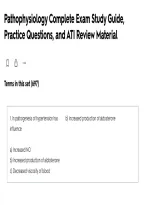
Pathophysiology Complete Exam Study Guide,
Practice Questions, and ATI Review Material
Terms in this set (697)
1. In pathogenesis of hypertension has b) Increased production of aldosterone
influence:
a) Increased NO
b) Increased production of aldosterone
c) Decreased viscosity of blood
!@#()*$*(&@&(*%*&((%UPathophysiology
!@#()*$*(&@&(*%*&((%UPathophysiology
Complete Exam!@#()*$*(&@&(*%*&((%UPathophysiology
Study Guide,Complete
Practice Questions,
Exam Studyand
Guide,
ATIComplete
Review
PracticeMaterial,,,.pdfhttps://www.stuvia.com/user/docstudent96https://www.stuvia.com/user/docstudent96
Questions,
Exam Studyand Guide,
ATI Review
PracticeMaterial,,,.pdfhttps://www.stuvia.com/user/docstudent96https://www.stuvia.com/user/docstudent96
Questions, and ATI Review Material,,,.pdfhttps://www.stuvia.com/user/docstudent96https://www.stuvia.com/user/docstudent96
,!@#()*$*(&@&(*%*&((%UPathophysiology
!@#()*$*(&@&(*%*&((%UPathophysiology
Complete Exam!@#()*$*(&@&(*%*&((%UPathophysiology
Study Guide,Complete
Practice Questions,
Exam Studyand
Guide,
ATIComplete
Review
PracticeMaterial,,,.pdfhttps://www.stuvia.com/user/docstudent96https://www.stuvia.com/user/docstudent96
Questions,
Exam Studyand Guide,
ATI Review
PracticeMaterial,,,.pdfhttps://www.stuvia.com/user/docstudent96https://www.stuvia.com/user/docstudent96
Questions, and ATI Review Material,,,.pdfhttps://www.stuvia.com/user/docstudent96https://www.stuvia.com/user/docstudent96
2. Hypernatremia occurs in: a) Diabetes insipidus
a) Diabetes insipidus condition where the body cannot regulate water
b) Secretion of vasopressin balance due to low secretion of ADH, therefore lots of
c) Syndrome of hepatic something? water is excreted by the body which causes an
increase in sodium in the blood (sodium isn't excreted
at the same rate as water)
3. Glycemia is not influenced by: a) Calcitonin
a) Calcitonin
b) Adrenalin
c) Somatotropin
!@#()*$*(&@&(*%*&((%UPathophysiology
!@#()*$*(&@&(*%*&((%UPathophysiology
Complete Exam!@#()*$*(&@&(*%*&((%UPathophysiology
Study Guide,Complete
Practice Questions,
Exam Studyand
Guide,
ATIComplete
Review
PracticeMaterial,,,.pdfhttps://www.stuvia.com/user/docstudent96https://www.stuvia.com/user/docstudent96
Questions,
Exam Studyand Guide,
ATI Review
PracticeMaterial,,,.pdfhttps://www.stuvia.com/user/docstudent96https://www.stuvia.com/user/docstudent96
Questions, and ATI Review Material,,,.pdfhttps://www.stuvia.com/user/docstudent96https://www.stuvia.com/user/docstudent96
,!@#()*$*(&@&(*%*&((%UPathophysiology
!@#()*$*(&@&(*%*&((%UPathophysiology
Complete Exam!@#()*$*(&@&(*%*&((%UPathophysiology
Study Guide,Complete
Practice Questions,
Exam Studyand
Guide,
ATIComplete
Review
PracticeMaterial,,,.pdfhttps://www.stuvia.com/user/docstudent96https://www.stuvia.com/user/docstudent96
Questions,
Exam Studyand Guide,
ATI Review
PracticeMaterial,,,.pdfhttps://www.stuvia.com/user/docstudent96https://www.stuvia.com/user/docstudent96
Questions, and ATI Review Material,,,.pdfhttps://www.stuvia.com/user/docstudent96https://www.stuvia.com/user/docstudent96
4. Increased lung compliance occurs in: b) Emphysema
a) Edema a type of COPD
b) Emphysema walls of alveoli are damaged = loss of elastic fibres, so
c) Fibrosis they're easier to inflate but not easier to recoil back
into original shape
5. In which case neutrophilia does not b) Hypoadrenocorticism
occur:
low levels of cortisol
a) Hyperadrenocorticism (stress leukogram = high levels of cortisol, high
b) Hypoadrenocorticism amounts of monocytes and neutrophils)
c) Bacterial infection
!@#()*$*(&@&(*%*&((%UPathophysiology
!@#()*$*(&@&(*%*&((%UPathophysiology
Complete Exam!@#()*$*(&@&(*%*&((%UPathophysiology
Study Guide,Complete
Practice Questions,
Exam Studyand
Guide,
ATIComplete
Review
PracticeMaterial,,,.pdfhttps://www.stuvia.com/user/docstudent96https://www.stuvia.com/user/docstudent96
Questions,
Exam Studyand Guide,
ATI Review
PracticeMaterial,,,.pdfhttps://www.stuvia.com/user/docstudent96https://www.stuvia.com/user/docstudent96
Questions, and ATI Review Material,,,.pdfhttps://www.stuvia.com/user/docstudent96https://www.stuvia.com/user/docstudent96
, !@#()*$*(&@&(*%*&((%UPathophysiology
!@#()*$*(&@&(*%*&((%UPathophysiology
Complete Exam!@#()*$*(&@&(*%*&((%UPathophysiology
Study Guide,Complete
Practice Questions,
Exam Studyand
Guide,
ATIComplete
Review
PracticeMaterial,,,.pdfhttps://www.stuvia.com/user/docstudent96https://www.stuvia.com/user/docstudent96
Questions,
Exam Studyand Guide,
ATI Review
PracticeMaterial,,,.pdfhttps://www.stuvia.com/user/docstudent96https://www.stuvia.com/user/docstudent96
Questions, and ATI Review Material,,,.pdfhttps://www.stuvia.com/user/docstudent96https://www.stuvia.com/user/docstudent96
6. What is used for staining of Howell- a) Panoptical
Jolly bodies:
a) Panoptical
b) Brilliant cresyl
c) Berlin blue
7. Which staining is used for assessment d) NBT test
of metabolic reactions in phagocytosis:
measures production of ROS by neutrophils (resp
a) Berlin blue burst)
b) Brilliant cresyl - Berlin blue = detecting iron in tissues.
c) PAS reaction - Brilliant cresyl = staining reticulocytes in blood
d) NBT test smears.
PAS reaction (Periodic acid-Schiff) = staining
carbohydrates and mucosubstances.
!@#()*$*(&@&(*%*&((%UPathophysiology
!@#()*$*(&@&(*%*&((%UPathophysiology
Complete Exam!@#()*$*(&@&(*%*&((%UPathophysiology
Study Guide,Complete
Practice Questions,
Exam Studyand
Guide,
ATIComplete
Review
PracticeMaterial,,,.pdfhttps://www.stuvia.com/user/docstudent96https://www.stuvia.com/user/docstudent96
Questions,
Exam Studyand Guide,
ATI Review
PracticeMaterial,,,.pdfhttps://www.stuvia.com/user/docstudent96https://www.stuvia.com/user/docstudent96
Questions, and ATI Review Material,,,.pdfhttps://www.stuvia.com/user/docstudent96https://www.stuvia.com/user/docstudent96
!@#()*$*(&@&(*%*&((%UPathophysiology
Complete Exam!@#()*$*(&@&(*%*&((%UPathophysiology
Study Guide,Complete
Practice Questions,
Exam Studyand
Guide,
ATIComplete
Review
PracticeMaterial,,,.pdfhttps://www.stuvia.com/user/docstudent96https://www.stuvia.com/user/docstudent96
Questions,
Exam Studyand Guide,
ATI Review
PracticeMaterial,,,.pdfhttps://www.stuvia.com/user/docstudent96https://www.stuvia.com/user/docstudent96
Questions, and ATI Review Material,,,.pdfhttps://www.stuvia.com/user/docstudent96https://www.stuvia.com/user/docstudent96
Pathophysiology Complete Exam Study Guide,
Practice Questions, and ATI Review Material
Terms in this set (697)
1. In pathogenesis of hypertension has b) Increased production of aldosterone
influence:
a) Increased NO
b) Increased production of aldosterone
c) Decreased viscosity of blood
!@#()*$*(&@&(*%*&((%UPathophysiology
!@#()*$*(&@&(*%*&((%UPathophysiology
Complete Exam!@#()*$*(&@&(*%*&((%UPathophysiology
Study Guide,Complete
Practice Questions,
Exam Studyand
Guide,
ATIComplete
Review
PracticeMaterial,,,.pdfhttps://www.stuvia.com/user/docstudent96https://www.stuvia.com/user/docstudent96
Questions,
Exam Studyand Guide,
ATI Review
PracticeMaterial,,,.pdfhttps://www.stuvia.com/user/docstudent96https://www.stuvia.com/user/docstudent96
Questions, and ATI Review Material,,,.pdfhttps://www.stuvia.com/user/docstudent96https://www.stuvia.com/user/docstudent96
,!@#()*$*(&@&(*%*&((%UPathophysiology
!@#()*$*(&@&(*%*&((%UPathophysiology
Complete Exam!@#()*$*(&@&(*%*&((%UPathophysiology
Study Guide,Complete
Practice Questions,
Exam Studyand
Guide,
ATIComplete
Review
PracticeMaterial,,,.pdfhttps://www.stuvia.com/user/docstudent96https://www.stuvia.com/user/docstudent96
Questions,
Exam Studyand Guide,
ATI Review
PracticeMaterial,,,.pdfhttps://www.stuvia.com/user/docstudent96https://www.stuvia.com/user/docstudent96
Questions, and ATI Review Material,,,.pdfhttps://www.stuvia.com/user/docstudent96https://www.stuvia.com/user/docstudent96
2. Hypernatremia occurs in: a) Diabetes insipidus
a) Diabetes insipidus condition where the body cannot regulate water
b) Secretion of vasopressin balance due to low secretion of ADH, therefore lots of
c) Syndrome of hepatic something? water is excreted by the body which causes an
increase in sodium in the blood (sodium isn't excreted
at the same rate as water)
3. Glycemia is not influenced by: a) Calcitonin
a) Calcitonin
b) Adrenalin
c) Somatotropin
!@#()*$*(&@&(*%*&((%UPathophysiology
!@#()*$*(&@&(*%*&((%UPathophysiology
Complete Exam!@#()*$*(&@&(*%*&((%UPathophysiology
Study Guide,Complete
Practice Questions,
Exam Studyand
Guide,
ATIComplete
Review
PracticeMaterial,,,.pdfhttps://www.stuvia.com/user/docstudent96https://www.stuvia.com/user/docstudent96
Questions,
Exam Studyand Guide,
ATI Review
PracticeMaterial,,,.pdfhttps://www.stuvia.com/user/docstudent96https://www.stuvia.com/user/docstudent96
Questions, and ATI Review Material,,,.pdfhttps://www.stuvia.com/user/docstudent96https://www.stuvia.com/user/docstudent96
,!@#()*$*(&@&(*%*&((%UPathophysiology
!@#()*$*(&@&(*%*&((%UPathophysiology
Complete Exam!@#()*$*(&@&(*%*&((%UPathophysiology
Study Guide,Complete
Practice Questions,
Exam Studyand
Guide,
ATIComplete
Review
PracticeMaterial,,,.pdfhttps://www.stuvia.com/user/docstudent96https://www.stuvia.com/user/docstudent96
Questions,
Exam Studyand Guide,
ATI Review
PracticeMaterial,,,.pdfhttps://www.stuvia.com/user/docstudent96https://www.stuvia.com/user/docstudent96
Questions, and ATI Review Material,,,.pdfhttps://www.stuvia.com/user/docstudent96https://www.stuvia.com/user/docstudent96
4. Increased lung compliance occurs in: b) Emphysema
a) Edema a type of COPD
b) Emphysema walls of alveoli are damaged = loss of elastic fibres, so
c) Fibrosis they're easier to inflate but not easier to recoil back
into original shape
5. In which case neutrophilia does not b) Hypoadrenocorticism
occur:
low levels of cortisol
a) Hyperadrenocorticism (stress leukogram = high levels of cortisol, high
b) Hypoadrenocorticism amounts of monocytes and neutrophils)
c) Bacterial infection
!@#()*$*(&@&(*%*&((%UPathophysiology
!@#()*$*(&@&(*%*&((%UPathophysiology
Complete Exam!@#()*$*(&@&(*%*&((%UPathophysiology
Study Guide,Complete
Practice Questions,
Exam Studyand
Guide,
ATIComplete
Review
PracticeMaterial,,,.pdfhttps://www.stuvia.com/user/docstudent96https://www.stuvia.com/user/docstudent96
Questions,
Exam Studyand Guide,
ATI Review
PracticeMaterial,,,.pdfhttps://www.stuvia.com/user/docstudent96https://www.stuvia.com/user/docstudent96
Questions, and ATI Review Material,,,.pdfhttps://www.stuvia.com/user/docstudent96https://www.stuvia.com/user/docstudent96
, !@#()*$*(&@&(*%*&((%UPathophysiology
!@#()*$*(&@&(*%*&((%UPathophysiology
Complete Exam!@#()*$*(&@&(*%*&((%UPathophysiology
Study Guide,Complete
Practice Questions,
Exam Studyand
Guide,
ATIComplete
Review
PracticeMaterial,,,.pdfhttps://www.stuvia.com/user/docstudent96https://www.stuvia.com/user/docstudent96
Questions,
Exam Studyand Guide,
ATI Review
PracticeMaterial,,,.pdfhttps://www.stuvia.com/user/docstudent96https://www.stuvia.com/user/docstudent96
Questions, and ATI Review Material,,,.pdfhttps://www.stuvia.com/user/docstudent96https://www.stuvia.com/user/docstudent96
6. What is used for staining of Howell- a) Panoptical
Jolly bodies:
a) Panoptical
b) Brilliant cresyl
c) Berlin blue
7. Which staining is used for assessment d) NBT test
of metabolic reactions in phagocytosis:
measures production of ROS by neutrophils (resp
a) Berlin blue burst)
b) Brilliant cresyl - Berlin blue = detecting iron in tissues.
c) PAS reaction - Brilliant cresyl = staining reticulocytes in blood
d) NBT test smears.
PAS reaction (Periodic acid-Schiff) = staining
carbohydrates and mucosubstances.
!@#()*$*(&@&(*%*&((%UPathophysiology
!@#()*$*(&@&(*%*&((%UPathophysiology
Complete Exam!@#()*$*(&@&(*%*&((%UPathophysiology
Study Guide,Complete
Practice Questions,
Exam Studyand
Guide,
ATIComplete
Review
PracticeMaterial,,,.pdfhttps://www.stuvia.com/user/docstudent96https://www.stuvia.com/user/docstudent96
Questions,
Exam Studyand Guide,
ATI Review
PracticeMaterial,,,.pdfhttps://www.stuvia.com/user/docstudent96https://www.stuvia.com/user/docstudent96
Questions, and ATI Review Material,,,.pdfhttps://www.stuvia.com/user/docstudent96https://www.stuvia.com/user/docstudent96


