
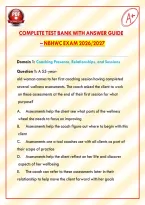
COMPLETE TEST BANK WITH ANSWER GUIDE = = = = = =
– NBHWC EXAM 2026/2027
= = =
=
Domain 1: Coaching Presence, Relationships, and Sessions
= = = = = = =
Question 1: A 55-year- = = =
old woman comes to her first coaching session having completed
= = = = = = = = = =
several wellness assessments. The coach asked the client to work
= = = = = = = = =
on these assessments at the end of their first session for what
= = = = = = = = = = = =
purpose?
= =
A. Assessments help the client see what parts of the wellness
= = = = = = = = =
= wheel she needs to focus on improving
= = = = = = =
B. Assessments help the coach figure out where to begin with this
= = = = = = = = = =
= client =
C. Assessments are a tool coaches use with all clients as part of
= = = = = = = = = = = =
their scope of practice
= = = =
D. Assessments help the client reflect on her life and discover
= = = = = = = = =
= aspects of her wellbeing
= = = =
E. The coach can refer to these assessments later in their
= = = = = = = = = =
relationship to help move the client forward with her goals
= = = = = = = = = =
,Correct Answer: D. Assessments help the client reflect on her lif
= = = = = = = = = =
e and discover aspects of her wellbeing
= = = = = = =
Rationale: The primary purpose of having clients complete wellnes
= = = = = = = =
s assessments is to facilitate self-
= = = = =
reflection and discovery . Assessments serve as a tool for the client
= = = = = = = = = = = =
to gain insight into their own life and wellbeing, not primarily for th
= = = = = = = = = = = =
e coach's benefit. While coaches may use assessment results to gui
= = = = = = = = = =
de sessions, the client's self-
= = = =
discovery is paramount. Starting with reflective tools helps establis
= = = = = = = =
h a client-
= =
centered approach and empowers clients to take ownership of the
= = = = = = = = =
ir wellness journey.
= = =
=
Question 2: A 28-year- = = =
old female client is on her fourth coaching session. She has been str
= = = = = = = = = = = =
uggling with stress as she does not get along with her current room
= = = = = = = = = = = =
mate. =
Client: "I just don't know whether to move out or not."
= = = = = = = = = = =
Coach: "You should do whatever you think is best."
= = = = = = = = =
,Which of the 12 Thomas Gordon's Roadblocks to Communication d
= = = = = = = = =
id the coach demonstrate?
= = = =
A. Warning =
B. Shaming =
C. Telling people what to do = = = = =
D. Interpreting =
Correct Answer: C. Telling people what to do
= = = = = = = =
Rationale: Thomas Gordon's 12 Roadblocks to Communication ide
= = = = = = =
ntify responses that block effective communication . "Telling peopl
= = = = = = = =
e what to do" includes giving advice, solutions, or directives. While
= = = = = = = = = =
the coach's response seems innocuous, it subtly directs the client rat
= = = = = = = = = = =
her than exploring their ambivalence. Effective coaching requires
= = = = = = = =
exploring options rather than providing solutions. Other roadblock
= = = = = = =
s include warning, shaming, interpreting, and judging.
= = = = = = =
=
Question 3: At the beginning of each coaching session, before con
= = = = = = = = = =
tacting the client, a coach rings a small bell three times. This is an e
= = = = = = = = = = = = = =
xample of an activity to improve what coaching technique?
= = = = = = = = =
A. Mindfulness =
B. Perceptive Reflections = =
C. Appreciative Inquiries = =
, D. Affirmations =
Correct Answer: A. Mindfulness = = = =
Rationale: Mindfulness practices help coaches cultivate presentmo
= = = = = =
ment awareness and intentionality before engaging with clients . R
= = = = = = = = =
ituals like ringing a bell, deep breathing, or centering exercises hel
= = = = = = = = = =
p coaches clear distractions and be fully present. Mindfulness enha
= = = = = = = = =
nces coaching presence, allowing the coach to better listen, observ
= = = = = = = = =
e, and respond effectively during sessions.
= = = = = =
=
Question 4: About halfway through your coaching agreement wit
= = = = = = = =
h a client, the coach notices that the client is arriving to the coachin
= = = = = = = = = = = = =
g calls late and has missed a couple of sessions without notifying y
= = = = = = = = = = = =
ou in advance. Which of the following approaches would be BEST
= = = = = = = = = = =
to pursue with your client?
= = = = =
A. Explore what's working, revisit client's strengths, and create a
= = = = = = = =
plan for improvement
= = = =
B. Explore why coaching isn't working and get feedback on wha
= = = = = = = = =
t specific things they don't like
= = = = = =
C. Share your observations, express empathy, and inquire as to
= = = = = = = = =
what could make their vision and goals more of a priority D. Confr
= = = = = = = = = = = =
– NBHWC EXAM 2026/2027
= = =
=
Domain 1: Coaching Presence, Relationships, and Sessions
= = = = = = =
Question 1: A 55-year- = = =
old woman comes to her first coaching session having completed
= = = = = = = = = =
several wellness assessments. The coach asked the client to work
= = = = = = = = =
on these assessments at the end of their first session for what
= = = = = = = = = = = =
purpose?
= =
A. Assessments help the client see what parts of the wellness
= = = = = = = = =
= wheel she needs to focus on improving
= = = = = = =
B. Assessments help the coach figure out where to begin with this
= = = = = = = = = =
= client =
C. Assessments are a tool coaches use with all clients as part of
= = = = = = = = = = = =
their scope of practice
= = = =
D. Assessments help the client reflect on her life and discover
= = = = = = = = =
= aspects of her wellbeing
= = = =
E. The coach can refer to these assessments later in their
= = = = = = = = = =
relationship to help move the client forward with her goals
= = = = = = = = = =
,Correct Answer: D. Assessments help the client reflect on her lif
= = = = = = = = = =
e and discover aspects of her wellbeing
= = = = = = =
Rationale: The primary purpose of having clients complete wellnes
= = = = = = = =
s assessments is to facilitate self-
= = = = =
reflection and discovery . Assessments serve as a tool for the client
= = = = = = = = = = = =
to gain insight into their own life and wellbeing, not primarily for th
= = = = = = = = = = = =
e coach's benefit. While coaches may use assessment results to gui
= = = = = = = = = =
de sessions, the client's self-
= = = =
discovery is paramount. Starting with reflective tools helps establis
= = = = = = = =
h a client-
= =
centered approach and empowers clients to take ownership of the
= = = = = = = = =
ir wellness journey.
= = =
=
Question 2: A 28-year- = = =
old female client is on her fourth coaching session. She has been str
= = = = = = = = = = = =
uggling with stress as she does not get along with her current room
= = = = = = = = = = = =
mate. =
Client: "I just don't know whether to move out or not."
= = = = = = = = = = =
Coach: "You should do whatever you think is best."
= = = = = = = = =
,Which of the 12 Thomas Gordon's Roadblocks to Communication d
= = = = = = = = =
id the coach demonstrate?
= = = =
A. Warning =
B. Shaming =
C. Telling people what to do = = = = =
D. Interpreting =
Correct Answer: C. Telling people what to do
= = = = = = = =
Rationale: Thomas Gordon's 12 Roadblocks to Communication ide
= = = = = = =
ntify responses that block effective communication . "Telling peopl
= = = = = = = =
e what to do" includes giving advice, solutions, or directives. While
= = = = = = = = = =
the coach's response seems innocuous, it subtly directs the client rat
= = = = = = = = = = =
her than exploring their ambivalence. Effective coaching requires
= = = = = = = =
exploring options rather than providing solutions. Other roadblock
= = = = = = =
s include warning, shaming, interpreting, and judging.
= = = = = = =
=
Question 3: At the beginning of each coaching session, before con
= = = = = = = = = =
tacting the client, a coach rings a small bell three times. This is an e
= = = = = = = = = = = = = =
xample of an activity to improve what coaching technique?
= = = = = = = = =
A. Mindfulness =
B. Perceptive Reflections = =
C. Appreciative Inquiries = =
, D. Affirmations =
Correct Answer: A. Mindfulness = = = =
Rationale: Mindfulness practices help coaches cultivate presentmo
= = = = = =
ment awareness and intentionality before engaging with clients . R
= = = = = = = = =
ituals like ringing a bell, deep breathing, or centering exercises hel
= = = = = = = = = =
p coaches clear distractions and be fully present. Mindfulness enha
= = = = = = = = =
nces coaching presence, allowing the coach to better listen, observ
= = = = = = = = =
e, and respond effectively during sessions.
= = = = = =
=
Question 4: About halfway through your coaching agreement wit
= = = = = = = =
h a client, the coach notices that the client is arriving to the coachin
= = = = = = = = = = = = =
g calls late and has missed a couple of sessions without notifying y
= = = = = = = = = = = =
ou in advance. Which of the following approaches would be BEST
= = = = = = = = = = =
to pursue with your client?
= = = = =
A. Explore what's working, revisit client's strengths, and create a
= = = = = = = =
plan for improvement
= = = =
B. Explore why coaching isn't working and get feedback on wha
= = = = = = = = =
t specific things they don't like
= = = = = =
C. Share your observations, express empathy, and inquire as to
= = = = = = = = =
what could make their vision and goals more of a priority D. Confr
= = = = = = = = = = = =


