
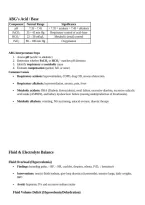
ABG’s Acid / Base
Component Normal Range Significance
pH 7.35 – 7.45 < 7.35 = acidosis > 7.45 = alkalosis
PaCO₂ 35 – 45 mm Hg Respiratory control of acid–base
HCO₃⁻ 22 – 28 mEq/L Metabolic (renal) control
PaO₂ 80 – 100 mm Hg Oxygenation
ABG Interpretation Steps
1. Assess pH (acidic vs alkalotic)
2. Determine whether PaCO₂ or HCO₃⁻ matches pH direction
3. Identify respiratory or metabolic cause
4. Evaluate compensation (partial, full, or none)
Common Causes
Respiratory acidosis: hypoventilation, COPD, drug OD, airway obstruction
Respiratory alkalosis: hyperventilation, anxiety, pain, fever
Metabolic acidosis: DKA (Diabetic Ketoacidosis), renal failure, excessive diarrhea, excessive salicylic
acid intake (ASPRIN), and kidney dysfunction/ failure (causing underproduction of bicarbonate).
Metabolic alkalosis: vomiting, NG suctioning, antacid overuse, diuretic therapy
Fluid & Electrolyte Balance
Fluid Overload (Hypervolemia)
Findings: bounding pulse, ↑ BP, ↑ HR, crackles, dyspnea, edema, JVD, ↓ hematocrit
Interventions: restrict fluids/sodium, give loop diuretics (furosemide), monitor lungs, daily weights,
I&O
Avoid: hypotonic IVs and excessive sodium intake
Fluid Volume Deficit (Hypovolemia/Dehydration)
, Findings: dry mucous membranes, weak pulse, hypotension, tachycardia, poor skin turgor, ↑ BUN/Hct
Interventions: isotonic IV fluids (0.9% NS, LR), monitor I&O, encourage PO fluids, assess orthostatic
BP
Lab Male Female
Hemoglobin 14–18 g/dL 12–16 g/dL
Hematocrit 42–52 % 37–47 %
Platelets 150 000 – 400 000 /µL SAME
WBC 5 000 – 10 000 /µL SAME
Electrolyte Imbalances
Sodium (Na⁺ 135–145 mEq/L)
Hyponatremia: Confusion, seizures, weakness, nausea, muscle/abdominal cramping, lethargy.
o Causes: Diuretics, SIADH, excess water intake, excessive sweating (diaphoresis), kidney failure,
heart failure
o Interventions: Hypertonic saline (3% NS) cautiously, as raising it too fast can cause seizures/
cerebral edema; seizure precautions, monitor I&O’s.
Hypernatremia: Thirst, dry mucous membranes, agitation, muscle twitching, Decreased LOC,
confusion, elevated temperature.
o Causes: dehydration, excess salt intake, hypertonic fluids.
o Interventions: Hypotonic IV fluids (0.45% NS) cautiously, as raising it too fast can cause
seizures/ cerebral edema; seizure precautions, sodium restriction, diuretics, and increase water
Component Normal Range Significance
pH 7.35 – 7.45 < 7.35 = acidosis > 7.45 = alkalosis
PaCO₂ 35 – 45 mm Hg Respiratory control of acid–base
HCO₃⁻ 22 – 28 mEq/L Metabolic (renal) control
PaO₂ 80 – 100 mm Hg Oxygenation
ABG Interpretation Steps
1. Assess pH (acidic vs alkalotic)
2. Determine whether PaCO₂ or HCO₃⁻ matches pH direction
3. Identify respiratory or metabolic cause
4. Evaluate compensation (partial, full, or none)
Common Causes
Respiratory acidosis: hypoventilation, COPD, drug OD, airway obstruction
Respiratory alkalosis: hyperventilation, anxiety, pain, fever
Metabolic acidosis: DKA (Diabetic Ketoacidosis), renal failure, excessive diarrhea, excessive salicylic
acid intake (ASPRIN), and kidney dysfunction/ failure (causing underproduction of bicarbonate).
Metabolic alkalosis: vomiting, NG suctioning, antacid overuse, diuretic therapy
Fluid & Electrolyte Balance
Fluid Overload (Hypervolemia)
Findings: bounding pulse, ↑ BP, ↑ HR, crackles, dyspnea, edema, JVD, ↓ hematocrit
Interventions: restrict fluids/sodium, give loop diuretics (furosemide), monitor lungs, daily weights,
I&O
Avoid: hypotonic IVs and excessive sodium intake
Fluid Volume Deficit (Hypovolemia/Dehydration)
, Findings: dry mucous membranes, weak pulse, hypotension, tachycardia, poor skin turgor, ↑ BUN/Hct
Interventions: isotonic IV fluids (0.9% NS, LR), monitor I&O, encourage PO fluids, assess orthostatic
BP
Lab Male Female
Hemoglobin 14–18 g/dL 12–16 g/dL
Hematocrit 42–52 % 37–47 %
Platelets 150 000 – 400 000 /µL SAME
WBC 5 000 – 10 000 /µL SAME
Electrolyte Imbalances
Sodium (Na⁺ 135–145 mEq/L)
Hyponatremia: Confusion, seizures, weakness, nausea, muscle/abdominal cramping, lethargy.
o Causes: Diuretics, SIADH, excess water intake, excessive sweating (diaphoresis), kidney failure,
heart failure
o Interventions: Hypertonic saline (3% NS) cautiously, as raising it too fast can cause seizures/
cerebral edema; seizure precautions, monitor I&O’s.
Hypernatremia: Thirst, dry mucous membranes, agitation, muscle twitching, Decreased LOC,
confusion, elevated temperature.
o Causes: dehydration, excess salt intake, hypertonic fluids.
o Interventions: Hypotonic IV fluids (0.45% NS) cautiously, as raising it too fast can cause
seizures/ cerebral edema; seizure precautions, sodium restriction, diuretics, and increase water


