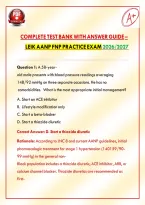
COMPLETE TEST BANK WITH ANSWER GUIDE – = = = = = =
=LEIK AANP FNP PRACTICE EXAM 2026/2027
= = = = =
=
Question 1: A 58-year- = = =
old male presents with blood pressure readings averaging
= = = = = = = =
148/92 mmHg on three separate occasions. He has no
= = = = = = = =
comorbidities. What is the most appropriate initial management?
= = = = = = = = =
A. Start an ACE inhibitor
= = = =
B. Lifestyle modification only = = =
C. Start a beta-blocker
= = =
D. Start a thiazide diuretic
= = = =
Correct Answer: D. Start a thiazide diuretic
= = = = = = =
Rationale: According to JNC 8 and current AANP guidelines, initial
= = = = = = = = = =
pharmacologic treatment for stage 1 hypertension (140159/90-
= = = = = =
99 mmHg) in the general non-
= = = = =
Black population includes a thiazide diuretic, ACE inhibitor, ARB, or
= = = = = = = = = =
calcium channel blocker. Thiazide diuretics are recommended as
= = = = = = = =
first-
,line therapy for most patients. Lifestyle modifications should be
= = = = = = = = =
recommended concurrently, but pharmacotherapy is indicated for
= = = = = = =
persistent BP ≥140/90 mmHg . = = = = =
=
Question 2: A 44-year- = = =
old male patient comes to the clinic for his routine well visit. He has a
= = = = = = = = = = = = = =
history of obesity, hypertension, and migraines. He takes lisinopril
= = = = = = = = = =
for his hypertension. Upon examination, the nurse practitioner hear
= = = = = = = =
s a sound over the pulmonic area during inspiration that disappears
= = = = = = = = = =
at expiration.
= = =
The nurse practitioner knows that this finding is:
= = = = = = = =
A. An indication of heart malformation
= = = = =
B. A reason for cardiology referral
= = = = =
C. A benign variant
= = =
D. A common finding in obese patients
= = = = = =
Correct Answer: C. A benign variant
= = = = = =
Rationale: A split S2 that disappears at expiration is considered a
= = = = = = = = = = =
benign variant known as a physiological split. It does not indicate a
= = = = = = = = = = = =
malformation of the heart and the patient does not need referral to
= = = = = = = = = = =
cardiology for this isolated finding. A fixed split S2, however,
= = = = = = = = = =
would be concerning for an atrial septal defect .
= = = = = = = = = =
, =
Question 3: The nurse practitioner knows that Erb's Point is located
= = = = = = = = = = =
at the:
= =
A. Second intercostal space to the right of the sternum
= = = = = = = = =
B. Third or fourth intercostal space to the left of the sternum
= = = = = = = = = = =
C. Fifth intercostal space, 8-9 cm left from the midsternal line
= = = = = = = = = =
D. First intercostal space to the left of the sternum
= = = = = = = = =
Correct Answer: B. Third or fourth intercostal space to the left of t
= = = = = = = = = = = =
he sternum
= =
Rationale: Erb's point is located at the third or fourth intercostal spa
= = = = = = = = = = =
ce to the left of the sternum. The aortic area is the second intercostal
= = = = = = = = = = = = =
space to the right of the sternum; the pulmonic area is the second int
= = = = = = = = = = = = = =
ercostal space to the left; the tricuspid area is the fourth or fifth inte
= = = = = = = = = = = = =
rcostal space at the left sternal border; and the mitral area is the fif
= = = = = = = = = = = = =
th intercostal space at the midclavicular line .
= = = = = = = =
=
Question 4: A 65-year-old woman presents for a follow-
= = = = = = = =
up examination. She is a smoker and her hypertension is now contro
= = = = = = = = = = =
lled with medication. Her mother died at age 40 from a heart attac
= = = = = = = = = = = =
k. The fasting lipid profile shows cholesterol = 240 mg/dL, HDL = 3
= = = = = = = = = = = =
, 0, and LDL = 200. In addition to starting Therapeutic Lifestyle Chan
= = = = = = = = = = =
ges, the nurse practitioner should start the patient on:
= = = = = = = = =
A. Bile acid sequestrant
= = =
B. A statin drug
= = =
C. A cholesterol absorption inhibitor
= = = =
D. Low-dose aspirin = =
Correct Answer: B. A statin drug
= = = = = =
Rationale: This patient has multiple risk factors for cardiovascular d
= = = = = = = = =
isease: age >55, smoking, family history of early heart disease, hy
= = = = = = = = = =
pertension, and elevated LDL. With an = = = = = =
LDL of 200, she is at high risk and requires statin therapy per ACC/
= = = = = = = = = = = = =
AHA guidelines. Statins are the most effective lipidlowering agents
= = = = = = = = =
for reducing cardiovascular events .
= = = = =
=
Question 5: A 72-year- = = =
old male presents with syncope. Cardiac auscultation reveals a har
= = = = = = = = =
sh crescendo-
=
decrescendo systolic murmur at the right upper sternal border radi
= = = = = = = = =
ating to the carotids. Carotid upstroke is delayed. The most likely di
= = = = = = = = = = =
agnosis is: = =
=LEIK AANP FNP PRACTICE EXAM 2026/2027
= = = = =
=
Question 1: A 58-year- = = =
old male presents with blood pressure readings averaging
= = = = = = = =
148/92 mmHg on three separate occasions. He has no
= = = = = = = =
comorbidities. What is the most appropriate initial management?
= = = = = = = = =
A. Start an ACE inhibitor
= = = =
B. Lifestyle modification only = = =
C. Start a beta-blocker
= = =
D. Start a thiazide diuretic
= = = =
Correct Answer: D. Start a thiazide diuretic
= = = = = = =
Rationale: According to JNC 8 and current AANP guidelines, initial
= = = = = = = = = =
pharmacologic treatment for stage 1 hypertension (140159/90-
= = = = = =
99 mmHg) in the general non-
= = = = =
Black population includes a thiazide diuretic, ACE inhibitor, ARB, or
= = = = = = = = = =
calcium channel blocker. Thiazide diuretics are recommended as
= = = = = = = =
first-
,line therapy for most patients. Lifestyle modifications should be
= = = = = = = = =
recommended concurrently, but pharmacotherapy is indicated for
= = = = = = =
persistent BP ≥140/90 mmHg . = = = = =
=
Question 2: A 44-year- = = =
old male patient comes to the clinic for his routine well visit. He has a
= = = = = = = = = = = = = =
history of obesity, hypertension, and migraines. He takes lisinopril
= = = = = = = = = =
for his hypertension. Upon examination, the nurse practitioner hear
= = = = = = = =
s a sound over the pulmonic area during inspiration that disappears
= = = = = = = = = =
at expiration.
= = =
The nurse practitioner knows that this finding is:
= = = = = = = =
A. An indication of heart malformation
= = = = =
B. A reason for cardiology referral
= = = = =
C. A benign variant
= = =
D. A common finding in obese patients
= = = = = =
Correct Answer: C. A benign variant
= = = = = =
Rationale: A split S2 that disappears at expiration is considered a
= = = = = = = = = = =
benign variant known as a physiological split. It does not indicate a
= = = = = = = = = = = =
malformation of the heart and the patient does not need referral to
= = = = = = = = = = =
cardiology for this isolated finding. A fixed split S2, however,
= = = = = = = = = =
would be concerning for an atrial septal defect .
= = = = = = = = = =
, =
Question 3: The nurse practitioner knows that Erb's Point is located
= = = = = = = = = = =
at the:
= =
A. Second intercostal space to the right of the sternum
= = = = = = = = =
B. Third or fourth intercostal space to the left of the sternum
= = = = = = = = = = =
C. Fifth intercostal space, 8-9 cm left from the midsternal line
= = = = = = = = = =
D. First intercostal space to the left of the sternum
= = = = = = = = =
Correct Answer: B. Third or fourth intercostal space to the left of t
= = = = = = = = = = = =
he sternum
= =
Rationale: Erb's point is located at the third or fourth intercostal spa
= = = = = = = = = = =
ce to the left of the sternum. The aortic area is the second intercostal
= = = = = = = = = = = = =
space to the right of the sternum; the pulmonic area is the second int
= = = = = = = = = = = = = =
ercostal space to the left; the tricuspid area is the fourth or fifth inte
= = = = = = = = = = = = =
rcostal space at the left sternal border; and the mitral area is the fif
= = = = = = = = = = = = =
th intercostal space at the midclavicular line .
= = = = = = = =
=
Question 4: A 65-year-old woman presents for a follow-
= = = = = = = =
up examination. She is a smoker and her hypertension is now contro
= = = = = = = = = = =
lled with medication. Her mother died at age 40 from a heart attac
= = = = = = = = = = = =
k. The fasting lipid profile shows cholesterol = 240 mg/dL, HDL = 3
= = = = = = = = = = = =
, 0, and LDL = 200. In addition to starting Therapeutic Lifestyle Chan
= = = = = = = = = = =
ges, the nurse practitioner should start the patient on:
= = = = = = = = =
A. Bile acid sequestrant
= = =
B. A statin drug
= = =
C. A cholesterol absorption inhibitor
= = = =
D. Low-dose aspirin = =
Correct Answer: B. A statin drug
= = = = = =
Rationale: This patient has multiple risk factors for cardiovascular d
= = = = = = = = =
isease: age >55, smoking, family history of early heart disease, hy
= = = = = = = = = =
pertension, and elevated LDL. With an = = = = = =
LDL of 200, she is at high risk and requires statin therapy per ACC/
= = = = = = = = = = = = =
AHA guidelines. Statins are the most effective lipidlowering agents
= = = = = = = = =
for reducing cardiovascular events .
= = = = =
=
Question 5: A 72-year- = = =
old male presents with syncope. Cardiac auscultation reveals a har
= = = = = = = = =
sh crescendo-
=
decrescendo systolic murmur at the right upper sternal border radi
= = = = = = = = =
ating to the carotids. Carotid upstroke is delayed. The most likely di
= = = = = = = = = = =
agnosis is: = =