
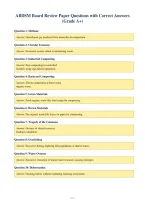
ABDSM Board Review Paper Questions with Correct Answers
(Grade A+)
Question 1: Methane
Answer: Greenhouse gas produced from anaerobic decomposition.
Question 2: Circular Economy
Answer: Economic system aimed at minimizing waste.
Question 3: Industrial Composting
Answer: Fast composting in controlled
facilities using specialized equipment.
Question 4: Backyard Composting
Answer: Slower composting at home using
organic waste.
Question 5: Green Materials
Answer: Fresh organic waste like food scraps for composting.
Question 6: Brown Materials
Answer: Dry organic waste like leaves or paper for composting.
Question 7: Tragedy of the Commons
Answer: Overuse of shared resources
leading to depletion.
Question 8: Overfishing
Answer: Excessive fishing depleting fish populations in shared waters.
Question 9: Water Overuse
Answer: Excessive extraction of shared water resources causing shortages.
Question 10: Deforestation
Answer: Clearing forests without replanting, harming ecosystems.
Page 1
,Question 11: HIPPO
Answer: Acronym for factors affecting wildlife extinction.
Question 12: Habitat Destruction
Answer: Loss of natural environments due to human activity.
Question 13: Invasive Species
Answer: Non-native species disrupting local ecosystems.
Question 14: Pollution
Answer: Contamination of air, water, or soil harming wildlife.
Question 15: Overproduction
Answer: Excessive production leading to resource depletion.
Question 16: Compostable Plastics
Answer: Biodegradable plastics suitable for industrial composting.
Question 17: Nutrients
Answer: Essential elements returned to soil through composting.
Question 18: Chemical Fertilizers
Answer: Synthetic substances that can harm the environment.
Question 19: Landfill
Answer: Site for waste disposal that can produce harmful gases.
Question 20: Waste Reduction
Answer: Minimizing waste generation through composting and recycling.
Question 21: Ecosystems
Answer: Communities of living organisms interacting with their environment.
Question 22: Climate Change
Answer: Long-term alteration of temperature and typical weather patterns.
Page 2
, Question 23: Habitat Destruction
Answer: Loss of natural environments due to human activities.
Question 24: Invasive Species
Answer: Non-native species that disrupt local ecosystems.
Question 25: Over-Harvesting
Answer: Excessive removal of species leading to population decline.
Question 26: Pollution
Answer: Contamination of air, water, and soil harming wildlife.
Question 27: Overproduction
Answer: Excessive extraction of resources
threatening species survival.
Question 28: Keystone Species
Answer: Species crucial for maintaining ecosystem balance.
Question 29: Deforestation
Answer: Clearing forests for agriculture or urban development.
Question 30: Climate Change
Answer: Long-term alteration of temperature and weather patterns.
Question 31: Ecosystem Services
Answer: Benefits provided by ecosystems to
humans.
Question 32: Intrinsic Value
Answer: Value of an entity based on its existence.
Question 33: Instrumental Value
Answer: Value based on usefulness to humans.
Question 34: Global Warming
Answer: Increase in Earth's average temperature due to greenhouse gases.
Page 3
(Grade A+)
Question 1: Methane
Answer: Greenhouse gas produced from anaerobic decomposition.
Question 2: Circular Economy
Answer: Economic system aimed at minimizing waste.
Question 3: Industrial Composting
Answer: Fast composting in controlled
facilities using specialized equipment.
Question 4: Backyard Composting
Answer: Slower composting at home using
organic waste.
Question 5: Green Materials
Answer: Fresh organic waste like food scraps for composting.
Question 6: Brown Materials
Answer: Dry organic waste like leaves or paper for composting.
Question 7: Tragedy of the Commons
Answer: Overuse of shared resources
leading to depletion.
Question 8: Overfishing
Answer: Excessive fishing depleting fish populations in shared waters.
Question 9: Water Overuse
Answer: Excessive extraction of shared water resources causing shortages.
Question 10: Deforestation
Answer: Clearing forests without replanting, harming ecosystems.
Page 1
,Question 11: HIPPO
Answer: Acronym for factors affecting wildlife extinction.
Question 12: Habitat Destruction
Answer: Loss of natural environments due to human activity.
Question 13: Invasive Species
Answer: Non-native species disrupting local ecosystems.
Question 14: Pollution
Answer: Contamination of air, water, or soil harming wildlife.
Question 15: Overproduction
Answer: Excessive production leading to resource depletion.
Question 16: Compostable Plastics
Answer: Biodegradable plastics suitable for industrial composting.
Question 17: Nutrients
Answer: Essential elements returned to soil through composting.
Question 18: Chemical Fertilizers
Answer: Synthetic substances that can harm the environment.
Question 19: Landfill
Answer: Site for waste disposal that can produce harmful gases.
Question 20: Waste Reduction
Answer: Minimizing waste generation through composting and recycling.
Question 21: Ecosystems
Answer: Communities of living organisms interacting with their environment.
Question 22: Climate Change
Answer: Long-term alteration of temperature and typical weather patterns.
Page 2
, Question 23: Habitat Destruction
Answer: Loss of natural environments due to human activities.
Question 24: Invasive Species
Answer: Non-native species that disrupt local ecosystems.
Question 25: Over-Harvesting
Answer: Excessive removal of species leading to population decline.
Question 26: Pollution
Answer: Contamination of air, water, and soil harming wildlife.
Question 27: Overproduction
Answer: Excessive extraction of resources
threatening species survival.
Question 28: Keystone Species
Answer: Species crucial for maintaining ecosystem balance.
Question 29: Deforestation
Answer: Clearing forests for agriculture or urban development.
Question 30: Climate Change
Answer: Long-term alteration of temperature and weather patterns.
Question 31: Ecosystem Services
Answer: Benefits provided by ecosystems to
humans.
Question 32: Intrinsic Value
Answer: Value of an entity based on its existence.
Question 33: Instrumental Value
Answer: Value based on usefulness to humans.
Question 34: Global Warming
Answer: Increase in Earth's average temperature due to greenhouse gases.
Page 3


