
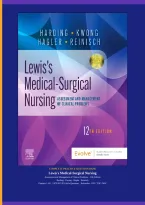
COMPLETE PRACTICE QUESTION BANK
Lewis's Medical-Surgical Nursing
Assessment and Management of Clinical Problems · 12th Edition
Harding · Kwong · Hagler · Reinisch
Chapters 1–69 · 2,070 NCLEX-Style Questions · Rationales · DIF / TOP / MSC
,Contents
SECTION 1 Concepts in Nursing Practice
Chapter 1 Professional Nursing
Chapter 2 Social Determinants of Health
Chapter 3 Health History and Physical Examination
Chapter 4 Patient and Caregiver Teaching
Chapter 5 Chronic Illness and Older Adults
Chapter 6 Caring for LGBTQ+ and Gender Diverse Patients
SECTION 2 Problems Related to Comfort and Coping
Chapter 7 Stress Management
Chapter 8 Sleep and Sleep Disorders
Chapter 9 Pain
Chapter 10 Palliative and End-of-Life Care
Chapter 11 Substance Use Disorders in Acute Care
SECTION 3 Problems Related to Homeostasis and Protection
Chapter 12 Inflammation and Healing
Chapter 13 Genetics
Chapter 14 Immune Responses and Transplantation
Chapter 15 Infection
Chapter 16 Cancer
Chapter 17 Fluid, Electrolyte, and Acid-Base Imbalances
SECTION 4 Perioperative and Emergency Care
Chapter 18 Preoperative Care
Chapter 19 Intraoperative Care
Chapter 20 Postoperative Care
Chapter 21 Emergency and Disaster Nursing
SECTION 5 Problems Related to Altered Sensory Input
Chapter 22 Assessment and Management: Visual Problems
Chapter 23 Assessment and Management: Auditory Problems
Chapter 24 Assessment: Integumentary System
Chapter 25 Integumentary Problems
Chapter 26 Burns
SECTION 6 Problems of Oxygenation: Ventilation
Chapter 27 Assessment: Respiratory System
Chapter 28 Supporting Ventilation
Chapter 29 Upper Respiratory Problems
Chapter 30 Lower Respiratory Problems
Chapter 31 Obstructive Pulmonary Diseases
Chapter 32 Acute Respiratory Failure and ARDS
Lewis's Medical-Surgical Nursing, 12th Ed. | Practice Bank | Page 2
,SECTION 7 Problems of Oxygenation: Transport
Chapter 33 Assessment: Hematologic System
Chapter 34 Hematologic Problems
SECTION 8 Problems of Oxygenation: Perfusion
Chapter 35 Assessment: Cardiovascular System
Chapter 36 Hypertension
Chapter 37 Coronary Artery Disease and Acute Coronary Syndrome
Chapter 38 Heart Failure
Chapter 39 Dysrhythmias
Chapter 40 Inflammatory and Structural Heart Disorders
Chapter 41 Vascular Disorders
Chapter 42 Shock, Sepsis, and Multiple Organ Dysfunction Syndrome
SECTION 9 Problems of Ingestion, Digestion, Absorption, and Elimination
Chapter 43 Assessment: Gastrointestinal System
Chapter 44 Nutrition Problems
Chapter 45 Obesity
Chapter 46 Upper Gastrointestinal Problems
Chapter 47 Lower Gastrointestinal Problems
Chapter 48 Liver, Biliary Tract, and Pancreas Problems
SECTION 10 Problems of Urinary Function
Chapter 49 Assessment: Urinary System
Chapter 50 Renal and Urologic Problems
Chapter 51 Acute Kidney Injury and Chronic Kidney Disease
SECTION 11 Problems Related to Regulatory and Reproductive Mechanisms
Chapter 52 Assessment: Endocrine System
Chapter 53 Diabetes
Chapter 54 Endocrine Problems
Chapter 55 Assessment: Reproductive System
Chapter 56 Breast Problems
Chapter 57 Sexually Transmitted Infections
Chapter 58 Female Reproductive Problems
Chapter 59 Male Reproductive Problems
SECTION 12 Problems Related to Movement and Coordination
Chapter 60 Assessment: Nervous System
Chapter 61 Acute Intracranial Problems
Chapter 62 Stroke
Chapter 63 Chronic Neurologic Problems
Chapter 64 Dementia and Delirium
Chapter 65 Spinal Cord and Peripheral Nerve Problems
Chapter 66 Assessment: Musculoskeletal System
Lewis's Medical-Surgical Nursing, 12th Ed. | Practice Bank | Page 3
,Chapter 67 Musculoskeletal Trauma and Orthopedic Surgery
Chapter 68 Musculoskeletal Problems
Chapter 69 Arthritis and Connective Tissue Diseases
Lewis's Medical-Surgical Nursing, 12th Ed. | Practice Bank | Page 4
,Chapter 1: Professional Nursing
1. A newly licensed nurse is orienting to a medical-surgical unit and asks how nursing’s professional role
differs from simply carrying out physician orders. The charge nurse explains that contemporary nursing
includes independent and collaborative functions focused on the whole person. The orientee wants a
response that reflects current professional standards rather than a dependent-only view of practice. Which
action should the nurse take first?
a. Rely on one normal vital sign and skip the rest of the focused exam before reassessment.
b. Document findings without comparing them to the patient's baseline.
c. Document findings without comparing them to the patient's baseline in this patient.
d. In addition to providing care during illness, nurses help patients plan and maintain health.
ANS: D
This scenario requires recognition of a high-priority clinical cue. In addition to providing care during illness,
nurses help patients plan and maintain health is the best action because it addresses that risk directly and follows
accepted medical-surgical standards. “Rely on one normal vital sign and skip the rest of the focused exam before
reassessment” is not appropriate because it fails to manage the primary problem. “Document findings without
comparing them to the patient's baseline” either delays needed care or uses an unsafe approach. “Document
findings without comparing them to the patient's baseline in this patient” does not fit the patient's immediate
needs.
DIF: Cognitive Level: Analyze TOP: Nursing Process: Implementation MSC: NCLEX: Safe and Effective Care Environment
Lewis's Medical-Surgical Nursing, 12th Ed. | Practice Bank | Page 5
,2. A staff nurse is reviewing unit policies and notices that several practices are based on long-standing
tradition rather than current research. The nurse wants to use evidence-based practice when updating a
skin-care protocol. Colleagues disagree about what evidence-based practice actually includes. What is the
priority nursing intervention?
a. Prioritize routine hygiene over new diaphoretic chest pain.
b. Prioritize routine hygiene over new diaphoretic chest pain in this patient.
c. Prioritize routine hygiene over new diaphoretic chest pain at this time.
d. Recommendations combine best research evidence, clinical expertise, and patient preferences.
ANS: D
Based on the assessment findings, recommendations combine best research evidence, clinical expertise, and
patient preferences is indicated. That choice reduces the likelihood of deterioration and matches evidence-based
practice for this condition. The other options are weaker: one ignores urgency, one misapplies a routine
intervention, and one conflicts with safety expectations.
DIF: Cognitive Level: Apply TOP: Nursing Process: Planning MSC: NCLEX: Safe and Effective Care Environment
Lewis's Medical-Surgical Nursing, 12th Ed. | Practice Bank | Page 6
Lewis's Medical-Surgical Nursing
Assessment and Management of Clinical Problems · 12th Edition
Harding · Kwong · Hagler · Reinisch
Chapters 1–69 · 2,070 NCLEX-Style Questions · Rationales · DIF / TOP / MSC
,Contents
SECTION 1 Concepts in Nursing Practice
Chapter 1 Professional Nursing
Chapter 2 Social Determinants of Health
Chapter 3 Health History and Physical Examination
Chapter 4 Patient and Caregiver Teaching
Chapter 5 Chronic Illness and Older Adults
Chapter 6 Caring for LGBTQ+ and Gender Diverse Patients
SECTION 2 Problems Related to Comfort and Coping
Chapter 7 Stress Management
Chapter 8 Sleep and Sleep Disorders
Chapter 9 Pain
Chapter 10 Palliative and End-of-Life Care
Chapter 11 Substance Use Disorders in Acute Care
SECTION 3 Problems Related to Homeostasis and Protection
Chapter 12 Inflammation and Healing
Chapter 13 Genetics
Chapter 14 Immune Responses and Transplantation
Chapter 15 Infection
Chapter 16 Cancer
Chapter 17 Fluid, Electrolyte, and Acid-Base Imbalances
SECTION 4 Perioperative and Emergency Care
Chapter 18 Preoperative Care
Chapter 19 Intraoperative Care
Chapter 20 Postoperative Care
Chapter 21 Emergency and Disaster Nursing
SECTION 5 Problems Related to Altered Sensory Input
Chapter 22 Assessment and Management: Visual Problems
Chapter 23 Assessment and Management: Auditory Problems
Chapter 24 Assessment: Integumentary System
Chapter 25 Integumentary Problems
Chapter 26 Burns
SECTION 6 Problems of Oxygenation: Ventilation
Chapter 27 Assessment: Respiratory System
Chapter 28 Supporting Ventilation
Chapter 29 Upper Respiratory Problems
Chapter 30 Lower Respiratory Problems
Chapter 31 Obstructive Pulmonary Diseases
Chapter 32 Acute Respiratory Failure and ARDS
Lewis's Medical-Surgical Nursing, 12th Ed. | Practice Bank | Page 2
,SECTION 7 Problems of Oxygenation: Transport
Chapter 33 Assessment: Hematologic System
Chapter 34 Hematologic Problems
SECTION 8 Problems of Oxygenation: Perfusion
Chapter 35 Assessment: Cardiovascular System
Chapter 36 Hypertension
Chapter 37 Coronary Artery Disease and Acute Coronary Syndrome
Chapter 38 Heart Failure
Chapter 39 Dysrhythmias
Chapter 40 Inflammatory and Structural Heart Disorders
Chapter 41 Vascular Disorders
Chapter 42 Shock, Sepsis, and Multiple Organ Dysfunction Syndrome
SECTION 9 Problems of Ingestion, Digestion, Absorption, and Elimination
Chapter 43 Assessment: Gastrointestinal System
Chapter 44 Nutrition Problems
Chapter 45 Obesity
Chapter 46 Upper Gastrointestinal Problems
Chapter 47 Lower Gastrointestinal Problems
Chapter 48 Liver, Biliary Tract, and Pancreas Problems
SECTION 10 Problems of Urinary Function
Chapter 49 Assessment: Urinary System
Chapter 50 Renal and Urologic Problems
Chapter 51 Acute Kidney Injury and Chronic Kidney Disease
SECTION 11 Problems Related to Regulatory and Reproductive Mechanisms
Chapter 52 Assessment: Endocrine System
Chapter 53 Diabetes
Chapter 54 Endocrine Problems
Chapter 55 Assessment: Reproductive System
Chapter 56 Breast Problems
Chapter 57 Sexually Transmitted Infections
Chapter 58 Female Reproductive Problems
Chapter 59 Male Reproductive Problems
SECTION 12 Problems Related to Movement and Coordination
Chapter 60 Assessment: Nervous System
Chapter 61 Acute Intracranial Problems
Chapter 62 Stroke
Chapter 63 Chronic Neurologic Problems
Chapter 64 Dementia and Delirium
Chapter 65 Spinal Cord and Peripheral Nerve Problems
Chapter 66 Assessment: Musculoskeletal System
Lewis's Medical-Surgical Nursing, 12th Ed. | Practice Bank | Page 3
,Chapter 67 Musculoskeletal Trauma and Orthopedic Surgery
Chapter 68 Musculoskeletal Problems
Chapter 69 Arthritis and Connective Tissue Diseases
Lewis's Medical-Surgical Nursing, 12th Ed. | Practice Bank | Page 4
,Chapter 1: Professional Nursing
1. A newly licensed nurse is orienting to a medical-surgical unit and asks how nursing’s professional role
differs from simply carrying out physician orders. The charge nurse explains that contemporary nursing
includes independent and collaborative functions focused on the whole person. The orientee wants a
response that reflects current professional standards rather than a dependent-only view of practice. Which
action should the nurse take first?
a. Rely on one normal vital sign and skip the rest of the focused exam before reassessment.
b. Document findings without comparing them to the patient's baseline.
c. Document findings without comparing them to the patient's baseline in this patient.
d. In addition to providing care during illness, nurses help patients plan and maintain health.
ANS: D
This scenario requires recognition of a high-priority clinical cue. In addition to providing care during illness,
nurses help patients plan and maintain health is the best action because it addresses that risk directly and follows
accepted medical-surgical standards. “Rely on one normal vital sign and skip the rest of the focused exam before
reassessment” is not appropriate because it fails to manage the primary problem. “Document findings without
comparing them to the patient's baseline” either delays needed care or uses an unsafe approach. “Document
findings without comparing them to the patient's baseline in this patient” does not fit the patient's immediate
needs.
DIF: Cognitive Level: Analyze TOP: Nursing Process: Implementation MSC: NCLEX: Safe and Effective Care Environment
Lewis's Medical-Surgical Nursing, 12th Ed. | Practice Bank | Page 5
,2. A staff nurse is reviewing unit policies and notices that several practices are based on long-standing
tradition rather than current research. The nurse wants to use evidence-based practice when updating a
skin-care protocol. Colleagues disagree about what evidence-based practice actually includes. What is the
priority nursing intervention?
a. Prioritize routine hygiene over new diaphoretic chest pain.
b. Prioritize routine hygiene over new diaphoretic chest pain in this patient.
c. Prioritize routine hygiene over new diaphoretic chest pain at this time.
d. Recommendations combine best research evidence, clinical expertise, and patient preferences.
ANS: D
Based on the assessment findings, recommendations combine best research evidence, clinical expertise, and
patient preferences is indicated. That choice reduces the likelihood of deterioration and matches evidence-based
practice for this condition. The other options are weaker: one ignores urgency, one misapplies a routine
intervention, and one conflicts with safety expectations.
DIF: Cognitive Level: Apply TOP: Nursing Process: Planning MSC: NCLEX: Safe and Effective Care Environment
Lewis's Medical-Surgical Nursing, 12th Ed. | Practice Bank | Page 6



