[STUDY GUIDE] • HIGH-YIELD PRACTICE & REVIEW EDITION
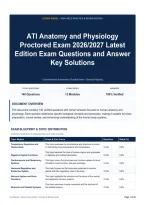
ATI Anatomy and Physiology
Proctored Exam 2026/2027 Latest
Edition Exam Questions and Answer
Key Solutions
Comprehensive Examination Question Bank • Concept Mapping
TOTAL QUESTIONS EXAM TOPICS ANSWERS
140 Questions 12 Modules 100% Verified
DOCUMENT OVERVIEW
This document contains 140 verified questions with correct answers focused on human anatomy and
physiology. Each question addresses specific biological concepts and processes, making it suitable for exam
preparation, course review, and enhancing understanding of the human body systems.
EXAM BLUEPRINT & TOPIC DISTRIBUTION
Systematic breakdown of subject domains and exam coverage.
Topic Module Scope & Core Focus Questions Share (%)
Temperature Regulation and This topic examines the mechanisms and structures involved
Homeostasis in maintaining body temperature and homeostasis. 12 Qs 8.6%
This topic explores the roles of various organs and processes
Digestive System Functions in digestion and nutrient absorption. 12 Qs 8.6%
Cardiovascular and Respiratory This topic covers the structures and functions related to blood
Systems circulation, heart function, and gas exchange. 12 Qs 8.6%
Hormonal Regulation and This topic focuses on the hormones produced by various
Endocrine System glands and their regulatory roles in the body. 12 Qs 8.6%
Nervous System and Brain This topic highlights the structure and functions of the central
Functions and peripheral nervous systems. 12 Qs 8.6%
This topic examines muscle movement and the structure of
Muscular and Skeletal Systems the skeletal system. 12 Qs 8.6%
Confidential • Student Study Edition • Practice & Review Guide Page 1 of 48
,STUDENT STUDY & MASTERY EDITION PRACTICE & REVIEW GUIDE
This topic reviews the various cell structures and their roles in
Cell Structure and Function biological processes. 12 Qs 8.6%
Immune Response and This topic addresses the components and functions of the
Lymphatic System immune system and lymphatic circulation. 12 Qs 8.6%
Reproductive System and This topic discusses the structures and processes involved in
Gametogenesis human reproduction and gamete formation. 11 Qs 7.9%
This topic covers the structures and processes involved in
Urinary System Functions urine formation and fluid balance. 11 Qs 7.9%
Blood Components and This topic focuses on the different components of blood and
Functions their vital roles in the body. 11 Qs 7.9%
Physiological Processes and This topic includes various physiological responses and
Conditions conditions affecting bodily functions. 11 Qs 7.9%
Total Exam Coverage 12 Integrated Topic Modules 140 Qs 100.0%
TOPIC 1: TEMPERATURE REGULATION AND HOMEOSTASIS
12 Questions • 8.6% of Exam • This topic examines the mechanisms and structures involved in maintaining body temperature and
homeostasis.
QUESTION 1
Which of the following glands is responsible for temperature regulation?
A. Apocrine glands
B. Sebaceous glands
C. Serous glands
D. Eccrine glands
Answer: D. Eccrine glands.
QUESTION 2
Which of the following is responsible for the regulation of body temperature?
A. Cerebellum
B. Pons
C. Hypothalamus
D. Parietal lobe
Answer: C. hypothalamus.
Confidential • Student Study Edition • Practice & Review Guide Page 2 of 48
,STUDENT STUDY & MASTERY EDITION PRACTICE & REVIEW GUIDE
QUESTION 3
Which of the following structures is located at the end of the ear canal and vibrates
when sound waves strike it?
A. Acoustic meatus
B. Cochlea
C. Eustachian tube
D. Tympanic membrane
Answer: D. Tympanic membrane.
QUESTION 4
Which of the following effects is expected when renin is released from the kidney?
A. An increase in blood pressure due to widespread vasoconstriction
B. A decrease in blood pressure due to widespread vasodilation
C. A decreased release of aldosterone
D. An increased release of erythropoietin
Answer: A. An increase in blood pressure due to widespread vasoconstriction.
QUESTION 5
Which of the following is the function of angiotensin II in the regulation of blood
pressure?
A. Vasoconstriction
B. Decreased sodium retention
C. Increased heart rate
D. Inhibits production of aldosterone
Answer: A. Vasoconstriction.
Confidential • Student Study Edition • Practice & Review Guide Page 3 of 48
, STUDENT STUDY & MASTERY EDITION PRACTICE & REVIEW GUIDE
QUESTION 6
Which of the following is a result of the process of meiosis?
A. The fertilization of an ovum takes place.
B. A somatic cell divides.
C. Sperm and ova are produced.
D. Cell death occurs.
Answer: C. Sperm and ova are produced.
QUESTION 7
Peripheral vasodilation results in heat loss through which of the following processes?
A. Conduction
B. Convection
C. Radiation
D. Evaporation
Answer: C. radiation.
QUESTION 8
Which of the following types of cells release histamine in response to allergens?
A. B cells
B. T cells
C. Mast cells
D. Dendritic cells
Answer: C. mast cells.
Confidential • Student Study Edition • Practice & Review Guide Page 4 of 48
ATI Anatomy and Physiology
Proctored Exam 2026/2027 Latest
Edition Exam Questions and Answer
Key Solutions
Comprehensive Examination Question Bank • Concept Mapping
TOTAL QUESTIONS EXAM TOPICS ANSWERS
140 Questions 12 Modules 100% Verified
DOCUMENT OVERVIEW
This document contains 140 verified questions with correct answers focused on human anatomy and
physiology. Each question addresses specific biological concepts and processes, making it suitable for exam
preparation, course review, and enhancing understanding of the human body systems.
EXAM BLUEPRINT & TOPIC DISTRIBUTION
Systematic breakdown of subject domains and exam coverage.
Topic Module Scope & Core Focus Questions Share (%)
Temperature Regulation and This topic examines the mechanisms and structures involved
Homeostasis in maintaining body temperature and homeostasis. 12 Qs 8.6%
This topic explores the roles of various organs and processes
Digestive System Functions in digestion and nutrient absorption. 12 Qs 8.6%
Cardiovascular and Respiratory This topic covers the structures and functions related to blood
Systems circulation, heart function, and gas exchange. 12 Qs 8.6%
Hormonal Regulation and This topic focuses on the hormones produced by various
Endocrine System glands and their regulatory roles in the body. 12 Qs 8.6%
Nervous System and Brain This topic highlights the structure and functions of the central
Functions and peripheral nervous systems. 12 Qs 8.6%
This topic examines muscle movement and the structure of
Muscular and Skeletal Systems the skeletal system. 12 Qs 8.6%
Confidential • Student Study Edition • Practice & Review Guide Page 1 of 48
,STUDENT STUDY & MASTERY EDITION PRACTICE & REVIEW GUIDE
This topic reviews the various cell structures and their roles in
Cell Structure and Function biological processes. 12 Qs 8.6%
Immune Response and This topic addresses the components and functions of the
Lymphatic System immune system and lymphatic circulation. 12 Qs 8.6%
Reproductive System and This topic discusses the structures and processes involved in
Gametogenesis human reproduction and gamete formation. 11 Qs 7.9%
This topic covers the structures and processes involved in
Urinary System Functions urine formation and fluid balance. 11 Qs 7.9%
Blood Components and This topic focuses on the different components of blood and
Functions their vital roles in the body. 11 Qs 7.9%
Physiological Processes and This topic includes various physiological responses and
Conditions conditions affecting bodily functions. 11 Qs 7.9%
Total Exam Coverage 12 Integrated Topic Modules 140 Qs 100.0%
TOPIC 1: TEMPERATURE REGULATION AND HOMEOSTASIS
12 Questions • 8.6% of Exam • This topic examines the mechanisms and structures involved in maintaining body temperature and
homeostasis.
QUESTION 1
Which of the following glands is responsible for temperature regulation?
A. Apocrine glands
B. Sebaceous glands
C. Serous glands
D. Eccrine glands
Answer: D. Eccrine glands.
QUESTION 2
Which of the following is responsible for the regulation of body temperature?
A. Cerebellum
B. Pons
C. Hypothalamus
D. Parietal lobe
Answer: C. hypothalamus.
Confidential • Student Study Edition • Practice & Review Guide Page 2 of 48
,STUDENT STUDY & MASTERY EDITION PRACTICE & REVIEW GUIDE
QUESTION 3
Which of the following structures is located at the end of the ear canal and vibrates
when sound waves strike it?
A. Acoustic meatus
B. Cochlea
C. Eustachian tube
D. Tympanic membrane
Answer: D. Tympanic membrane.
QUESTION 4
Which of the following effects is expected when renin is released from the kidney?
A. An increase in blood pressure due to widespread vasoconstriction
B. A decrease in blood pressure due to widespread vasodilation
C. A decreased release of aldosterone
D. An increased release of erythropoietin
Answer: A. An increase in blood pressure due to widespread vasoconstriction.
QUESTION 5
Which of the following is the function of angiotensin II in the regulation of blood
pressure?
A. Vasoconstriction
B. Decreased sodium retention
C. Increased heart rate
D. Inhibits production of aldosterone
Answer: A. Vasoconstriction.
Confidential • Student Study Edition • Practice & Review Guide Page 3 of 48
, STUDENT STUDY & MASTERY EDITION PRACTICE & REVIEW GUIDE
QUESTION 6
Which of the following is a result of the process of meiosis?
A. The fertilization of an ovum takes place.
B. A somatic cell divides.
C. Sperm and ova are produced.
D. Cell death occurs.
Answer: C. Sperm and ova are produced.
QUESTION 7
Peripheral vasodilation results in heat loss through which of the following processes?
A. Conduction
B. Convection
C. Radiation
D. Evaporation
Answer: C. radiation.
QUESTION 8
Which of the following types of cells release histamine in response to allergens?
A. B cells
B. T cells
C. Mast cells
D. Dendritic cells
Answer: C. mast cells.
Confidential • Student Study Edition • Practice & Review Guide Page 4 of 48