
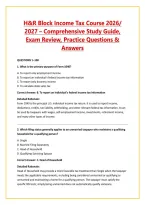
H&R Block Income Tax Course 2026/
2027 – Comprehensive Study Guide,
Exam Review, Practice Questions &
Answers
QUESTIONS 1–100
1. What is the primary purpose of Form 1040?
A. To report only employment income
B. To report an individual's federal income tax information
C. To report only business income
D. To calculate state sales tax
Correct Answer: B. To report an individual's federal income tax information
Detailed Rationale:
Form 1040 is the principal U.S. individual income tax return. It is used to report income,
deductions, credits, tax liability, withholding, and other relevant federal tax information. It can
be used by taxpayers with wages, self-employment income, investments, retirement income,
and many other types of income.
2. Which filing status generally applies to an unmarried taxpayer who maintains a qualifying
household for a qualifying person?
A. Single
B. Married Filing Separately
C. Head of Household
D. Qualifying Surviving Spouse
Correct Answer: C. Head of Household
Detailed Rationale:
Head of Household may provide a more favorable tax treatment than Single when the taxpayer
meets the applicable requirements, including being considered unmarried or qualifying as
unmarried and maintaining a home for a qualifying person. The taxpayer must satisfy the
specific IRS tests; simply being unmarried does not automatically qualify someone.
,3. Which filing status is generally available to a taxpayer who is legally married at the end of
the tax year and chooses to file jointly with the spouse?
A. Single
B. Married Filing Jointly
C. Head of Household
D. Qualifying Surviving Spouse
Correct Answer: B. Married Filing Jointly
Detailed Rationale:
A married couple may generally file one joint federal income tax return when they elect Married
Filing Jointly and meet the applicable requirements. A joint return combines the spouses'
income, deductions, credits, and tax information.
4. For tax year 2026, what is the standard deduction for a taxpayer filing Single?
A. $12,550
B. $15,750
C. $16,100
D. $24,150
Correct Answer: C. $16,100
Detailed Rationale:
For tax year 2026, the standard deduction for Single taxpayers is $16,100. The same basic
amount applies to Married Filing Separately.
5. What is the 2026 standard deduction for Head of Household?
A. $16,100
B. $20,000
C. $24,150
D. $32,200
Correct Answer: C. $24,150
,Detailed Rationale:
The 2026 standard deduction for Head of Household is $24,150. It is higher than the standard
deduction for Single or Married Filing Separately.
6. What is the 2026 standard deduction for Married Filing Jointly?
A. $16,100
B. $24,150
C. $31,500
D. $32,200
Correct Answer: D. $32,200
Detailed Rationale:
For tax year 2026, Married Filing Jointly and qualifying surviving spouses generally receive a
$32,200 standard deduction.
7. Which statement best describes the standard deduction?
A. It is a credit that directly reduces tax
B. It reduces income subject to tax
C. It increases taxable income
D. It applies only to business owners
Correct Answer: B. It reduces income subject to tax
Detailed Rationale:
The standard deduction is a deduction from income used in determining taxable income. A
deduction and a tax credit are not the same: a deduction generally reduces taxable income,
while a credit reduces tax liability.
8. Which statement correctly describes a tax credit?
A. It always reduces gross income
B. It reduces tax liability directly
C. It increases taxable income
D. It is the same as withholding
Correct Answer: B. It reduces tax liability directly
, Detailed Rationale:
A tax credit is generally applied against tax liability. Depending on the credit, it may be
nonrefundable or refundable. Refundable credits can potentially produce a refund even when
the taxpayer's regular tax liability has been reduced to zero.
9. What is the difference between gross income and taxable income?
A. They are always identical
B. Taxable income generally reflects allowable deductions from income
C. Gross income is always lower
D. Taxable income includes only wages
Correct Answer: B. Taxable income generally reflects allowable deductions from income
Detailed Rationale:
Gross income includes taxable income items before applicable deductions and adjustments.
Taxable income is generally the amount remaining after allowable deductions are applied.
10. Which document normally reports an employee's annual wages and federal income tax
withholding?
A. Form W-2
B. Form 1098
C. Form 1099-INT
D. Form 1095-A
Correct Answer: A. Form W-2
Detailed Rationale:
Employers generally issue Form W-2 to employees to report wages, tips, and various federal and
state tax withholding amounts.
11. What is generally reported on Form 1099-NEC?
A. Mortgage interest
B. Nonemployee compensation
C. Unemployment compensation
D. Social Security benefits
2027 – Comprehensive Study Guide,
Exam Review, Practice Questions &
Answers
QUESTIONS 1–100
1. What is the primary purpose of Form 1040?
A. To report only employment income
B. To report an individual's federal income tax information
C. To report only business income
D. To calculate state sales tax
Correct Answer: B. To report an individual's federal income tax information
Detailed Rationale:
Form 1040 is the principal U.S. individual income tax return. It is used to report income,
deductions, credits, tax liability, withholding, and other relevant federal tax information. It can
be used by taxpayers with wages, self-employment income, investments, retirement income,
and many other types of income.
2. Which filing status generally applies to an unmarried taxpayer who maintains a qualifying
household for a qualifying person?
A. Single
B. Married Filing Separately
C. Head of Household
D. Qualifying Surviving Spouse
Correct Answer: C. Head of Household
Detailed Rationale:
Head of Household may provide a more favorable tax treatment than Single when the taxpayer
meets the applicable requirements, including being considered unmarried or qualifying as
unmarried and maintaining a home for a qualifying person. The taxpayer must satisfy the
specific IRS tests; simply being unmarried does not automatically qualify someone.
,3. Which filing status is generally available to a taxpayer who is legally married at the end of
the tax year and chooses to file jointly with the spouse?
A. Single
B. Married Filing Jointly
C. Head of Household
D. Qualifying Surviving Spouse
Correct Answer: B. Married Filing Jointly
Detailed Rationale:
A married couple may generally file one joint federal income tax return when they elect Married
Filing Jointly and meet the applicable requirements. A joint return combines the spouses'
income, deductions, credits, and tax information.
4. For tax year 2026, what is the standard deduction for a taxpayer filing Single?
A. $12,550
B. $15,750
C. $16,100
D. $24,150
Correct Answer: C. $16,100
Detailed Rationale:
For tax year 2026, the standard deduction for Single taxpayers is $16,100. The same basic
amount applies to Married Filing Separately.
5. What is the 2026 standard deduction for Head of Household?
A. $16,100
B. $20,000
C. $24,150
D. $32,200
Correct Answer: C. $24,150
,Detailed Rationale:
The 2026 standard deduction for Head of Household is $24,150. It is higher than the standard
deduction for Single or Married Filing Separately.
6. What is the 2026 standard deduction for Married Filing Jointly?
A. $16,100
B. $24,150
C. $31,500
D. $32,200
Correct Answer: D. $32,200
Detailed Rationale:
For tax year 2026, Married Filing Jointly and qualifying surviving spouses generally receive a
$32,200 standard deduction.
7. Which statement best describes the standard deduction?
A. It is a credit that directly reduces tax
B. It reduces income subject to tax
C. It increases taxable income
D. It applies only to business owners
Correct Answer: B. It reduces income subject to tax
Detailed Rationale:
The standard deduction is a deduction from income used in determining taxable income. A
deduction and a tax credit are not the same: a deduction generally reduces taxable income,
while a credit reduces tax liability.
8. Which statement correctly describes a tax credit?
A. It always reduces gross income
B. It reduces tax liability directly
C. It increases taxable income
D. It is the same as withholding
Correct Answer: B. It reduces tax liability directly
, Detailed Rationale:
A tax credit is generally applied against tax liability. Depending on the credit, it may be
nonrefundable or refundable. Refundable credits can potentially produce a refund even when
the taxpayer's regular tax liability has been reduced to zero.
9. What is the difference between gross income and taxable income?
A. They are always identical
B. Taxable income generally reflects allowable deductions from income
C. Gross income is always lower
D. Taxable income includes only wages
Correct Answer: B. Taxable income generally reflects allowable deductions from income
Detailed Rationale:
Gross income includes taxable income items before applicable deductions and adjustments.
Taxable income is generally the amount remaining after allowable deductions are applied.
10. Which document normally reports an employee's annual wages and federal income tax
withholding?
A. Form W-2
B. Form 1098
C. Form 1099-INT
D. Form 1095-A
Correct Answer: A. Form W-2
Detailed Rationale:
Employers generally issue Form W-2 to employees to report wages, tips, and various federal and
state tax withholding amounts.
11. What is generally reported on Form 1099-NEC?
A. Mortgage interest
B. Nonemployee compensation
C. Unemployment compensation
D. Social Security benefits


