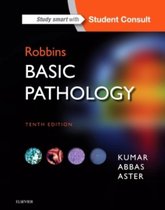
Robbins Basic Pathology
10th Edition
Author(s)Vinay Kumar; MBBS; MD;
FRCPath; Abul K. Abbas; MBBS and
Jon C. Aster; MD; PhD
Print ISBN: 9780323353175
,Question 1
A researcher examines a human cell and asks which structure contains
most of the cell's genetic material under normal conditions. Which
location is the best answer?
A. Lysosomal lumen
B. Nucleus
C. Golgi apparatus
D. Extracellular matrix
Correct Answer: B. Nucleus
,Rationale: The nucleus contains the vast majority of the cell's genomic
DNA organized into chromosomes. Lysosomes contain hydrolytic
enzymes, the Golgi modifies and sorts proteins, and the extracellular
matrix is outside the cell. The mitochondrial genome is an important
exception because mitochondria contain their own small amount of
DNA.
Question 2
A newly synthesized protein is intended to remain in the cytosol and
function as a metabolic enzyme. Where is it most likely synthesized?
A. Rough endoplasmic reticulum
B. Golgi apparatus
C. Free ribosomes in the cytosol
D. Lysosomal membrane
Correct Answer: C. Free ribosomes in the cytosol
Rationale: Proteins that function in the cytosol are generally
synthesized on free ribosomes. Ribosomes attached to rough
endoplasmic reticulum primarily synthesize proteins destined for
secretion, membranes, or the endomembrane system. The Golgi
modifies and sorts proteins but does not synthesize them, while
lysosomes are degradative organelles.
Question 3
A cell is exposed to a nutrient-rich environment and rapidly increases its
production of ATP. Which organelle is primarily responsible for
generating ATP through oxidative phosphorylation?
, A. Peroxisome
B. Mitochondrion
C. Lysosome
D. Golgi apparatus
Correct Answer: B. Mitochondrion
Rationale: Mitochondria generate most cellular ATP through oxidative
phosphorylation using the electron transport chain and mitochondrial
ATP synthase. Peroxisomes participate mainly in oxidative reactions and
lipid metabolism, whereas lysosomes digest intracellular material and
the Golgi processes and sorts proteins.
Question 4
A membrane receptor binds its extracellular ligand and activates a
cytoplasmic signaling cascade that changes gene expression. What is
the most immediate significance of ligand binding?
A. It permanently destroys the receptor
B. It initiates intracellular signaling
C. It directly duplicates nuclear DNA
D. It immediately releases lysosomal enzymes
Correct Answer: B. It initiates intracellular signaling
Rationale: Binding of a signaling molecule to its receptor can induce a
conformational or enzymatic change that activates intracellular
signaling pathways. These pathways can ultimately alter transcription,
metabolism, cytoskeletal organization, or cell behavior. Ligand binding
does not normally destroy the receptor, directly replicate DNA, or cause
nonspecific lysosomal rupture.
10th Edition
Author(s)Vinay Kumar; MBBS; MD;
FRCPath; Abul K. Abbas; MBBS and
Jon C. Aster; MD; PhD
Print ISBN: 9780323353175
,Question 1
A researcher examines a human cell and asks which structure contains
most of the cell's genetic material under normal conditions. Which
location is the best answer?
A. Lysosomal lumen
B. Nucleus
C. Golgi apparatus
D. Extracellular matrix
Correct Answer: B. Nucleus
,Rationale: The nucleus contains the vast majority of the cell's genomic
DNA organized into chromosomes. Lysosomes contain hydrolytic
enzymes, the Golgi modifies and sorts proteins, and the extracellular
matrix is outside the cell. The mitochondrial genome is an important
exception because mitochondria contain their own small amount of
DNA.
Question 2
A newly synthesized protein is intended to remain in the cytosol and
function as a metabolic enzyme. Where is it most likely synthesized?
A. Rough endoplasmic reticulum
B. Golgi apparatus
C. Free ribosomes in the cytosol
D. Lysosomal membrane
Correct Answer: C. Free ribosomes in the cytosol
Rationale: Proteins that function in the cytosol are generally
synthesized on free ribosomes. Ribosomes attached to rough
endoplasmic reticulum primarily synthesize proteins destined for
secretion, membranes, or the endomembrane system. The Golgi
modifies and sorts proteins but does not synthesize them, while
lysosomes are degradative organelles.
Question 3
A cell is exposed to a nutrient-rich environment and rapidly increases its
production of ATP. Which organelle is primarily responsible for
generating ATP through oxidative phosphorylation?
, A. Peroxisome
B. Mitochondrion
C. Lysosome
D. Golgi apparatus
Correct Answer: B. Mitochondrion
Rationale: Mitochondria generate most cellular ATP through oxidative
phosphorylation using the electron transport chain and mitochondrial
ATP synthase. Peroxisomes participate mainly in oxidative reactions and
lipid metabolism, whereas lysosomes digest intracellular material and
the Golgi processes and sorts proteins.
Question 4
A membrane receptor binds its extracellular ligand and activates a
cytoplasmic signaling cascade that changes gene expression. What is
the most immediate significance of ligand binding?
A. It permanently destroys the receptor
B. It initiates intracellular signaling
C. It directly duplicates nuclear DNA
D. It immediately releases lysosomal enzymes
Correct Answer: B. It initiates intracellular signaling
Rationale: Binding of a signaling molecule to its receptor can induce a
conformational or enzymatic change that activates intracellular
signaling pathways. These pathways can ultimately alter transcription,
metabolism, cytoskeletal organization, or cell behavior. Ligand binding
does not normally destroy the receptor, directly replicate DNA, or cause
nonspecific lysosomal rupture.