
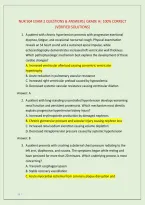
NUR 504 EXAM 2 QUESTIONS & ANSWERS| GRADE A| 100% CORRECT
(VERIFIED SOLUTIONS)
1. A patient with chronic hypertension presents with progressive exertional
dyspnea, fatigue, and occasional nocturnal cough. Physical examination
reveals an S4 heart sound and a sustained apical impulse, while
echocardiography demonstrates increased left ventricular wall thickness.
Which pathophysiologic mechanism best explains the development of these
cardiac changes?
A. Increased ventricular afterload causing concentric ventricular
hypertrophy
B. Acute reduction in pulmonary vascular resistance
C. Increased right ventricular preload caused by hypovolemia
D. Decreased systemic vascular resistance causing ventricular dilation
Answer: A
2. A patient with long-standing uncontrolled hypertension develops worsening
renal function and persistent proteinuria. Which mechanism most directly
explains progressive hypertensive kidney injury?
A. Increased erythropoietin production by damaged nephrons
B. Chronic glomerular pressure and vascular injury causing nephron loss
C. Increased renal sodium excretion causing volume depletion
D. Decreased intraglomerular pressure caused by systemic hypertension
Answer: B
3. A patient presents with crushing substernal chest pressure radiating to the
left arm, diaphoresis, and nausea. The symptoms began while resting and
have persisted for more than 20 minutes. Which underlying process is most
concerning?
A. Transient esophageal spasm
B. Stable coronary vasodilation
C. Acute myocardial ischemia from coronary plaque disruption and
pg. 1
, thrombosis
D. Isolated inflammation of the chest wall
Answer: C
4. A patient with chronic heart failure develops worsening orthopnea, bilateral
crackles, and an S3 gallop. Which mechanism most directly contributes to
the pulmonary findings?
A. Decreased pulmonary venous pressure
B. Increased systemic arterial oxygenation
C. Reduced left atrial pressure
D. Elevated pulmonary capillary hydrostatic pressure causing fluid
movement into the interstitium
Answer: D
5. A patient with atrial fibrillation is not receiving anticoagulation and
suddenly develops expressive aphasia and right-sided weakness. Which
mechanism best explains this complication?
A. Embolization of thrombus formed because of blood stasis in the atrium
B. Increased cerebrospinal fluid pressure
C. Peripheral nerve compression
D. Rupture of a skeletal muscle blood vessel
Answer: A
6. A patient presents with a harsh systolic murmur that radiates to the carotids
and reports exertional syncope and chest discomfort. Which structural
abnormality most likely explains the clinical presentation?
A. Mitral valve prolapse
B. Narrowing of the aortic valve orifice
C. Tricuspid valve stenosis
D. Pulmonary valve regurgitation
Answer: B
pg. 2
, 7. A patient with severe chest pain suddenly becomes hypotensive and
develops muffled heart sounds and jugular venous distention. Which
pathophysiologic process is most likely occurring?
A. Acute pulmonary edema
B. Left ventricular hypertrophy
C. Pericardial fluid accumulation impairing ventricular filling
D. Increased systemic vascular resistance without cardiac involvement
Answer: C
8. A patient with peripheral arterial disease reports calf pain that consistently
begins after walking a specific distance and resolves after several minutes of
rest. Which mechanism best explains the symptom?
A. Venous pooling during exercise
B. Excessive arterial oxygen delivery
C. Acute inflammation of the peripheral nerves
D. Inadequate arterial blood flow to exercising skeletal muscle
Answer: D
9. A patient develops unilateral calf swelling and tenderness after prolonged
immobilization. Several hours later, the patient experiences sudden pleuritic
chest pain and severe dyspnea. Which complication should be suspected?
A. Pulmonary embolism caused by thrombus migration
B. Acute bronchitis
C. Left ventricular hypertrophy
D. Pleural fibrosis
Answer: A
10. A patient with chronic obstructive pulmonary disease has increased
anterior-posterior chest diameter, prolonged expiration, and diminished
breath sounds. Which pathophysiologic change contributes most to these
findings?
A. Increased elastic recoil of the lungs
B. Air trapping caused by expiratory airflow limitation
pg. 3
, C. Decreased residual volume
D. Increased alveolar surface area
Answer: B
11. A patient with asthma develops wheezing and chest tightness after
exposure to a known allergen. Which mechanism is primarily responsible
for the acute airflow limitation?
A. Permanent destruction of alveolar walls
B. Pleural fluid accumulation
C. Reversible bronchoconstriction with airway inflammation and mucosal
edema
D. Complete loss of pulmonary surfactant
Answer: C
12. A patient with severe pneumonia develops worsening hypoxemia despite
receiving supplemental oxygen. Imaging demonstrates bilateral pulmonary
infiltrates. Which mechanism may explain the refractory hypoxemia?
A. Increased oxygen diffusion across healthy alveoli
B. Reduced pulmonary blood flow to all affected areas
C. Increased hemoglobin affinity for oxygen
D. Ventilation-perfusion mismatch and intrapulmonary shunting
Answer: D
13. A patient develops sudden unilateral pleuritic chest pain and dyspnea
shortly after insertion of a central venous catheter. Breath sounds are
absent on the affected side. Which condition is most likely?
A. Pneumothorax
B. Pulmonary edema
C. Bronchitis
D. Pulmonary fibrosis
Answer: A
pg. 4
(VERIFIED SOLUTIONS)
1. A patient with chronic hypertension presents with progressive exertional
dyspnea, fatigue, and occasional nocturnal cough. Physical examination
reveals an S4 heart sound and a sustained apical impulse, while
echocardiography demonstrates increased left ventricular wall thickness.
Which pathophysiologic mechanism best explains the development of these
cardiac changes?
A. Increased ventricular afterload causing concentric ventricular
hypertrophy
B. Acute reduction in pulmonary vascular resistance
C. Increased right ventricular preload caused by hypovolemia
D. Decreased systemic vascular resistance causing ventricular dilation
Answer: A
2. A patient with long-standing uncontrolled hypertension develops worsening
renal function and persistent proteinuria. Which mechanism most directly
explains progressive hypertensive kidney injury?
A. Increased erythropoietin production by damaged nephrons
B. Chronic glomerular pressure and vascular injury causing nephron loss
C. Increased renal sodium excretion causing volume depletion
D. Decreased intraglomerular pressure caused by systemic hypertension
Answer: B
3. A patient presents with crushing substernal chest pressure radiating to the
left arm, diaphoresis, and nausea. The symptoms began while resting and
have persisted for more than 20 minutes. Which underlying process is most
concerning?
A. Transient esophageal spasm
B. Stable coronary vasodilation
C. Acute myocardial ischemia from coronary plaque disruption and
pg. 1
, thrombosis
D. Isolated inflammation of the chest wall
Answer: C
4. A patient with chronic heart failure develops worsening orthopnea, bilateral
crackles, and an S3 gallop. Which mechanism most directly contributes to
the pulmonary findings?
A. Decreased pulmonary venous pressure
B. Increased systemic arterial oxygenation
C. Reduced left atrial pressure
D. Elevated pulmonary capillary hydrostatic pressure causing fluid
movement into the interstitium
Answer: D
5. A patient with atrial fibrillation is not receiving anticoagulation and
suddenly develops expressive aphasia and right-sided weakness. Which
mechanism best explains this complication?
A. Embolization of thrombus formed because of blood stasis in the atrium
B. Increased cerebrospinal fluid pressure
C. Peripheral nerve compression
D. Rupture of a skeletal muscle blood vessel
Answer: A
6. A patient presents with a harsh systolic murmur that radiates to the carotids
and reports exertional syncope and chest discomfort. Which structural
abnormality most likely explains the clinical presentation?
A. Mitral valve prolapse
B. Narrowing of the aortic valve orifice
C. Tricuspid valve stenosis
D. Pulmonary valve regurgitation
Answer: B
pg. 2
, 7. A patient with severe chest pain suddenly becomes hypotensive and
develops muffled heart sounds and jugular venous distention. Which
pathophysiologic process is most likely occurring?
A. Acute pulmonary edema
B. Left ventricular hypertrophy
C. Pericardial fluid accumulation impairing ventricular filling
D. Increased systemic vascular resistance without cardiac involvement
Answer: C
8. A patient with peripheral arterial disease reports calf pain that consistently
begins after walking a specific distance and resolves after several minutes of
rest. Which mechanism best explains the symptom?
A. Venous pooling during exercise
B. Excessive arterial oxygen delivery
C. Acute inflammation of the peripheral nerves
D. Inadequate arterial blood flow to exercising skeletal muscle
Answer: D
9. A patient develops unilateral calf swelling and tenderness after prolonged
immobilization. Several hours later, the patient experiences sudden pleuritic
chest pain and severe dyspnea. Which complication should be suspected?
A. Pulmonary embolism caused by thrombus migration
B. Acute bronchitis
C. Left ventricular hypertrophy
D. Pleural fibrosis
Answer: A
10. A patient with chronic obstructive pulmonary disease has increased
anterior-posterior chest diameter, prolonged expiration, and diminished
breath sounds. Which pathophysiologic change contributes most to these
findings?
A. Increased elastic recoil of the lungs
B. Air trapping caused by expiratory airflow limitation
pg. 3
, C. Decreased residual volume
D. Increased alveolar surface area
Answer: B
11. A patient with asthma develops wheezing and chest tightness after
exposure to a known allergen. Which mechanism is primarily responsible
for the acute airflow limitation?
A. Permanent destruction of alveolar walls
B. Pleural fluid accumulation
C. Reversible bronchoconstriction with airway inflammation and mucosal
edema
D. Complete loss of pulmonary surfactant
Answer: C
12. A patient with severe pneumonia develops worsening hypoxemia despite
receiving supplemental oxygen. Imaging demonstrates bilateral pulmonary
infiltrates. Which mechanism may explain the refractory hypoxemia?
A. Increased oxygen diffusion across healthy alveoli
B. Reduced pulmonary blood flow to all affected areas
C. Increased hemoglobin affinity for oxygen
D. Ventilation-perfusion mismatch and intrapulmonary shunting
Answer: D
13. A patient develops sudden unilateral pleuritic chest pain and dyspnea
shortly after insertion of a central venous catheter. Breath sounds are
absent on the affected side. Which condition is most likely?
A. Pneumothorax
B. Pulmonary edema
C. Bronchitis
D. Pulmonary fibrosis
Answer: A
pg. 4


