
CHAM BE RL AIN U NIVE RSITY
A+
NR-293 VERIFIED
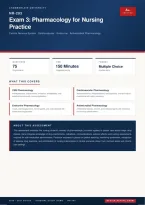
Exam 3: Pharmacology for Nursing
Practice
Central Nervous System · Cardiovascular · Endocrine · Antimicrobial Pharmacology
QUESTIONS TIME FORMAT
75 150 Minutes Multiple Choice
Original items Suggested pacing 4-option items
WHAT TH IS COVE RS
CNS Pharmacology Cardiovascular Pharmacology
Antidepressants, antipsychotics, anxiolytics, antiepileptics, and Antihypertensives, antidysrhythmics, anticoagulants, and heart failure
sedative-hypnotics with nursing implications medications with safety monitoring
Endocrine Pharmacology Antimicrobial Pharmacology
Insulin, oral hypoglycemics, thyroid agents, and corticosteroids with Antibacterial classes, antiviral, and antifungal agents with resistance
patient teaching priorities and nursing considerations
A BO U T THIS ASSESSMENT
This assessment evaluates the nursing student's mastery of pharmacologic principles applied to patient care across major drug
classes. Items integrate knowledge of drug mechanisms, indications, contraindications, adverse effects, and nursing assessments
required for safe medication administration. Particular emphasis is placed on patient teaching, monitoring parameters, recognition
of adverse drug reactions, and prioritization of nursing interventions in clinical scenarios drawn from common acute and chronic
care settings.
Edition · O RIGINAL ST U DY ITEMS · NR-293 STUVIA ACTUAL EXAM
,NR-293 · Exam 3: Pharmacology for Nursing Practice 75 Questions
EXAMINATION ITEMS · NR-293 · 75 QUESTIONS
SECTION 1 · QUESTIONS 1–25
1. A 62-year-old patient receives a scheduled dose of lisinopril 20 mg for hypertension. Two hours later, the
patient reports swelling of the lips and tongue. Vital signs are stable. Which nursing action is the highest
priority at this time?
A. Administer acetaminophen for swelling
B. Document the finding and continue monitoring
C. Assess airway patency and notify the prescriber immediately
D. Administer the next scheduled dose early
Correct Answer: C
Rationale. Angioedema is a life-threatening adverse reaction to ACE inhibitors that can progress rapidly to airway
obstruction. The nurse must immediately assess airway patency and notify the prescriber for emergency management
including possible epinephrine and airway protection. The medication should be permanently discontinued.
2. A patient receiving intravenous vancomycin for a methicillin-resistant Staphylococcus aureus bacteremia
reports flushing, itching, and hypotension during the infusion. Which nursing intervention is most
appropriate?
A. Increase the infusion rate
B. Stop infusion, then restart at a slower rate after symptoms resolve
C. Administer diphenhydramine intravenously and continue infusion at the same rate
D. Discontinue the IV site
Correct Answer: B
Rationale. Red man syndrome is caused by histamine release during rapid vancomycin infusion. The correct intervention is
to stop the infusion, allow symptoms to resolve, and restart at a slower infusion rate (over at least 60-90 minutes). This is a
rate-related reaction, not a true allergy, so vancomycin can typically be continued.
3. A nurse is preparing to administer digoxin to a patient with heart failure. The patient's apical pulse is 52
beats per minute. Which action by the nurse is most appropriate?
A. Administer half the dose
B. Administer the dose as scheduled
C. Hold the dose and notify the prescriber
D. Administer the dose and recheck pulse in 30 minutes
Correct Answer: C
Rationale. Digoxin should be held when the apical heart rate is below 60 beats per minute in adults due to risk of
bradycardia and digoxin toxicity. The nurse should hold the dose, assess for other signs of toxicity (visual disturbances, GI
symptoms, arrhythmias), and notify the prescriber for further orders.
Original Study Items · For Educational Review Page 1
, NR-293 · Exam 3: Pharmacology for Nursing Practice 75 Questions
4. A patient newly prescribed phenytoin for seizure control asks the nurse about alcohol consumption. Which
response by the nurse is most accurate?
A. Alcohol can alter phenytoin levels and increase seizure risk; discuss with your prescriber
B. Alcohol increases phenytoin effectiveness
C. Alcohol has no interaction with phenytoin
D. Alcohol should be consumed in moderation to prevent side effects
Correct Answer: A
Rationale. Alcohol can either increase or decrease phenytoin levels depending on chronic versus acute intake, and lowers
the seizure threshold. Patients on phenytoin should avoid alcohol or discuss any use with their prescriber. Acute intoxication
inhibits phenytoin metabolism, while chronic use induces hepatic enzymes and lowers levels.
5. A patient with type 1 diabetes receives 10 units of regular insulin and 20 units of NPH insulin
subcutaneously at 0700. At approximately what time should the nurse assess for signs of hypoglycemia
related to the NPH insulin peak?
A. 1300-1700
B. 2200-0100
C. 1000-1100
D. 0800-0900
Correct Answer: A
Rationale. NPH insulin has an onset of 1-2 hours, peaks at 4-12 hours, and lasts 16-24 hours. When administered at
0700, NPH peaks between approximately 1100 and 1900, with the most likely hypoglycemic risk period in the afternoon.
Patients should be counseled to eat a mid-afternoon snack to prevent hypoglycemia.
6. A patient receiving heparin therapy develops new-onset thrombocytopenia with platelet count dropping
from 220,000 to 80,000 over three days. Which nursing action is most appropriate?
A. Continue heparin and recheck platelets tomorrow
B. Switch to warfarin immediately without overlap
C. Administer platelets and continue heparin
D. Stop heparin immediately and notify the prescriber; suspect heparin-induced thrombocytopenia
Correct Answer: D
Rationale. A platelet count drop of more than 50% or below 150,000 after heparin exposure suggests heparin-induced
thrombocytopenia (HIT), an immune-mediated complication that paradoxically increases thrombosis risk. Heparin must be
discontinued immediately and an alternative anticoagulant such as argatroban or fondaparinux initiated. Warfarin should
not be started without overlap due to transient hypercoagulability.
Original Study Items · For Educational Review Page 2
A+
NR-293 VERIFIED
Exam 3: Pharmacology for Nursing
Practice
Central Nervous System · Cardiovascular · Endocrine · Antimicrobial Pharmacology
QUESTIONS TIME FORMAT
75 150 Minutes Multiple Choice
Original items Suggested pacing 4-option items
WHAT TH IS COVE RS
CNS Pharmacology Cardiovascular Pharmacology
Antidepressants, antipsychotics, anxiolytics, antiepileptics, and Antihypertensives, antidysrhythmics, anticoagulants, and heart failure
sedative-hypnotics with nursing implications medications with safety monitoring
Endocrine Pharmacology Antimicrobial Pharmacology
Insulin, oral hypoglycemics, thyroid agents, and corticosteroids with Antibacterial classes, antiviral, and antifungal agents with resistance
patient teaching priorities and nursing considerations
A BO U T THIS ASSESSMENT
This assessment evaluates the nursing student's mastery of pharmacologic principles applied to patient care across major drug
classes. Items integrate knowledge of drug mechanisms, indications, contraindications, adverse effects, and nursing assessments
required for safe medication administration. Particular emphasis is placed on patient teaching, monitoring parameters, recognition
of adverse drug reactions, and prioritization of nursing interventions in clinical scenarios drawn from common acute and chronic
care settings.
Edition · O RIGINAL ST U DY ITEMS · NR-293 STUVIA ACTUAL EXAM
,NR-293 · Exam 3: Pharmacology for Nursing Practice 75 Questions
EXAMINATION ITEMS · NR-293 · 75 QUESTIONS
SECTION 1 · QUESTIONS 1–25
1. A 62-year-old patient receives a scheduled dose of lisinopril 20 mg for hypertension. Two hours later, the
patient reports swelling of the lips and tongue. Vital signs are stable. Which nursing action is the highest
priority at this time?
A. Administer acetaminophen for swelling
B. Document the finding and continue monitoring
C. Assess airway patency and notify the prescriber immediately
D. Administer the next scheduled dose early
Correct Answer: C
Rationale. Angioedema is a life-threatening adverse reaction to ACE inhibitors that can progress rapidly to airway
obstruction. The nurse must immediately assess airway patency and notify the prescriber for emergency management
including possible epinephrine and airway protection. The medication should be permanently discontinued.
2. A patient receiving intravenous vancomycin for a methicillin-resistant Staphylococcus aureus bacteremia
reports flushing, itching, and hypotension during the infusion. Which nursing intervention is most
appropriate?
A. Increase the infusion rate
B. Stop infusion, then restart at a slower rate after symptoms resolve
C. Administer diphenhydramine intravenously and continue infusion at the same rate
D. Discontinue the IV site
Correct Answer: B
Rationale. Red man syndrome is caused by histamine release during rapid vancomycin infusion. The correct intervention is
to stop the infusion, allow symptoms to resolve, and restart at a slower infusion rate (over at least 60-90 minutes). This is a
rate-related reaction, not a true allergy, so vancomycin can typically be continued.
3. A nurse is preparing to administer digoxin to a patient with heart failure. The patient's apical pulse is 52
beats per minute. Which action by the nurse is most appropriate?
A. Administer half the dose
B. Administer the dose as scheduled
C. Hold the dose and notify the prescriber
D. Administer the dose and recheck pulse in 30 minutes
Correct Answer: C
Rationale. Digoxin should be held when the apical heart rate is below 60 beats per minute in adults due to risk of
bradycardia and digoxin toxicity. The nurse should hold the dose, assess for other signs of toxicity (visual disturbances, GI
symptoms, arrhythmias), and notify the prescriber for further orders.
Original Study Items · For Educational Review Page 1
, NR-293 · Exam 3: Pharmacology for Nursing Practice 75 Questions
4. A patient newly prescribed phenytoin for seizure control asks the nurse about alcohol consumption. Which
response by the nurse is most accurate?
A. Alcohol can alter phenytoin levels and increase seizure risk; discuss with your prescriber
B. Alcohol increases phenytoin effectiveness
C. Alcohol has no interaction with phenytoin
D. Alcohol should be consumed in moderation to prevent side effects
Correct Answer: A
Rationale. Alcohol can either increase or decrease phenytoin levels depending on chronic versus acute intake, and lowers
the seizure threshold. Patients on phenytoin should avoid alcohol or discuss any use with their prescriber. Acute intoxication
inhibits phenytoin metabolism, while chronic use induces hepatic enzymes and lowers levels.
5. A patient with type 1 diabetes receives 10 units of regular insulin and 20 units of NPH insulin
subcutaneously at 0700. At approximately what time should the nurse assess for signs of hypoglycemia
related to the NPH insulin peak?
A. 1300-1700
B. 2200-0100
C. 1000-1100
D. 0800-0900
Correct Answer: A
Rationale. NPH insulin has an onset of 1-2 hours, peaks at 4-12 hours, and lasts 16-24 hours. When administered at
0700, NPH peaks between approximately 1100 and 1900, with the most likely hypoglycemic risk period in the afternoon.
Patients should be counseled to eat a mid-afternoon snack to prevent hypoglycemia.
6. A patient receiving heparin therapy develops new-onset thrombocytopenia with platelet count dropping
from 220,000 to 80,000 over three days. Which nursing action is most appropriate?
A. Continue heparin and recheck platelets tomorrow
B. Switch to warfarin immediately without overlap
C. Administer platelets and continue heparin
D. Stop heparin immediately and notify the prescriber; suspect heparin-induced thrombocytopenia
Correct Answer: D
Rationale. A platelet count drop of more than 50% or below 150,000 after heparin exposure suggests heparin-induced
thrombocytopenia (HIT), an immune-mediated complication that paradoxically increases thrombosis risk. Heparin must be
discontinued immediately and an alternative anticoagulant such as argatroban or fondaparinux initiated. Warfarin should
not be started without overlap due to transient hypercoagulability.
Original Study Items · For Educational Review Page 2


