
NUR 239: Exam 5
Study online at https://quizlet.com/_iconeu
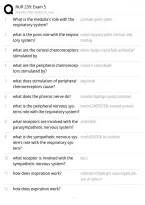
1. What is the medulla's role with the pacemaker, generic patters
respiratory system?
2. what is the pons role with the respira- controls respiratory patters, fine tunes, deep
tory system? breathing
3. what are the central chemoreceptors detects changes in spinal fluids and blood pH
stimulated by
4. what are the peripheral chemorecep- increase in carbon dioxide
tors stimulated by?
5. what does stimulation of peripheral deep breath
chemoreceptors cause?
6. what does the phrenic nerve do? innervates diaphragm causing contractions
7. what is the peripheral nervous sys- bronchoCONSTRICTION, increased secretions
tems role with the respiratory system?
8. what receptors are involved with the acetylcholine
parasympathetic nervous system?
9. what is the sympathetic nervous sys- bronchoDILATION, less secretions
tem's role with the respiratory sys-
tem?
10. what receptor is involved with the beta 2
sympathetic nervous system?
11. how does inspiration work? contraction of diaphragm, causes negative pres-
sure, air rushes in
12. how does expiration work?
, NUR 239: Exam 5
Study online at https://quizlet.com/_iconeu
relaxation of diaphragm, causes air to go out,
equal pressures
13. what is ventilation? Movement of air in and out of the lungs; breathing
14. what is perfusion movement of blood for gas exchange
15. what does compliance mean? distensibility of lungs, how much they can stretch,
think balloon
16. what happens with increased compli- lose elasticity, hyperdistended, overinflated
ance?
17. what causes increase in compliance? COPD
18. what happens with decreased compli- lungs become stiff, harder to inflate
ance?
19. What causes decreased compliance? pulmonary fibrosis, pulmonary edema
20. what does emphysema do with com- decreases recoil and ability to deflate
pliance?
21. what is surfactant? decreases surface tension
22. what does a decrease in surfactant atelectasis
cause?
23. is dyspnea subjective or objective? subjective
24. what causes acute dyspnea? asthma
25. what causes chronic dyspnea? COPD
26. heart failure
Study online at https://quizlet.com/_iconeu
1. What is the medulla's role with the pacemaker, generic patters
respiratory system?
2. what is the pons role with the respira- controls respiratory patters, fine tunes, deep
tory system? breathing
3. what are the central chemoreceptors detects changes in spinal fluids and blood pH
stimulated by
4. what are the peripheral chemorecep- increase in carbon dioxide
tors stimulated by?
5. what does stimulation of peripheral deep breath
chemoreceptors cause?
6. what does the phrenic nerve do? innervates diaphragm causing contractions
7. what is the peripheral nervous sys- bronchoCONSTRICTION, increased secretions
tems role with the respiratory system?
8. what receptors are involved with the acetylcholine
parasympathetic nervous system?
9. what is the sympathetic nervous sys- bronchoDILATION, less secretions
tem's role with the respiratory sys-
tem?
10. what receptor is involved with the beta 2
sympathetic nervous system?
11. how does inspiration work? contraction of diaphragm, causes negative pres-
sure, air rushes in
12. how does expiration work?
, NUR 239: Exam 5
Study online at https://quizlet.com/_iconeu
relaxation of diaphragm, causes air to go out,
equal pressures
13. what is ventilation? Movement of air in and out of the lungs; breathing
14. what is perfusion movement of blood for gas exchange
15. what does compliance mean? distensibility of lungs, how much they can stretch,
think balloon
16. what happens with increased compli- lose elasticity, hyperdistended, overinflated
ance?
17. what causes increase in compliance? COPD
18. what happens with decreased compli- lungs become stiff, harder to inflate
ance?
19. What causes decreased compliance? pulmonary fibrosis, pulmonary edema
20. what does emphysema do with com- decreases recoil and ability to deflate
pliance?
21. what is surfactant? decreases surface tension
22. what does a decrease in surfactant atelectasis
cause?
23. is dyspnea subjective or objective? subjective
24. what causes acute dyspnea? asthma
25. what causes chronic dyspnea? COPD
26. heart failure


