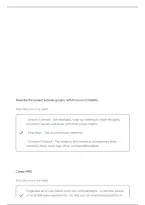
Describe the project process groups, with focus on CLOSING:
Give this one a try later!
• Lessons Learned - Get feedback, wrap-up meeting to share thoughts,
document lessons and share with other project teams
• Final Work - File documents for reference
• Contract Closeout - Pay vendors, End contracts of temporary team
members, Have client sign off on contract/deliverables
Create WBS
Give this one a try later!
Organize's all of your team's work into work packages - or discrete pieces
of work that team members do - so that you can keep the momentum of
, the project going from the start.
Human Resources
Give this one a try later!
Getting the people to work on the team and helping them stay motivated.
Rewarding them for a job well done and resolving conflicts that come up.
Collect Requirements
Give this one a try later!
Find out all the stakeholders needs and write them down so that you know
what to build and your requirements can be measured and tracked.
The client of the project you are managing called you and asked for changes to the
scope of the project. The changes are doable, but may cause the project to run over
budget or delay delivery. What should you do to ensure the project turns out
successful?
Give this one a try later!
Make sure the client understands the impact of the suggested changes on
the project budget and schedule and then follow the agreed upon change
approval process
, WBS Dictionary:
Give this one a try later!
• Facilitates management and evaluation of cost, time, and technical
performance of the organization on a project;
• Helps in the development of the organization breakdown structure (OBS)
• which assigns project responsibilities to organizational units and
individuals
• Defines communication channels and assists in coordinating the various
project elements.
Scope Management (Planning) Tools & Techniques
Give this one a try later!
Tools & Techniques
• Expert judgment
• Meetings
The Five Scope Management Processes:
Give this one a try later!
1. Collect Requirements
2. Define Scope
3. Create WBS
4. Control Scope
5. Verify Scope
Give this one a try later!
• Lessons Learned - Get feedback, wrap-up meeting to share thoughts,
document lessons and share with other project teams
• Final Work - File documents for reference
• Contract Closeout - Pay vendors, End contracts of temporary team
members, Have client sign off on contract/deliverables
Create WBS
Give this one a try later!
Organize's all of your team's work into work packages - or discrete pieces
of work that team members do - so that you can keep the momentum of
, the project going from the start.
Human Resources
Give this one a try later!
Getting the people to work on the team and helping them stay motivated.
Rewarding them for a job well done and resolving conflicts that come up.
Collect Requirements
Give this one a try later!
Find out all the stakeholders needs and write them down so that you know
what to build and your requirements can be measured and tracked.
The client of the project you are managing called you and asked for changes to the
scope of the project. The changes are doable, but may cause the project to run over
budget or delay delivery. What should you do to ensure the project turns out
successful?
Give this one a try later!
Make sure the client understands the impact of the suggested changes on
the project budget and schedule and then follow the agreed upon change
approval process
, WBS Dictionary:
Give this one a try later!
• Facilitates management and evaluation of cost, time, and technical
performance of the organization on a project;
• Helps in the development of the organization breakdown structure (OBS)
• which assigns project responsibilities to organizational units and
individuals
• Defines communication channels and assists in coordinating the various
project elements.
Scope Management (Planning) Tools & Techniques
Give this one a try later!
Tools & Techniques
• Expert judgment
• Meetings
The Five Scope Management Processes:
Give this one a try later!
1. Collect Requirements
2. Define Scope
3. Create WBS
4. Control Scope
5. Verify Scope