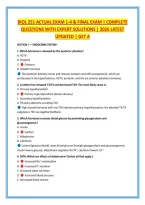
BIOL 251 ACTUAL EXAM 1-4 & FINAL EXAM | COMPLETE
QUESTIONS WITH EXPERT SOLUTIONS | 2026 LATEST
UPDATED | GET A
SECTION I — ENDOCRINE SYSTEM
1. Which hormone is released by the posterior pituitary?
A. ACTH
B. Prolactin
C. Oxytocin
D. Growth hormone
The posterior pituitary stores and releases oxytocin and ADH (vasopressin), which are
synthesized in the hypothalamus. ACTH, prolactin, and GH are anterior pituitary hormones.
2. A patient has elevated T3/T4 and decreased TSH. The most likely cause is:
A. Primary hypothyroidism
B. Primary hyperthyroidism (Graves disease)
C. Secondary hypothyroidism
D. Pituitary adenoma secreting TSH
High thyroid hormone with low TSH indicates primary hyperthyroidism; the elevated T3/T4
suppresses TSH via negative feedback.
3. Which hormone increases blood glucose by promoting glycogenolysis and
gluconeogenesis?
A. Insulin
B. Cortisol
C. Aldosterone
D. Calcitonin
Cortisol (glucocorticoid) raises blood glucose through glycogenolysis and gluconeogenesis.
Insulin lowers glucose; aldosterone regulates Na⁺/K⁺; calcitonin lowers Ca²⁺.
4. SATA: Which are effects of aldosterone? (Select all that apply.)
A. Increased Na⁺ reabsorption
B. Increased K⁺ secretion
C. Increased water excretion
D. Increased blood pressure
E. Decreased blood volume
, Aldosterone promotes Na⁺ reabsorption and K⁺ secretion in the distal tubule/collecting
duct; water follows Na⁺, raising blood volume and pressure.
5. Insulin is secreted by which pancreatic cells?
A. Alpha cells
B. Beta cells
C. Delta cells
D. Acinar cells
Beta cells secrete insulin; alpha cells secrete glucagon; delta cells secrete somatostatin.
6. Which hormone is the primary regulator of blood calcium by increasing it?
A. Calcitonin
B. Parathyroid hormone (PTH)
C. Insulin
D. Aldosterone
PTH raises blood Ca²⁺ via bone resorption, renal reabsorption, and vitamin D activation.
Calcitonin lowers Ca²⁺.
7. A tumor destroying the adrenal cortex would most directly decrease:
A. Insulin
B. Cortisol and aldosterone
C. Thyroxine
D. ADH
The adrenal cortex produces glucocorticoids (cortisol), mineralocorticoids (aldosterone),
and androgens.
8. Which is a tropic hormone?
A. Oxytocin
B. ACTH
C. ADH
D. Calcitonin
Tropic hormones stimulate other endocrine glands; ACTH stimulates the adrenal cortex.
9. SATA: Which hormones are produced by the anterior pituitary? (Select all that apply.)
A. GH
B. TSH
C. FSH
D. Oxytocin
E. Prolactin
, The anterior pituitary produces GH, TSH, ACTH, FSH, LH, and prolactin. Oxytocin and ADH
are posterior pituitary.
10. Diabetes insipidus results from:
A. Excess insulin
B. Deficiency of ADH
C. Excess aldosterone
D. Deficiency of cortisol
Without ADH, the collecting ducts don't reabsorb water → polyuria and dilute urine.
11. Which hormone is responsible for the "fight-or-flight" response?
A. Cortisol
B. Epinephrine
C. Insulin
D. Thyroxine
Epinephrine from the adrenal medulla drives the sympathetic fight-or-flight response.
12. Negative feedback in the endocrine system means:
A. Hormone release increases without limit
B. Rising hormone levels inhibit further secretion
C. Only positive feedback occurs
D. Hormones act only on the same gland
Negative feedback maintains homeostasis by inhibiting further hormone release when
levels rise.
13. Which condition results from excess GH in adults?
A. Gigantism
B. Dwarfism
C. Acromegaly
D. Cretinism
Excess GH after epiphyseal closure causes acromegaly (enlarged hands, feet, jaw).
14. Melatonin is secreted by the:
A. Thymus
B. Pineal gland
C. Thyroid
D. Adrenal medulla
The pineal gland secretes melatonin, regulating circadian rhythms.
QUESTIONS WITH EXPERT SOLUTIONS | 2026 LATEST
UPDATED | GET A
SECTION I — ENDOCRINE SYSTEM
1. Which hormone is released by the posterior pituitary?
A. ACTH
B. Prolactin
C. Oxytocin
D. Growth hormone
The posterior pituitary stores and releases oxytocin and ADH (vasopressin), which are
synthesized in the hypothalamus. ACTH, prolactin, and GH are anterior pituitary hormones.
2. A patient has elevated T3/T4 and decreased TSH. The most likely cause is:
A. Primary hypothyroidism
B. Primary hyperthyroidism (Graves disease)
C. Secondary hypothyroidism
D. Pituitary adenoma secreting TSH
High thyroid hormone with low TSH indicates primary hyperthyroidism; the elevated T3/T4
suppresses TSH via negative feedback.
3. Which hormone increases blood glucose by promoting glycogenolysis and
gluconeogenesis?
A. Insulin
B. Cortisol
C. Aldosterone
D. Calcitonin
Cortisol (glucocorticoid) raises blood glucose through glycogenolysis and gluconeogenesis.
Insulin lowers glucose; aldosterone regulates Na⁺/K⁺; calcitonin lowers Ca²⁺.
4. SATA: Which are effects of aldosterone? (Select all that apply.)
A. Increased Na⁺ reabsorption
B. Increased K⁺ secretion
C. Increased water excretion
D. Increased blood pressure
E. Decreased blood volume
, Aldosterone promotes Na⁺ reabsorption and K⁺ secretion in the distal tubule/collecting
duct; water follows Na⁺, raising blood volume and pressure.
5. Insulin is secreted by which pancreatic cells?
A. Alpha cells
B. Beta cells
C. Delta cells
D. Acinar cells
Beta cells secrete insulin; alpha cells secrete glucagon; delta cells secrete somatostatin.
6. Which hormone is the primary regulator of blood calcium by increasing it?
A. Calcitonin
B. Parathyroid hormone (PTH)
C. Insulin
D. Aldosterone
PTH raises blood Ca²⁺ via bone resorption, renal reabsorption, and vitamin D activation.
Calcitonin lowers Ca²⁺.
7. A tumor destroying the adrenal cortex would most directly decrease:
A. Insulin
B. Cortisol and aldosterone
C. Thyroxine
D. ADH
The adrenal cortex produces glucocorticoids (cortisol), mineralocorticoids (aldosterone),
and androgens.
8. Which is a tropic hormone?
A. Oxytocin
B. ACTH
C. ADH
D. Calcitonin
Tropic hormones stimulate other endocrine glands; ACTH stimulates the adrenal cortex.
9. SATA: Which hormones are produced by the anterior pituitary? (Select all that apply.)
A. GH
B. TSH
C. FSH
D. Oxytocin
E. Prolactin
, The anterior pituitary produces GH, TSH, ACTH, FSH, LH, and prolactin. Oxytocin and ADH
are posterior pituitary.
10. Diabetes insipidus results from:
A. Excess insulin
B. Deficiency of ADH
C. Excess aldosterone
D. Deficiency of cortisol
Without ADH, the collecting ducts don't reabsorb water → polyuria and dilute urine.
11. Which hormone is responsible for the "fight-or-flight" response?
A. Cortisol
B. Epinephrine
C. Insulin
D. Thyroxine
Epinephrine from the adrenal medulla drives the sympathetic fight-or-flight response.
12. Negative feedback in the endocrine system means:
A. Hormone release increases without limit
B. Rising hormone levels inhibit further secretion
C. Only positive feedback occurs
D. Hormones act only on the same gland
Negative feedback maintains homeostasis by inhibiting further hormone release when
levels rise.
13. Which condition results from excess GH in adults?
A. Gigantism
B. Dwarfism
C. Acromegaly
D. Cretinism
Excess GH after epiphyseal closure causes acromegaly (enlarged hands, feet, jaw).
14. Melatonin is secreted by the:
A. Thymus
B. Pineal gland
C. Thyroid
D. Adrenal medulla
The pineal gland secretes melatonin, regulating circadian rhythms.