NSG 252 Test 2 – Questions With Applicable
Solutions
Add to calendar
Play your way to mastery with fun games
Match Blocks Charms NEW
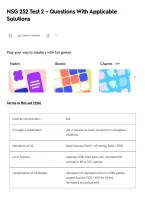
Terms in this set (226)
room air concentration 21%
is oxygen a medication? yes, it requires an order (except for in emergency
situations)
indications of O2 tissue hypoxia (PaO2 < 60 mmHg, SaO2 < 90%)
s/s of hypoxia dyspnea, SOB, chest pain, LOC, increased RR,
increase in BP or HR, cyanosis
complications of O2 therapy depression of respiratory drive in COPD patient
oxygen toxicity (FiO2 > 60% for 48 hrs)
fire hazard (no petroleum!)
,oxygen toxicity s/s parathesia, dyspnea, restlessness, fatigue, malaise,
progressive respiratory distress, atelectasis,
pulmonary infiltrates and fibrosis, vision impairment in
neonates
nursing management O2 therapy assess and monitor
pulse ox monitoring
ABG
nasal cannula 0.5-6 lpm, FiO2 23-42%
connect to humidifier for >2 L/min
skin integrity
hi-flow nasal cannula up to 100% FiO2-precise
humidification
positive pressure
continuous positive airway pressure keeps airway open and assists w/ breathing
(CPAP) PEEP keeps bronchioles and alveoli open
BiPAP uses lower pressure than CPAP during expiration
OSA, COPD, CHF, hypercapnia, hypoxia, pneumonia
via mask (tight seal)
can be uncomfortable and drying out mucous
membranes
rescue breathing respiratory arrest or severe distress
AMBU-bag
bag even if O2 is not hooked up
tracheostomy creation of an artificial opening into the trachea
alternate airway
,endotracheal intubation general anesthesia
respiratory failure
failure to ventilate (paralysis, guilllan-barre)
inability to protect airway
inability to maintain airway patency
deteriorating status
placement verification of ET tube auscultate bilaterally
end tidal CO2 device/monitor
CXR gold standard
ET tube nursing management administer drugs (paralytics, sedatives)
assess patient's ABCs
document cm placement
communicate with patient
safety (sedation, restraints)
cuff inflation seals tube against tracheal wall
facilitates positive pressure ventilation
protects from aspiration
< 25 mmHg
assess cuff pressure q8 hours
complications of intubation cuff leaks
trauma, bleeding, ischemia
complications of mechanical injury during intubation
ventilation barotrauma
oxygen toxicity
ventilator associated pneumonia
skin break down
immobility
impaired nutrition
self-extubation-damages vocal cords
impaired communication
pain and discomfort
, vent settings mode
fiO2
respiratory rate
tidal volume
PEEP
volume controlled ventilation tidal volume delivered with each breath
pressure controlled ventilation breath given using positive pressure until preset
pressure reached
pressure regulated volume control attempt to deliver preset vol., not to increase preset
(PRVC) max pressure
asynchronous ventilation ventilator delivers breaths at predetermined intervals
synchronous ventilation patient can initiate breaths but ventilator will deliver
after preset interval if no breath is initiated
high pressure alarms (airway is coughing, excessive mucus, pneumothorax, patient
blocked) fighting vent
assess, suction, and bag!
reintubate or adjust tube
low pressure alarms (inadequate or no disconnected tubing, air leak, inappropriate settings
breath given) assess, check connection and check for air leaks
high respiratory alarm rate Anxiety/Pain, Water or Kinks in tubing, Pulsating Air
that triggers Vent Alarm
Assess, communicate with patient, administer meds.
straighten out kinks, drain water collected in tubing.
apnea alarm patient has stopped breathing or tubing disconnected
assess, manually bag & call for help, or reconnect
tubing if that is the cause.
Solutions
Add to calendar
Play your way to mastery with fun games
Match Blocks Charms NEW
Terms in this set (226)
room air concentration 21%
is oxygen a medication? yes, it requires an order (except for in emergency
situations)
indications of O2 tissue hypoxia (PaO2 < 60 mmHg, SaO2 < 90%)
s/s of hypoxia dyspnea, SOB, chest pain, LOC, increased RR,
increase in BP or HR, cyanosis
complications of O2 therapy depression of respiratory drive in COPD patient
oxygen toxicity (FiO2 > 60% for 48 hrs)
fire hazard (no petroleum!)
,oxygen toxicity s/s parathesia, dyspnea, restlessness, fatigue, malaise,
progressive respiratory distress, atelectasis,
pulmonary infiltrates and fibrosis, vision impairment in
neonates
nursing management O2 therapy assess and monitor
pulse ox monitoring
ABG
nasal cannula 0.5-6 lpm, FiO2 23-42%
connect to humidifier for >2 L/min
skin integrity
hi-flow nasal cannula up to 100% FiO2-precise
humidification
positive pressure
continuous positive airway pressure keeps airway open and assists w/ breathing
(CPAP) PEEP keeps bronchioles and alveoli open
BiPAP uses lower pressure than CPAP during expiration
OSA, COPD, CHF, hypercapnia, hypoxia, pneumonia
via mask (tight seal)
can be uncomfortable and drying out mucous
membranes
rescue breathing respiratory arrest or severe distress
AMBU-bag
bag even if O2 is not hooked up
tracheostomy creation of an artificial opening into the trachea
alternate airway
,endotracheal intubation general anesthesia
respiratory failure
failure to ventilate (paralysis, guilllan-barre)
inability to protect airway
inability to maintain airway patency
deteriorating status
placement verification of ET tube auscultate bilaterally
end tidal CO2 device/monitor
CXR gold standard
ET tube nursing management administer drugs (paralytics, sedatives)
assess patient's ABCs
document cm placement
communicate with patient
safety (sedation, restraints)
cuff inflation seals tube against tracheal wall
facilitates positive pressure ventilation
protects from aspiration
< 25 mmHg
assess cuff pressure q8 hours
complications of intubation cuff leaks
trauma, bleeding, ischemia
complications of mechanical injury during intubation
ventilation barotrauma
oxygen toxicity
ventilator associated pneumonia
skin break down
immobility
impaired nutrition
self-extubation-damages vocal cords
impaired communication
pain and discomfort
, vent settings mode
fiO2
respiratory rate
tidal volume
PEEP
volume controlled ventilation tidal volume delivered with each breath
pressure controlled ventilation breath given using positive pressure until preset
pressure reached
pressure regulated volume control attempt to deliver preset vol., not to increase preset
(PRVC) max pressure
asynchronous ventilation ventilator delivers breaths at predetermined intervals
synchronous ventilation patient can initiate breaths but ventilator will deliver
after preset interval if no breath is initiated
high pressure alarms (airway is coughing, excessive mucus, pneumothorax, patient
blocked) fighting vent
assess, suction, and bag!
reintubate or adjust tube
low pressure alarms (inadequate or no disconnected tubing, air leak, inappropriate settings
breath given) assess, check connection and check for air leaks
high respiratory alarm rate Anxiety/Pain, Water or Kinks in tubing, Pulsating Air
that triggers Vent Alarm
Assess, communicate with patient, administer meds.
straighten out kinks, drain water collected in tubing.
apnea alarm patient has stopped breathing or tubing disconnected
assess, manually bag & call for help, or reconnect
tubing if that is the cause.