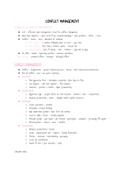
CONFLICT MANAGEMENT
TEAMWORK & CONFLICT MANAGEMENT:
● Link - effective team management + need for conflict management.
● Good team dynamics - open comm, fewer misunderstandings + solve problems - before - crisis.
● Conflict - teams - arise - allocation of workload.
○ Role overload - 1 member (willingly) takes on more - cope with.
○ Role conflict - more than 1 member wants - certain role.
○ Role ambiguity - lack of clarity - roles - members - expected to play.
● CM skills - needed - leadership position - business situations.
● Synergy = combined effort - stronger - individual effort.
CONFLICT MANAGEMENT
● Conflict = disagreement - parties involved perceive - threat - their needs/concerns/interests.
● Not all conflict - bad + can spark creativity.
● Functional:
○ Non-aggressive form - stimulates creativity + allow ideas to flow.
○ Can disagree - still work together - find solution.
○ Outcome - positive + results - higher productivity.
● Dysfunctional:
○ Aggressive type - people refuse to work towards - solution + task - compromised.
○ Reduced productivity + waste - valuable human capital resources.
● Advantages:
○ Create awareness - problem.
○ Stimulates creative thinking.
○ Help understand problem / learn from one another.
○ Lead to collab + focus - working together.
○ Motivate people - give input + get involved / participate - situation - previously felt apath.
○ Misconceptions - cleared + views - clarified.
● Disadvantages:
○ Hampers productivity + morale.
○ Leads - inappropriate beh - violence - feeling frustrated.
○ Climate - mistrust - backstabbing + gossiping.
○ Lower job satisfaction.
○ Waste of time + poor decisions - made.
SANJANA VINOD
, REASONS FOR CONFLICT
1. Change:
● To survive - business - adapt.
● People resist change - leads - conflict.
● New eco - rev changes are experienced - innovation in tech, globalisation + knowledge
management.
2. Inclusivity & Cultural Diversity:
● SA - cultural differences - conflict situations - due to ignorance.
● Need - accommodate all cultures + important - not stereotype.
● Entering business transactions/negotiations - acknowledge differences - conflict situations.
● UBUNTU VS WESTERN CULTURE:
○ Social trust first.
○ Personal relations + goodwill - valued.
○ Negotiations - slower + rituals - play a role.
○ ‘Get down to business’ attitude.
○ Emphasis - performance + expertise.
○ Time = money - conclude negotiations asap - start next transaction.
3. Lack of / poor communication:
● Employees - uninformed - decisions / what to expect - rely on grapevine (rumours).
● Uncertainty - conflict.
● Poor comm - poor listening skills - listen but don’t hear - misunderstandings.
● Comm barriers - org structure - too hierarchical - conflict.
○ Poorly defined org structure - jurisdictional ambiguity - who may discipline a worker?
○ Role overload - workers don’t understand - job entails.
4. Resource Allocation:
● Insufficient/unequal distr - resources - perform a task - stress amongst employees.
○ Fighting - resources - structural reason - conflict in org.
● Interdependence - different departments - resource allocation.
● Skills + abilities = resources also.
5. Personalities & Emotions:
● Everyone - unique - different personalities - conflict + react - different emotions.
● Type A = workaholics - high expectations, impatient + unhappy - delays in deadlines.
● Type B = easy-going - no real time urgency.
SANJANA VINOD
TEAMWORK & CONFLICT MANAGEMENT:
● Link - effective team management + need for conflict management.
● Good team dynamics - open comm, fewer misunderstandings + solve problems - before - crisis.
● Conflict - teams - arise - allocation of workload.
○ Role overload - 1 member (willingly) takes on more - cope with.
○ Role conflict - more than 1 member wants - certain role.
○ Role ambiguity - lack of clarity - roles - members - expected to play.
● CM skills - needed - leadership position - business situations.
● Synergy = combined effort - stronger - individual effort.
CONFLICT MANAGEMENT
● Conflict = disagreement - parties involved perceive - threat - their needs/concerns/interests.
● Not all conflict - bad + can spark creativity.
● Functional:
○ Non-aggressive form - stimulates creativity + allow ideas to flow.
○ Can disagree - still work together - find solution.
○ Outcome - positive + results - higher productivity.
● Dysfunctional:
○ Aggressive type - people refuse to work towards - solution + task - compromised.
○ Reduced productivity + waste - valuable human capital resources.
● Advantages:
○ Create awareness - problem.
○ Stimulates creative thinking.
○ Help understand problem / learn from one another.
○ Lead to collab + focus - working together.
○ Motivate people - give input + get involved / participate - situation - previously felt apath.
○ Misconceptions - cleared + views - clarified.
● Disadvantages:
○ Hampers productivity + morale.
○ Leads - inappropriate beh - violence - feeling frustrated.
○ Climate - mistrust - backstabbing + gossiping.
○ Lower job satisfaction.
○ Waste of time + poor decisions - made.
SANJANA VINOD
, REASONS FOR CONFLICT
1. Change:
● To survive - business - adapt.
● People resist change - leads - conflict.
● New eco - rev changes are experienced - innovation in tech, globalisation + knowledge
management.
2. Inclusivity & Cultural Diversity:
● SA - cultural differences - conflict situations - due to ignorance.
● Need - accommodate all cultures + important - not stereotype.
● Entering business transactions/negotiations - acknowledge differences - conflict situations.
● UBUNTU VS WESTERN CULTURE:
○ Social trust first.
○ Personal relations + goodwill - valued.
○ Negotiations - slower + rituals - play a role.
○ ‘Get down to business’ attitude.
○ Emphasis - performance + expertise.
○ Time = money - conclude negotiations asap - start next transaction.
3. Lack of / poor communication:
● Employees - uninformed - decisions / what to expect - rely on grapevine (rumours).
● Uncertainty - conflict.
● Poor comm - poor listening skills - listen but don’t hear - misunderstandings.
● Comm barriers - org structure - too hierarchical - conflict.
○ Poorly defined org structure - jurisdictional ambiguity - who may discipline a worker?
○ Role overload - workers don’t understand - job entails.
4. Resource Allocation:
● Insufficient/unequal distr - resources - perform a task - stress amongst employees.
○ Fighting - resources - structural reason - conflict in org.
● Interdependence - different departments - resource allocation.
● Skills + abilities = resources also.
5. Personalities & Emotions:
● Everyone - unique - different personalities - conflict + react - different emotions.
● Type A = workaholics - high expectations, impatient + unhappy - delays in deadlines.
● Type B = easy-going - no real time urgency.
SANJANA VINOD