
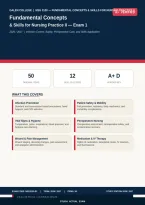
GALEN COLLEGE | NSG 3130 — FUNDAMENTAL CONCEPTS & SKILLS FOR NURSING PRACTICE II
A+ VERIFIED
Fundamental Concepts
& Skills for Nursing Practice II — Exam 1
| Infection Control, Safety, Perioperative Care, and Skills Application
50 12 A+ D
ORIGINAL ITEMS SKILL CLUSTERS VERIFIED KEY
WHAT THIS COVERS
Infection Prevention Patient Safety & Mobility
Standard and transmission-based precautions, hand Fall prevention, restraints, body mechanics, and
hygiene, and PPE selection. immobility complications.
Vital Signs & Hygiene Perioperative Nursing
Temperature, pulse, respirations, blood pressure, and Preoperative assessment, intraoperative safety, and
hygiene care planning. postoperative recovery.
Wound & Pain Management Medication & IV Therapy
Wound staging, dressing changes, pain assessment, Rights of medication, parenteral routes, IV insertion,
and analgesic administration. and fluid balance.
EXAM CODE: NSG3130-E1 | TERM: | ITEMS: 50 STUDY EDITION
ABOUT THIS ASSESSMENT
STUVIA ACTUAL
This original study booklet addresses the foundational EXAM and skills taught in NSG 3130 at Galen
nursing concepts
, GALEN COLLEGE | NSG 3130 — FUNDAMENTAL CONCEPTS & SKILLS FORNSG3130-E1
NURSING PRACTICE
| STUDY IIEDITION 2026/2027
EXAMINATION QUESTIONS
Q1.
A nurse is preparing to insert a peripheral IV. According to CDC hand hygiene guidelines, the nurse should
perform hand hygiene:
A. With alcohol-based hand sanitizer before donning gloves and after removing them
B. Only if hands are visibly soiled
C. With soap and water only
D. Only after the procedure
Correct Answer: A
Rationale: Hand hygiene must be performed before donning gloves and after removing them using an alcohol-based
sanitizer unless hands are visibly soiled. Soap and water are required for spores (e.g., C. difficile) or visible
contamination.
Q2.
A patient is on contact precautions for a draining infected wound. The nurse must don PPE in which order?
A. Gown, gloves, mask
B. Gown, mask, gloves
C. Gloves only
D. Mask, gown, gloves
Correct Answer: B
Rationale: Correct PPE donning order is gown first, then mask or face shield, then gloves. This minimizes
contamination of clean attire and ensures gloves cover gown cuffs for full barrier protection.
Q3.
A patient on airborne precautions requires transport to radiology. The nurse should:
A. Have the patient wear an N95 respirator
B. Delay the procedure until isolation is discontinued
C. Limit transport to essential procedures only and apply a surgical mask to the patient
D. Transport the patient without a mask
Correct Answer: C
Rationale: For airborne precautions (e.g., TB, measles), non-essential transport is deferred. When transport is
necessary, the patient wears a surgical mask to contain droplets. Staff wear N95 respirators in the room.
Q4.
The single most effective measure to prevent healthcare-associated infections is:
A. Environmental disinfection
B. Sterile gloves
C. Antibiotic prophylaxis
D. Proper hand hygiene
Correct Answer: D
Rationale: Hand hygiene remains the single most effective measure to prevent healthcare-associated infections.
Even with appropriate PPE, organisms on hands transmit to patients when hand hygiene is omitted between
contacts.
STUVIA ACTUAL EXAM NSG 3130 Fundamentals II Page 2
A+ VERIFIED
Fundamental Concepts
& Skills for Nursing Practice II — Exam 1
| Infection Control, Safety, Perioperative Care, and Skills Application
50 12 A+ D
ORIGINAL ITEMS SKILL CLUSTERS VERIFIED KEY
WHAT THIS COVERS
Infection Prevention Patient Safety & Mobility
Standard and transmission-based precautions, hand Fall prevention, restraints, body mechanics, and
hygiene, and PPE selection. immobility complications.
Vital Signs & Hygiene Perioperative Nursing
Temperature, pulse, respirations, blood pressure, and Preoperative assessment, intraoperative safety, and
hygiene care planning. postoperative recovery.
Wound & Pain Management Medication & IV Therapy
Wound staging, dressing changes, pain assessment, Rights of medication, parenteral routes, IV insertion,
and analgesic administration. and fluid balance.
EXAM CODE: NSG3130-E1 | TERM: | ITEMS: 50 STUDY EDITION
ABOUT THIS ASSESSMENT
STUVIA ACTUAL
This original study booklet addresses the foundational EXAM and skills taught in NSG 3130 at Galen
nursing concepts
, GALEN COLLEGE | NSG 3130 — FUNDAMENTAL CONCEPTS & SKILLS FORNSG3130-E1
NURSING PRACTICE
| STUDY IIEDITION 2026/2027
EXAMINATION QUESTIONS
Q1.
A nurse is preparing to insert a peripheral IV. According to CDC hand hygiene guidelines, the nurse should
perform hand hygiene:
A. With alcohol-based hand sanitizer before donning gloves and after removing them
B. Only if hands are visibly soiled
C. With soap and water only
D. Only after the procedure
Correct Answer: A
Rationale: Hand hygiene must be performed before donning gloves and after removing them using an alcohol-based
sanitizer unless hands are visibly soiled. Soap and water are required for spores (e.g., C. difficile) or visible
contamination.
Q2.
A patient is on contact precautions for a draining infected wound. The nurse must don PPE in which order?
A. Gown, gloves, mask
B. Gown, mask, gloves
C. Gloves only
D. Mask, gown, gloves
Correct Answer: B
Rationale: Correct PPE donning order is gown first, then mask or face shield, then gloves. This minimizes
contamination of clean attire and ensures gloves cover gown cuffs for full barrier protection.
Q3.
A patient on airborne precautions requires transport to radiology. The nurse should:
A. Have the patient wear an N95 respirator
B. Delay the procedure until isolation is discontinued
C. Limit transport to essential procedures only and apply a surgical mask to the patient
D. Transport the patient without a mask
Correct Answer: C
Rationale: For airborne precautions (e.g., TB, measles), non-essential transport is deferred. When transport is
necessary, the patient wears a surgical mask to contain droplets. Staff wear N95 respirators in the room.
Q4.
The single most effective measure to prevent healthcare-associated infections is:
A. Environmental disinfection
B. Sterile gloves
C. Antibiotic prophylaxis
D. Proper hand hygiene
Correct Answer: D
Rationale: Hand hygiene remains the single most effective measure to prevent healthcare-associated infections.
Even with appropriate PPE, organisms on hands transmit to patients when hand hygiene is omitted between
contacts.
STUVIA ACTUAL EXAM NSG 3130 Fundamentals II Page 2


