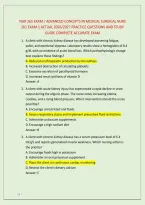
NUR 265 EXAM / ADVANCED CONCEPTS IN MEDICAL SURGICAL NURS
261 EXAM 1 ACTUAL 2026/2027 PRACTICE QUESTIONS AND STUDY
GUIDE COMPLETE ACCURATE EXAM
1. A client with chronic kidney disease has developed worsening fatigue,
pallor, and exertional dyspnea. Laboratory results show a hemoglobin of 8.4
g/dL with no evidence of acute blood loss. Which pathophysiologic change
best explains these findings?
A. Reduced erythropoietin production by the kidneys
B. Increased destruction of circulating platelets
C. Excessive secretion of parathyroid hormone
D. Increased renal synthesis of vitamin D
Answer: A
2. A client with acute kidney injury has experienced a rapid decline in urine
output during the oliguric phase. The nurse notes increasing edema,
crackles, and a rising blood pressure. Which intervention should the nurse
prioritize?
A. Encourage unrestricted oral fluids
B. Assess respiratory status and implement prescribed fluid restrictions
C. Administer potassium supplements
D. Encourage a high-sodium diet
Answer: B
3. A client with chronic kidney disease has a serum potassium level of 6.4
mEq/L and reports generalized muscle weakness. Which nursing action is
the priority?
A. Encourage foods high in potassium
B. Administer an oral potassium supplement
C. Place the client on continuous cardiac monitoring
D. Restrict the client's dietary calcium
Answer: C
pg. 1
, 4. A client receiving hemodialysis suddenly develops headache, nausea,
restlessness, and confusion during treatment. Which complication should
the nurse suspect?
A. Peritonitis
B. Hypoglycemia
C. Disequilibrium syndrome
D. Hypercalcemia
Answer: C
5. A client with chronic kidney disease is prescribed epoetin alfa for anemia.
Which finding should the nurse monitor most closely during therapy?
A. Blood pressure
B. Bowel sounds
C. Serum amylase
D. Pupillary response
Answer: A
6. A client with a newly created arteriovenous fistula for hemodialysis asks
why blood pressure measurements should not be taken in that arm. Which
response by the nurse is most appropriate?
A. The cuff causes permanent loss of sensation
B. Pressure can damage the access and compromise blood flow
C. The cuff causes excessive potassium loss
D. Blood pressure readings are always inaccurate on that side
Answer: B
7. A client receiving peritoneal dialysis reports abdominal pain, cloudy
dialysate, and fever. Which complication should the nurse suspect?
A. Hypokalemia
B. Disequilibrium syndrome
C. Peritonitis
D. Pulmonary edema
Answer: C
pg. 2
, 8. A client with chronic kidney disease asks why dietary phosphorus restriction
is necessary. Which response is most accurate?
A. Phosphorus retention contributes to hypocalcemia and bone disease
B. Phosphorus directly causes severe hypernatremia
C. Phosphorus restriction prevents erythropoietin secretion
D. Phosphorus is responsible for all forms of metabolic acidosis
Answer: A
9. A client with acute kidney injury has a urine output of 150 mL over 12
hours. Which assessment finding requires the most immediate follow-up?
A. Mild dry skin
B. Serum potassium of 6.8 mEq/L with peaked T waves
C. Mild fatigue
D. Decreased appetite
Answer: B
10. A client with nephrotic syndrome has generalized edema and significant
proteinuria. Which mechanism primarily contributes to the edema?
A. Increased serum albumin concentration
B. Decreased plasma oncotic pressure from urinary protein loss
C. Increased red blood cell production
D. Increased glomerular filtration caused by dehydration
Answer: B
11. A client with glomerulonephritis develops cola-colored urine, hypertension,
and periorbital edema several weeks after a streptococcal infection. Which
assessment finding is most consistent with the renal disorder?
A. Massive polyuria
B. Severe glycosuria
C. Hematuria
D. Absent urinary protein
Answer: C
12. A client with chronic kidney disease has metabolic acidosis related to
impaired renal acid excretion. Which respiratory response should the nurse
pg. 3
, anticipate?
A. Slow, shallow respirations
B. Rapid, deep respirations
C. Irregular respirations with prolonged apnea
D. Complete cessation of respiratory compensation
Answer: B
13. A client with end-stage kidney disease is preparing for hemodialysis. Which
laboratory abnormality is particularly concerning because of its potential to
cause fatal cardiac dysrhythmias?
A. Potassium of 7.1 mEq/L
B. Sodium of 136 mEq/L
C. Calcium of 9.2 mg/dL
D. Hemoglobin of 10.2 g/dL
Answer: A
14. A client with renal failure is prescribed calcium acetate with meals. Which
explanation should the nurse provide?
A. It stimulates erythropoietin release
B. It binds dietary phosphorus in the gastrointestinal tract
C. It increases urinary potassium excretion
D. It directly dissolves renal calculi
Answer: B
15. A client with suspected renal calculi reports sudden severe flank pain
radiating toward the groin with nausea. Which additional finding would
most strongly support renal colic?
A. Painless generalized edema
B. Hematuria
C. Bradycardia
D. Marked jaundice
Answer: B
16. A client with renal calculi is instructed to increase fluid intake when
clinically appropriate. What is the primary purpose of this intervention?
pg. 4
261 EXAM 1 ACTUAL 2026/2027 PRACTICE QUESTIONS AND STUDY
GUIDE COMPLETE ACCURATE EXAM
1. A client with chronic kidney disease has developed worsening fatigue,
pallor, and exertional dyspnea. Laboratory results show a hemoglobin of 8.4
g/dL with no evidence of acute blood loss. Which pathophysiologic change
best explains these findings?
A. Reduced erythropoietin production by the kidneys
B. Increased destruction of circulating platelets
C. Excessive secretion of parathyroid hormone
D. Increased renal synthesis of vitamin D
Answer: A
2. A client with acute kidney injury has experienced a rapid decline in urine
output during the oliguric phase. The nurse notes increasing edema,
crackles, and a rising blood pressure. Which intervention should the nurse
prioritize?
A. Encourage unrestricted oral fluids
B. Assess respiratory status and implement prescribed fluid restrictions
C. Administer potassium supplements
D. Encourage a high-sodium diet
Answer: B
3. A client with chronic kidney disease has a serum potassium level of 6.4
mEq/L and reports generalized muscle weakness. Which nursing action is
the priority?
A. Encourage foods high in potassium
B. Administer an oral potassium supplement
C. Place the client on continuous cardiac monitoring
D. Restrict the client's dietary calcium
Answer: C
pg. 1
, 4. A client receiving hemodialysis suddenly develops headache, nausea,
restlessness, and confusion during treatment. Which complication should
the nurse suspect?
A. Peritonitis
B. Hypoglycemia
C. Disequilibrium syndrome
D. Hypercalcemia
Answer: C
5. A client with chronic kidney disease is prescribed epoetin alfa for anemia.
Which finding should the nurse monitor most closely during therapy?
A. Blood pressure
B. Bowel sounds
C. Serum amylase
D. Pupillary response
Answer: A
6. A client with a newly created arteriovenous fistula for hemodialysis asks
why blood pressure measurements should not be taken in that arm. Which
response by the nurse is most appropriate?
A. The cuff causes permanent loss of sensation
B. Pressure can damage the access and compromise blood flow
C. The cuff causes excessive potassium loss
D. Blood pressure readings are always inaccurate on that side
Answer: B
7. A client receiving peritoneal dialysis reports abdominal pain, cloudy
dialysate, and fever. Which complication should the nurse suspect?
A. Hypokalemia
B. Disequilibrium syndrome
C. Peritonitis
D. Pulmonary edema
Answer: C
pg. 2
, 8. A client with chronic kidney disease asks why dietary phosphorus restriction
is necessary. Which response is most accurate?
A. Phosphorus retention contributes to hypocalcemia and bone disease
B. Phosphorus directly causes severe hypernatremia
C. Phosphorus restriction prevents erythropoietin secretion
D. Phosphorus is responsible for all forms of metabolic acidosis
Answer: A
9. A client with acute kidney injury has a urine output of 150 mL over 12
hours. Which assessment finding requires the most immediate follow-up?
A. Mild dry skin
B. Serum potassium of 6.8 mEq/L with peaked T waves
C. Mild fatigue
D. Decreased appetite
Answer: B
10. A client with nephrotic syndrome has generalized edema and significant
proteinuria. Which mechanism primarily contributes to the edema?
A. Increased serum albumin concentration
B. Decreased plasma oncotic pressure from urinary protein loss
C. Increased red blood cell production
D. Increased glomerular filtration caused by dehydration
Answer: B
11. A client with glomerulonephritis develops cola-colored urine, hypertension,
and periorbital edema several weeks after a streptococcal infection. Which
assessment finding is most consistent with the renal disorder?
A. Massive polyuria
B. Severe glycosuria
C. Hematuria
D. Absent urinary protein
Answer: C
12. A client with chronic kidney disease has metabolic acidosis related to
impaired renal acid excretion. Which respiratory response should the nurse
pg. 3
, anticipate?
A. Slow, shallow respirations
B. Rapid, deep respirations
C. Irregular respirations with prolonged apnea
D. Complete cessation of respiratory compensation
Answer: B
13. A client with end-stage kidney disease is preparing for hemodialysis. Which
laboratory abnormality is particularly concerning because of its potential to
cause fatal cardiac dysrhythmias?
A. Potassium of 7.1 mEq/L
B. Sodium of 136 mEq/L
C. Calcium of 9.2 mg/dL
D. Hemoglobin of 10.2 g/dL
Answer: A
14. A client with renal failure is prescribed calcium acetate with meals. Which
explanation should the nurse provide?
A. It stimulates erythropoietin release
B. It binds dietary phosphorus in the gastrointestinal tract
C. It increases urinary potassium excretion
D. It directly dissolves renal calculi
Answer: B
15. A client with suspected renal calculi reports sudden severe flank pain
radiating toward the groin with nausea. Which additional finding would
most strongly support renal colic?
A. Painless generalized edema
B. Hematuria
C. Bradycardia
D. Marked jaundice
Answer: B
16. A client with renal calculi is instructed to increase fluid intake when
clinically appropriate. What is the primary purpose of this intervention?
pg. 4