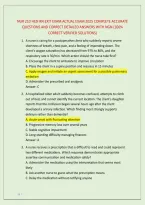
NUR 210 HESI RN EXIT EXAM ACTUAL EXAM 2025 COMPLETE ACCURATE
QUESTIONS AND CORRECT DETAILED ANSWERS WITH NGN (100%
CORRECT VERIFIED SOLUTIONS)
1. A nurse is caring for a postoperative client who suddenly reports severe
shortness of breath, chest pain, and a feeling of impending doom. The
client's oxygen saturation has decreased from 97% to 86%, and the
respiratory rate is 30/min. Which action should the nurse take first?
A. Encourage the client to ambulate to improve circulation
B. Place the client in a supine position and reassess in 15 minutes
C. Apply oxygen and initiate an urgent assessment for a possible pulmonary
embolism
D. Administer the prescribed oral analgesic
Answer: C
2. A hospitalized older adult suddenly becomes confused, attempts to climb
out of bed, and cannot identify the current location. The client's daughter
reports that the confusion began several hours ago after the client
developed a urinary infection. Which finding most strongly supports
delirium rather than dementia?
A. Acute onset with fluctuating attention
B. Progressive memory loss over several years
C. Stable cognitive impairment
D. Long-standing difficulty managing finances
Answer: A
3. A nurse receives a prescription that is difficult to read and could represent
two different medications. Which response demonstrates appropriate
assertive communication and medication safety?
A. Administer the medication using the interpretation that seems most
likely
B. Ask another nurse to guess what the prescription means
C. Delay the medication without notifying anyone
pg. 1
, D. Contact the prescriber and request clarification before administering it
Answer: D
4. A client with diabetes becomes pale, diaphoretic, shaky, and confused
before lunch. The capillary blood glucose is 52 mg/dL, and the client is
awake and able to swallow. Which intervention is most appropriate?
A. Administer the scheduled long-acting insulin
B. Give approximately 15 g of rapid-acting carbohydrate and recheck
glucose
C. Restrict oral intake until the glucose exceeds 100 mg/dL
D. Administer glucagon immediately regardless of swallowing ability
Answer: B
5. A nurse is preparing to administer IV potassium chloride to a client with
severe hypokalemia. Which action is essential before beginning the
infusion?
A. Administer the medication by IV push if the potassium is critically low
B. Mix the medication only with sterile water
C. Verify the prescribed dilution and administer it using an appropriate
controlled infusion
D. Give the medication rapidly through the closest IV port
Answer: C
6. A client with chronic obstructive pulmonary disease is receiving oxygen. The
client becomes increasingly drowsy, and the respiratory rate decreases to
8/min. Which action should the nurse prioritize?
A. Assess respiratory status and notify the healthcare provider immediately
B. Encourage the client to sleep because fatigue is expected
C. Remove all oxygen immediately
D. Administer a sedative to decrease anxiety
Answer: A
7. A client with heart failure reports increasing shortness of breath and
awakens at night gasping for air. Which additional assessment finding would
most strongly support worsening fluid overload?
pg. 2
, A. Dry mucous membranes
B. Flat neck veins
C. Decreased body weight
D. Bilateral crackles and dependent edema
Answer: D
8. A nurse is caring for a client receiving digoxin for heart failure. Before
administering the medication, which finding requires the nurse to withhold
the dose and notify the healthcare provider?
A. Blood pressure of 128/74 mmHg
B. Apical pulse of 54/min
C. Respiratory rate of 18/min
D. Oxygen saturation of 96%
Answer: B
9. A client receiving warfarin therapy has a markedly elevated INR and reports
bleeding gums and dark stools. Which action is most appropriate?
A. Administer the next scheduled dose
B. Encourage increased intake of high-dose aspirin
C. Hold the medication and notify the healthcare provider
D. Encourage vigorous tooth brushing
Answer: C
10. A client receiving unfractionated heparin develops unexpected bleeding and
a significant decrease in platelet count several days after therapy begins.
Which complication should the nurse suspect?
A. Heparin-induced thrombocytopenia
B. Iron-deficiency anemia
C. Vitamin B12 deficiency
D. Disseminated tuberculosis
Answer: A
11. A client arrives in the emergency department with crushing substernal
chest pain radiating to the left arm, diaphoresis, and nausea. Which
diagnostic test should the nurse anticipate obtaining rapidly?
pg. 3
, A. Colonoscopy
B. Bone scan
C. Pulmonary function test
D. 12-lead electrocardiogram
Answer: D
12. A client with an acute myocardial infarction suddenly develops ventricular
fibrillation and becomes unresponsive with no palpable pulse. Which
intervention has the highest priority?
A. Administer oral aspirin
B. Begin CPR and prepare for immediate defibrillation
C. Obtain a routine chest radiograph
D. Place the client in a sitting position and reassess
Answer: B
13. A client with a history of hypertension reports severe headache, blurred
vision, and chest discomfort. Blood pressure is 224/126 mmHg. Which
nursing response is most appropriate?
A. Reassure the client that anxiety commonly causes high blood pressure
B. Encourage the client to exercise to lower the pressure
C. Recognize possible hypertensive emergency and initiate urgent
evaluation
D. Recheck the blood pressure at the next scheduled appointment
Answer: C
14. A client with suspected ischemic stroke develops sudden facial drooping,
right-arm weakness, and difficulty speaking. Which information is most
important for the nurse to determine immediately?
A. The exact time the client was last known to be well
B. The client's favorite foods
C. The client's usual bedtime
D. The date of the last dental examination
Answer: A
pg. 4
QUESTIONS AND CORRECT DETAILED ANSWERS WITH NGN (100%
CORRECT VERIFIED SOLUTIONS)
1. A nurse is caring for a postoperative client who suddenly reports severe
shortness of breath, chest pain, and a feeling of impending doom. The
client's oxygen saturation has decreased from 97% to 86%, and the
respiratory rate is 30/min. Which action should the nurse take first?
A. Encourage the client to ambulate to improve circulation
B. Place the client in a supine position and reassess in 15 minutes
C. Apply oxygen and initiate an urgent assessment for a possible pulmonary
embolism
D. Administer the prescribed oral analgesic
Answer: C
2. A hospitalized older adult suddenly becomes confused, attempts to climb
out of bed, and cannot identify the current location. The client's daughter
reports that the confusion began several hours ago after the client
developed a urinary infection. Which finding most strongly supports
delirium rather than dementia?
A. Acute onset with fluctuating attention
B. Progressive memory loss over several years
C. Stable cognitive impairment
D. Long-standing difficulty managing finances
Answer: A
3. A nurse receives a prescription that is difficult to read and could represent
two different medications. Which response demonstrates appropriate
assertive communication and medication safety?
A. Administer the medication using the interpretation that seems most
likely
B. Ask another nurse to guess what the prescription means
C. Delay the medication without notifying anyone
pg. 1
, D. Contact the prescriber and request clarification before administering it
Answer: D
4. A client with diabetes becomes pale, diaphoretic, shaky, and confused
before lunch. The capillary blood glucose is 52 mg/dL, and the client is
awake and able to swallow. Which intervention is most appropriate?
A. Administer the scheduled long-acting insulin
B. Give approximately 15 g of rapid-acting carbohydrate and recheck
glucose
C. Restrict oral intake until the glucose exceeds 100 mg/dL
D. Administer glucagon immediately regardless of swallowing ability
Answer: B
5. A nurse is preparing to administer IV potassium chloride to a client with
severe hypokalemia. Which action is essential before beginning the
infusion?
A. Administer the medication by IV push if the potassium is critically low
B. Mix the medication only with sterile water
C. Verify the prescribed dilution and administer it using an appropriate
controlled infusion
D. Give the medication rapidly through the closest IV port
Answer: C
6. A client with chronic obstructive pulmonary disease is receiving oxygen. The
client becomes increasingly drowsy, and the respiratory rate decreases to
8/min. Which action should the nurse prioritize?
A. Assess respiratory status and notify the healthcare provider immediately
B. Encourage the client to sleep because fatigue is expected
C. Remove all oxygen immediately
D. Administer a sedative to decrease anxiety
Answer: A
7. A client with heart failure reports increasing shortness of breath and
awakens at night gasping for air. Which additional assessment finding would
most strongly support worsening fluid overload?
pg. 2
, A. Dry mucous membranes
B. Flat neck veins
C. Decreased body weight
D. Bilateral crackles and dependent edema
Answer: D
8. A nurse is caring for a client receiving digoxin for heart failure. Before
administering the medication, which finding requires the nurse to withhold
the dose and notify the healthcare provider?
A. Blood pressure of 128/74 mmHg
B. Apical pulse of 54/min
C. Respiratory rate of 18/min
D. Oxygen saturation of 96%
Answer: B
9. A client receiving warfarin therapy has a markedly elevated INR and reports
bleeding gums and dark stools. Which action is most appropriate?
A. Administer the next scheduled dose
B. Encourage increased intake of high-dose aspirin
C. Hold the medication and notify the healthcare provider
D. Encourage vigorous tooth brushing
Answer: C
10. A client receiving unfractionated heparin develops unexpected bleeding and
a significant decrease in platelet count several days after therapy begins.
Which complication should the nurse suspect?
A. Heparin-induced thrombocytopenia
B. Iron-deficiency anemia
C. Vitamin B12 deficiency
D. Disseminated tuberculosis
Answer: A
11. A client arrives in the emergency department with crushing substernal
chest pain radiating to the left arm, diaphoresis, and nausea. Which
diagnostic test should the nurse anticipate obtaining rapidly?
pg. 3
, A. Colonoscopy
B. Bone scan
C. Pulmonary function test
D. 12-lead electrocardiogram
Answer: D
12. A client with an acute myocardial infarction suddenly develops ventricular
fibrillation and becomes unresponsive with no palpable pulse. Which
intervention has the highest priority?
A. Administer oral aspirin
B. Begin CPR and prepare for immediate defibrillation
C. Obtain a routine chest radiograph
D. Place the client in a sitting position and reassess
Answer: B
13. A client with a history of hypertension reports severe headache, blurred
vision, and chest discomfort. Blood pressure is 224/126 mmHg. Which
nursing response is most appropriate?
A. Reassure the client that anxiety commonly causes high blood pressure
B. Encourage the client to exercise to lower the pressure
C. Recognize possible hypertensive emergency and initiate urgent
evaluation
D. Recheck the blood pressure at the next scheduled appointment
Answer: C
14. A client with suspected ischemic stroke develops sudden facial drooping,
right-arm weakness, and difficulty speaking. Which information is most
important for the nurse to determine immediately?
A. The exact time the client was last known to be well
B. The client's favorite foods
C. The client's usual bedtime
D. The date of the last dental examination
Answer: A
pg. 4