
4/7/26, 7:53 PM U.S. CONSTITUTION STUDY GUIDE Flashcards | Quizlet
U.S. CONSTITUTION STUDY GUIDE
11 studying now 4.3 (317 reviews)
Save
Students also studied
C
Terms in this set (83)
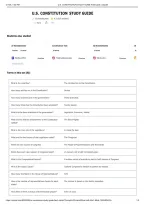
What is the preamble? The introduction to the Constitution.
How many articles are in the Constitution? Seven
How many branches are in the government? Three branches
How many times has the Constitution been amended? Twenty-seven
What are the three branches of the government? Legislative, Executive, Judicial
What are the first ten amendments to the Constitution The Bill of Rights
called?
What is the main job of the Legislature? to make the laws
What are the two houses of the Legislature called? The Congress
Name the two houses of Congress. The House of Representatives and The Senate
When does each new session of Congress begin? on January 3rd of odd numbered years
What is the Congressional Record? A written record of everything said in both houses of Congress
What is the Elastic Clause? It allows Congress to Stretch its powers as needed.
How many members in the House of Representatives? 435
How is the number of representatives chosen for each The number is based on the state's population.
state?
How often is there a census of the American people? Every 10 years.
https://quizlet.com/8229049/us-constitution-study-guide-flash-cards/?funnelUUID=aba383ca-fce5-45e1-88cb-15f454f0401b 1/5
, 4/7/26, 7:53 PM U.S. CONSTITUTION STUDY GUIDE Flashcards | Quizlet
What are the three qualifications to be a 1. at least 25 years old
Representative? 2. U.S. citizen for at least 7 years
3. live in the state you are representing
How long is the term of office for a Representative? 2 years
Who is the leader of the House of Representatives? The Speaker of the House
What role does the House play in an impeachment The House gathers the evidence.
trial?
How many members are in the Senate? 100
How many senators from each state? 2
What are the three qualifications to be a Senator? 1. at least 30 years old
2. U.S. citizen for at least 9 years
3. live in the state you are representing
How long is the term of office for a senator? 6 years
Who is the leader of the Senate? The President of the Senate which is the Vice-President
What role does the Senate play in an impeachment The Senate acts as the jury.
trial?
Where does a Bill go first to become a Law? It begins either in the Senate or in the House of Representatives.
What kind of Bill can only begin in the House of A bill concerning money or revenue.
Representatives?
After a Bill passes the first House of the Congress, To the other House.
where does it go next?
If a Bill passes through both Houses of Congress, where To the President.
does it go next?
What two things can a president do to a Bill? 1. sign it to make it a Law
2. veto it and send it back to Congress
How can a vetoed Bill become a law? Both Houses of Congress must override the veto with a 2/3 vote in each
House.
What are the Powers of Congress? 1. taxing
2. printing money
3. declaring war
Define: Habeas Corpus The right of the accused to see a judge and be told the charges against
him/her.
Define: Ex Post Facto law You may not be punished for something you'd done before the law was passed
against that action.
https://quizlet.com/8229049/us-constitution-study-guide-flash-cards/?funnelUUID=aba383ca-fce5-45e1-88cb-15f454f0401b 2/5


