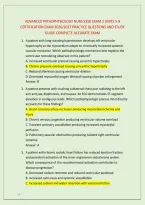
ADVANCED PATHOPHYSIOLOGY NURS 5350 EXAM 2 UNITS 5-8
CERTIFICATION EXAM 2026/2027 PRACTICE QUESTIONS AND STUDY
GUIDE COMPLETE ACCURATE EXAM
1. A patient with long-standing hypertension develops left ventricular
hypertrophy as the myocardium adapts to chronically increased systemic
vascular resistance. Which pathophysiologic mechanism best explains the
ventricular remodeling observed in this patient?
A. Increased ventricular preload causing eccentric hypertrophy
B. Chronic pressure overload causing concentric hypertrophy
C. Reduced afterload causing ventricular dilation
D. Decreased myocardial oxygen demand causing chamber enlargement
Answer: B
2. A patient presents with crushing substernal chest pain radiating to the left
arm and jaw, diaphoresis, and nausea. An ECG demonstrates ST-segment
elevation in contiguous leads. Which pathophysiologic process most directly
accounts for these findings?
A. Acute coronary artery occlusion producing myocardial ischemia and
injury
B. Chronic venous congestion producing ventricular volume overload
C. Transient coronary vasodilation producing increased myocardial
perfusion
D. Pulmonary vascular obstruction producing isolated right ventricular
ischemia
Answer: A
3. A patient with chronic systolic heart failure has reduced ejection fraction
and persistent activation of the renin-angiotensin-aldosterone system.
Which consequence of this neurohormonal activation contributes to
disease progression?
A. Decreased sodium retention and reduced ventricular workload
B. Increased natriuresis and systemic vasodilation
C. Increased sodium and water retention with vasoconstriction
pg. 1
, D. Suppression of sympathetic nervous system activity
Answer: C
4. A patient develops bilateral dependent edema, jugular venous distention,
hepatomegaly, and weight gain. The findings are most consistent with
which type of cardiac dysfunction?
A. Isolated left-sided heart failure
B. Right-sided heart failure
C. Acute pericarditis
D. Uncomplicated stable angina
Answer: B
5. A patient with aortic stenosis develops exertional dyspnea and syncope.
Which mechanism best explains the cardiac changes associated with this
disorder?
A. Chronic pressure overload of the left ventricle
B. Acute reduction in venous return
C. Increased right ventricular preload from pulmonary embolism
D. Primary reduction in systemic vascular resistance
Answer: A
6. A patient experiences episodes of chest pressure during exercise that
resolve after several minutes of rest. Which mechanism most likely explains
these symptoms?
A. Complete coronary artery occlusion with myocardial necrosis
B. Fixed coronary obstruction causing demand-induced myocardial ischemia
C. Acute inflammation of the pericardial sac
D. Sudden rupture of a ventricular aneurysm
Answer: B
7. A patient with atrial fibrillation has an irregularly irregular ventricular
rhythm. Which abnormality is primarily responsible for the irregular
rhythm?
A. Regular atrial depolarization with absent ventricular conduction
B. Chaotic atrial electrical activity producing variable AV conduction
pg. 2
, C. Complete absence of atrial electrical activity
D. Continuous ventricular repolarization without depolarization
Answer: B
8. A patient with prolonged uncontrolled hypertension develops progressive
renal dysfunction and left ventricular hypertrophy. Which vascular process
contributes to chronic target-organ injury?
A. Persistent elevation of arterial pressure causing endothelial and vascular
remodeling
B. Complete absence of sympathetic vascular stimulation
C. Permanent systemic vasodilation reducing tissue perfusion
D. Decreased arterial wall stress from reduced cardiac output
Answer: A
9. A patient with peripheral arterial disease reports calf pain after walking that
resolves with rest. Which pathophysiologic mechanism best explains
intermittent claudication?
A. Venous valve failure causing dependent venous pooling
B. Arterial obstruction limiting blood flow during increased muscle demand
C. Excess lymphatic drainage causing muscle ischemia
D. Increased capillary permeability causing acute compartment syndrome
Answer: B
10. A patient with chronic venous insufficiency develops lower-leg edema, skin
hyperpigmentation, and an ulcer near the medial malleolus. Which
mechanism is primarily responsible?
A. Chronic venous hypertension causing edema and tissue changes
B. Acute arterial embolization causing complete ischemia
C. Increased lymphatic absorption reducing interstitial fluid
D. Reduced capillary hydrostatic pressure causing tissue hypoxia
Answer: A
11. A patient develops sudden pleuritic chest pain, tachycardia, and dyspnea
after prolonged immobilization. Which pathophysiologic event is most
likely?
pg. 3
, A. Coronary artery spasm
B. Pulmonary embolization of a venous thrombus
C. Acute left ventricular rupture
D. Pericardial fluid accumulation
Answer: B
12. A patient with chronic heart failure develops worsening dyspnea when lying
flat and awakens at night gasping for air. Which mechanism best explains
these findings?
A. Pulmonary venous congestion caused by increased left-sided filling
pressures
B. Reduced pulmonary capillary pressure caused by hypovolemia
C. Increased systemic venous drainage into the lungs
D. Isolated bronchial smooth-muscle contraction
Answer: A
13. A patient with infective endocarditis develops a new cardiac murmur and
fever. Which pathophysiologic process is responsible for the murmur?
A. Destruction or interference with normal valvular function
B. Complete absence of ventricular contraction
C. Increased coronary perfusion during diastole
D. Decreased blood viscosity caused by infection
Answer: A
14. A patient develops acute aortic dissection with severe tearing chest pain
radiating to the back. Which process most directly causes the condition?
A. Rupture of a coronary plaque into the ventricular cavity
B. Separation of layers of the aortic wall after an intimal tear
C. Obstruction of the pulmonary artery by a thrombus
D. Inflammation limited to the pericardium
Answer: B
15. A patient with cardiac tamponade becomes hypotensive and develops
jugular venous distention. Which mechanism explains the hemodynamic
compromise?
pg. 4
CERTIFICATION EXAM 2026/2027 PRACTICE QUESTIONS AND STUDY
GUIDE COMPLETE ACCURATE EXAM
1. A patient with long-standing hypertension develops left ventricular
hypertrophy as the myocardium adapts to chronically increased systemic
vascular resistance. Which pathophysiologic mechanism best explains the
ventricular remodeling observed in this patient?
A. Increased ventricular preload causing eccentric hypertrophy
B. Chronic pressure overload causing concentric hypertrophy
C. Reduced afterload causing ventricular dilation
D. Decreased myocardial oxygen demand causing chamber enlargement
Answer: B
2. A patient presents with crushing substernal chest pain radiating to the left
arm and jaw, diaphoresis, and nausea. An ECG demonstrates ST-segment
elevation in contiguous leads. Which pathophysiologic process most directly
accounts for these findings?
A. Acute coronary artery occlusion producing myocardial ischemia and
injury
B. Chronic venous congestion producing ventricular volume overload
C. Transient coronary vasodilation producing increased myocardial
perfusion
D. Pulmonary vascular obstruction producing isolated right ventricular
ischemia
Answer: A
3. A patient with chronic systolic heart failure has reduced ejection fraction
and persistent activation of the renin-angiotensin-aldosterone system.
Which consequence of this neurohormonal activation contributes to
disease progression?
A. Decreased sodium retention and reduced ventricular workload
B. Increased natriuresis and systemic vasodilation
C. Increased sodium and water retention with vasoconstriction
pg. 1
, D. Suppression of sympathetic nervous system activity
Answer: C
4. A patient develops bilateral dependent edema, jugular venous distention,
hepatomegaly, and weight gain. The findings are most consistent with
which type of cardiac dysfunction?
A. Isolated left-sided heart failure
B. Right-sided heart failure
C. Acute pericarditis
D. Uncomplicated stable angina
Answer: B
5. A patient with aortic stenosis develops exertional dyspnea and syncope.
Which mechanism best explains the cardiac changes associated with this
disorder?
A. Chronic pressure overload of the left ventricle
B. Acute reduction in venous return
C. Increased right ventricular preload from pulmonary embolism
D. Primary reduction in systemic vascular resistance
Answer: A
6. A patient experiences episodes of chest pressure during exercise that
resolve after several minutes of rest. Which mechanism most likely explains
these symptoms?
A. Complete coronary artery occlusion with myocardial necrosis
B. Fixed coronary obstruction causing demand-induced myocardial ischemia
C. Acute inflammation of the pericardial sac
D. Sudden rupture of a ventricular aneurysm
Answer: B
7. A patient with atrial fibrillation has an irregularly irregular ventricular
rhythm. Which abnormality is primarily responsible for the irregular
rhythm?
A. Regular atrial depolarization with absent ventricular conduction
B. Chaotic atrial electrical activity producing variable AV conduction
pg. 2
, C. Complete absence of atrial electrical activity
D. Continuous ventricular repolarization without depolarization
Answer: B
8. A patient with prolonged uncontrolled hypertension develops progressive
renal dysfunction and left ventricular hypertrophy. Which vascular process
contributes to chronic target-organ injury?
A. Persistent elevation of arterial pressure causing endothelial and vascular
remodeling
B. Complete absence of sympathetic vascular stimulation
C. Permanent systemic vasodilation reducing tissue perfusion
D. Decreased arterial wall stress from reduced cardiac output
Answer: A
9. A patient with peripheral arterial disease reports calf pain after walking that
resolves with rest. Which pathophysiologic mechanism best explains
intermittent claudication?
A. Venous valve failure causing dependent venous pooling
B. Arterial obstruction limiting blood flow during increased muscle demand
C. Excess lymphatic drainage causing muscle ischemia
D. Increased capillary permeability causing acute compartment syndrome
Answer: B
10. A patient with chronic venous insufficiency develops lower-leg edema, skin
hyperpigmentation, and an ulcer near the medial malleolus. Which
mechanism is primarily responsible?
A. Chronic venous hypertension causing edema and tissue changes
B. Acute arterial embolization causing complete ischemia
C. Increased lymphatic absorption reducing interstitial fluid
D. Reduced capillary hydrostatic pressure causing tissue hypoxia
Answer: A
11. A patient develops sudden pleuritic chest pain, tachycardia, and dyspnea
after prolonged immobilization. Which pathophysiologic event is most
likely?
pg. 3
, A. Coronary artery spasm
B. Pulmonary embolization of a venous thrombus
C. Acute left ventricular rupture
D. Pericardial fluid accumulation
Answer: B
12. A patient with chronic heart failure develops worsening dyspnea when lying
flat and awakens at night gasping for air. Which mechanism best explains
these findings?
A. Pulmonary venous congestion caused by increased left-sided filling
pressures
B. Reduced pulmonary capillary pressure caused by hypovolemia
C. Increased systemic venous drainage into the lungs
D. Isolated bronchial smooth-muscle contraction
Answer: A
13. A patient with infective endocarditis develops a new cardiac murmur and
fever. Which pathophysiologic process is responsible for the murmur?
A. Destruction or interference with normal valvular function
B. Complete absence of ventricular contraction
C. Increased coronary perfusion during diastole
D. Decreased blood viscosity caused by infection
Answer: A
14. A patient develops acute aortic dissection with severe tearing chest pain
radiating to the back. Which process most directly causes the condition?
A. Rupture of a coronary plaque into the ventricular cavity
B. Separation of layers of the aortic wall after an intimal tear
C. Obstruction of the pulmonary artery by a thrombus
D. Inflammation limited to the pericardium
Answer: B
15. A patient with cardiac tamponade becomes hypotensive and develops
jugular venous distention. Which mechanism explains the hemodynamic
compromise?
pg. 4