
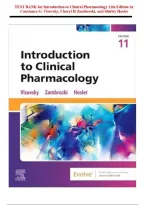
CLINICAL PHARMACOLOGY
Clinical Pharmacology is a comprehensive field focused on the safe, effective, and rational use of medicines in patient care. It combines principles of pharmacology, therapeutics, drug safety, pharmacokinetics, and pharmacodynamics to help healthcare professionals understand how medicines work in the human body and how they should be selected, administered, monitored, and adjusted. Our Clinical Pharmacology products and educational resources are designed to support medical students, pharmacists, physicians, nurses, researchers, and other healthcare professionals in developing a strong understanding of drug-related concepts. Topics commonly covered include mechanisms of drug action, drug absorption, distribution, metabolism, and elimination, dose-response relationships, adverse drug reactions, drug interactions, therapeutic drug monitoring, and individualized medication use. Clinical Pharmacology is particularly important in modern healthcare because patients can respond differently to the same medicine. Factors such as age, body weight, organ function, genetics, concurrent medications, and medical conditions may influence drug effectiveness and safety. Understanding these factors enables healthcare professionals to make informed decisions about medication selection and dosing while supporting appropriate patient monitoring. Our range of Clinical Pharmacology products can be valuable for academic study, professional development, clinical reference, and research. Resources may include textbooks, reference materials, study guides, pharmacology learning aids, clinical reference products, and educational materials covering both fundamental and advanced pharmacological principles. Key areas of Clinical Pharmacology include pharmacokinetics, pharmacodynamics, clinical therapeutics, adverse drug reactions, drug-drug interactions, medication safety, pharmacogenomics, toxicology, and evidence-based medicine. These areas provide an important foundation for understanding how medicines produce therapeutic effects, why adverse effects occur, and how treatment can be optimized for individual patients. Whether you are studying the fundamentals of pharmacology or looking for resources to support clinical practice and continuing education, Clinical Pharmacology materials can provide structured and practical information for understanding medicines and their appropriate use. The subject connects laboratory-based pharmacological knowledge with real-world patient care, helping bridge the gap between drug development, clinical research, and therapeutic practice. Clinical Pharmacology also contributes to the evaluation of new medicines through clinical trials, assessment of drug safety and efficacy, dose optimization, and post-marketing monitoring. Its principles are essential for promoting responsible medication use and improving the quality of pharmaceutical care. Explore our Clinical Pharmacology collection to find relevant educational and professional resources designed to support learning, clinical knowledge, research, and informed understanding of medicines. Choose resources according to your educational or professional requirements and always use medicines in accordance with appropriate clinical guidance and qualified healthcare advice.
Document information
- Uploaded on
- September 29, 2026
- Number of pages
- 160
- Written in
- 2026/2027
- Type
- Exam (elaborations)
- Contains
- Questions & answers


