BAIL APPLICATIONS PRACTICE QUESTIONS 2027 | SOUTH
AFRICAN CRIMINAL PROCEDURE, NPA ASPIRANT PROSECUTOR
EXAM PREP & STUDY GUIDE
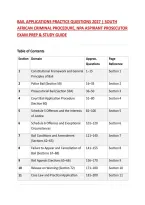
Table of Contents
Section Domain Approx. Page
Questions Reference
1 Constitutional Framework and General 1–15 Section 1
Principles of Bail
2 Police Bail (Section 59) 16–35 Section 2
3 Prosecutorial Bail (Section 59A) 36–50 Section 3
4 Court Bail Application Procedure 51–80 Section 4
(Section 60)
5 Schedule 5 Offences and the Interests 81–100 Section 5
of Justice
6 Schedule 6 Offences and Exceptional 101–120 Section 6
Circumstances
7 Bail Conditions and Amendment 121–140 Section 7
(Sections 62–63)
8 Failure to Appear and Cancellation of 141–155 Section 8
Bail (Sections 67–68)
9 Bail Appeals (Sections 65–66) 156–170 Section 9
10 Release on Warning (Section 72) 171–180 Section 10
11 Case Law and Practical Application 181–200 Section 11
,Section 1: Constitutional Framework and General Principles of Bail
(Questions 1–15)
Question 1: What is the primary source of the right to bail in South
African law?
A. The Bail Act 1976
B. Section 35(1)(f) of the Constitution of the Republic of South Africa,
1996
C. The Magistrates' Courts Act 32 of 1944
D. The National Prosecuting Authority Act 32 of 1998
CORRECT ANSWER: B. Section 35(1)(f) of the Constitution of the
Republic of South Africa, 1996
Rationale: Section 35(1)(f) of the Constitution provides that every
arrested person has the right to be released from detention if the
interests of justice permit, subject to reasonable conditions. This is the
constitutional foundation of the right to bail in South Africa.
Question 2: Which section of the Criminal Procedure Act 51 of 1977
primarily governs the release of an accused on bail by a court?
A. Section 59
B. Section 59A
C. Section 60
D. Section 72
CORRECT ANSWER: C. Section 60
Rationale: Section 60 of the CPA governs bail applications of an accused
in court. It sets out the procedure for applying for bail, the factors the
,court must consider, and the circumstances under which bail may be
refused.
Question 3: What is the general principle regarding the granting of bail
in South African law?
A. Bail is a matter of privilege, not right
B. The accused must prove exceptional circumstances in all cases
C. An accused is entitled to be released on bail unless the interests of
justice require detention
D. Bail must always be granted unless the accused has a previous
conviction
CORRECT ANSWER: C. An accused is entitled to be released on bail
unless the interests of justice require detention
Rationale: Section 60(1)(a) of the CPA provides that an accused who is
in custody in respect of an offence is entitled to be released on bail at
any stage preceding his or her conviction, unless the court finds that it is
in the interests of justice that he or she be detained in custody.
Question 4: Which constitutional right is directly implicated when a
court considers a bail application?
A. The right to a fair trial
B. The right to freedom and security of the person
C. The right to equality
D. The right to human dignity
CORRECT ANSWER: B. The right to freedom and security of the person
, Rationale: Section 12 of the Constitution guarantees the right to
freedom and security of the person, which includes the right not to be
detained without trial. Bail proceedings engage this right directly, as the
accused's liberty is at stake pending trial.
Question 5: In terms of Section 60(1)(a) of the CPA, at what stage can
an accused apply for bail?
A. Only after the first court appearance
B. At any stage preceding his or her conviction
C. Only after the prosecution has closed its case
D. Only during the trial
CORRECT ANSWER: B. At any stage preceding his or her conviction
Rationale: Section 60(1)(a) expressly provides that an accused is
entitled to be released on bail at any stage preceding his or her
conviction in respect of such offence, unless the interests of justice
require detention.
Question 6: What is the primary purpose of bail in the South African
criminal justice system?
A. To punish the accused before trial
B. To secure the accused's attendance at trial
C. To deter other potential offenders
D. To compensate victims of crime
CORRECT ANSWER: B. To secure the accused's attendance at trial
AFRICAN CRIMINAL PROCEDURE, NPA ASPIRANT PROSECUTOR
EXAM PREP & STUDY GUIDE
Table of Contents
Section Domain Approx. Page
Questions Reference
1 Constitutional Framework and General 1–15 Section 1
Principles of Bail
2 Police Bail (Section 59) 16–35 Section 2
3 Prosecutorial Bail (Section 59A) 36–50 Section 3
4 Court Bail Application Procedure 51–80 Section 4
(Section 60)
5 Schedule 5 Offences and the Interests 81–100 Section 5
of Justice
6 Schedule 6 Offences and Exceptional 101–120 Section 6
Circumstances
7 Bail Conditions and Amendment 121–140 Section 7
(Sections 62–63)
8 Failure to Appear and Cancellation of 141–155 Section 8
Bail (Sections 67–68)
9 Bail Appeals (Sections 65–66) 156–170 Section 9
10 Release on Warning (Section 72) 171–180 Section 10
11 Case Law and Practical Application 181–200 Section 11
,Section 1: Constitutional Framework and General Principles of Bail
(Questions 1–15)
Question 1: What is the primary source of the right to bail in South
African law?
A. The Bail Act 1976
B. Section 35(1)(f) of the Constitution of the Republic of South Africa,
1996
C. The Magistrates' Courts Act 32 of 1944
D. The National Prosecuting Authority Act 32 of 1998
CORRECT ANSWER: B. Section 35(1)(f) of the Constitution of the
Republic of South Africa, 1996
Rationale: Section 35(1)(f) of the Constitution provides that every
arrested person has the right to be released from detention if the
interests of justice permit, subject to reasonable conditions. This is the
constitutional foundation of the right to bail in South Africa.
Question 2: Which section of the Criminal Procedure Act 51 of 1977
primarily governs the release of an accused on bail by a court?
A. Section 59
B. Section 59A
C. Section 60
D. Section 72
CORRECT ANSWER: C. Section 60
Rationale: Section 60 of the CPA governs bail applications of an accused
in court. It sets out the procedure for applying for bail, the factors the
,court must consider, and the circumstances under which bail may be
refused.
Question 3: What is the general principle regarding the granting of bail
in South African law?
A. Bail is a matter of privilege, not right
B. The accused must prove exceptional circumstances in all cases
C. An accused is entitled to be released on bail unless the interests of
justice require detention
D. Bail must always be granted unless the accused has a previous
conviction
CORRECT ANSWER: C. An accused is entitled to be released on bail
unless the interests of justice require detention
Rationale: Section 60(1)(a) of the CPA provides that an accused who is
in custody in respect of an offence is entitled to be released on bail at
any stage preceding his or her conviction, unless the court finds that it is
in the interests of justice that he or she be detained in custody.
Question 4: Which constitutional right is directly implicated when a
court considers a bail application?
A. The right to a fair trial
B. The right to freedom and security of the person
C. The right to equality
D. The right to human dignity
CORRECT ANSWER: B. The right to freedom and security of the person
, Rationale: Section 12 of the Constitution guarantees the right to
freedom and security of the person, which includes the right not to be
detained without trial. Bail proceedings engage this right directly, as the
accused's liberty is at stake pending trial.
Question 5: In terms of Section 60(1)(a) of the CPA, at what stage can
an accused apply for bail?
A. Only after the first court appearance
B. At any stage preceding his or her conviction
C. Only after the prosecution has closed its case
D. Only during the trial
CORRECT ANSWER: B. At any stage preceding his or her conviction
Rationale: Section 60(1)(a) expressly provides that an accused is
entitled to be released on bail at any stage preceding his or her
conviction in respect of such offence, unless the interests of justice
require detention.
Question 6: What is the primary purpose of bail in the South African
criminal justice system?
A. To punish the accused before trial
B. To secure the accused's attendance at trial
C. To deter other potential offenders
D. To compensate victims of crime
CORRECT ANSWER: B. To secure the accused's attendance at trial