,
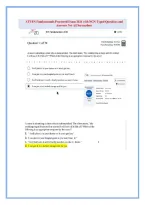
, RN ATI Fundamentals Nursing 2026 Retake
Proctored Exam with All NGN 70 Level 3
Passing Screenshot Q
SECTION I: SAFETY & INFECTION CONTROL (Q1–20)
1. A nurse is preparing to care for a client with Clostridioides difficile. Which action should the
nurse take?
A. Wear a mask and goggles when within 3 feet of the client
B. Wear gloves and a gown when entering the client's room
C. Use an alcohol-based hand rub after removing gloves
D. Place the client in a negative-pressure airborne infection isolation room
C. difficile requires contact precautions. Gowns and gloves are required for all room entry.
Alcohol rub does not kill C. diff spores; soap and water is required. Airborne isolation is not
indicated.
2. A nurse is assessing a client's fall risk. Which findings indicate increased risk? (SATA)
A. History of a fall in the past 3 months
B. Taking lorazepam at bedtime
C. Serum potassium 3.1 mEq/L
D. Urinary catheter discontinued 2 hours ago
E. Peripheral neuropathy in both feet
Prior falls, sedating medications, electrolyte imbalances, and neuropathy all increase fall
risk. A discontinued catheter (D) does not increase risk, though urgency after removal is a minor
consideration.
3. A nurse is teaching a client about home oxygen safety. Which statement by the client
indicates understanding?
A. "I will use petroleum jelly on my lips if they get dry."
B. "I will keep the oxygen at least 10 feet from the stove."
C. "I can store the oxygen tank in the closet when not in use."
D. "I will adjust the flow rate myself if I feel short of breath."
, Oxygen must be kept at least 10 feet from open flames/heat sources. Petroleum products
are flammable and prohibited near oxygen. Tanks must be stored upright and secure. Flow rate
changes require a provider order.
4. A nurse is caring for a client on droplet precautions. Which PPE is required when entering
the room?
A. Gloves only
B. Surgical mask and gloves
C. N95 respirator and gown
D. Gown, gloves, and N95 respirator
Droplet precautions require a surgical mask and gloves (gown if splash risk). N95 is for
airborne precautions (e.g., tuberculosis, measles).
5. A nurse is reviewing safety measures for a client using a walker. Which instruction is
correct?
A. "Hold the walker on the sides and step forward with it."
B. "Move the walker forward first, then step into it."
C. "Use the walker to pull yourself up from a chair."
D. "Lean your weight onto the walker when standing."
The walker is advanced first, then the client steps into it, maintaining balance. Walkers are
not used to pull up from chairs and should not bear full body weight.
6. A nurse discovers a small fire in a client's room. Which action should the nurse take first?
A. Activate the fire alarm
B. Remove the client from the room
C. Extinguish the fire with the nearest extinguisher
D. Close all doors and windows
Using the RACE mnemonic: Rescue the client first, then Alarm, Contain, and
Extinguish/Evacuate. Removing the client from immediate danger is priority.
7. A nurse is preparing to administer a blood transfusion. Which action is priority?
A. Prime the tubing with dextrose 5% in water
, RN ATI Fundamentals Nursing 2026 Retake
Proctored Exam with All NGN 70 Level 3
Passing Screenshot Q
SECTION I: SAFETY & INFECTION CONTROL (Q1–20)
1. A nurse is preparing to care for a client with Clostridioides difficile. Which action should the
nurse take?
A. Wear a mask and goggles when within 3 feet of the client
B. Wear gloves and a gown when entering the client's room
C. Use an alcohol-based hand rub after removing gloves
D. Place the client in a negative-pressure airborne infection isolation room
C. difficile requires contact precautions. Gowns and gloves are required for all room entry.
Alcohol rub does not kill C. diff spores; soap and water is required. Airborne isolation is not
indicated.
2. A nurse is assessing a client's fall risk. Which findings indicate increased risk? (SATA)
A. History of a fall in the past 3 months
B. Taking lorazepam at bedtime
C. Serum potassium 3.1 mEq/L
D. Urinary catheter discontinued 2 hours ago
E. Peripheral neuropathy in both feet
Prior falls, sedating medications, electrolyte imbalances, and neuropathy all increase fall
risk. A discontinued catheter (D) does not increase risk, though urgency after removal is a minor
consideration.
3. A nurse is teaching a client about home oxygen safety. Which statement by the client
indicates understanding?
A. "I will use petroleum jelly on my lips if they get dry."
B. "I will keep the oxygen at least 10 feet from the stove."
C. "I can store the oxygen tank in the closet when not in use."
D. "I will adjust the flow rate myself if I feel short of breath."
, Oxygen must be kept at least 10 feet from open flames/heat sources. Petroleum products
are flammable and prohibited near oxygen. Tanks must be stored upright and secure. Flow rate
changes require a provider order.
4. A nurse is caring for a client on droplet precautions. Which PPE is required when entering
the room?
A. Gloves only
B. Surgical mask and gloves
C. N95 respirator and gown
D. Gown, gloves, and N95 respirator
Droplet precautions require a surgical mask and gloves (gown if splash risk). N95 is for
airborne precautions (e.g., tuberculosis, measles).
5. A nurse is reviewing safety measures for a client using a walker. Which instruction is
correct?
A. "Hold the walker on the sides and step forward with it."
B. "Move the walker forward first, then step into it."
C. "Use the walker to pull yourself up from a chair."
D. "Lean your weight onto the walker when standing."
The walker is advanced first, then the client steps into it, maintaining balance. Walkers are
not used to pull up from chairs and should not bear full body weight.
6. A nurse discovers a small fire in a client's room. Which action should the nurse take first?
A. Activate the fire alarm
B. Remove the client from the room
C. Extinguish the fire with the nearest extinguisher
D. Close all doors and windows
Using the RACE mnemonic: Rescue the client first, then Alarm, Contain, and
Extinguish/Evacuate. Removing the client from immediate danger is priority.
7. A nurse is preparing to administer a blood transfusion. Which action is priority?
A. Prime the tubing with dextrose 5% in water